Spain’s famous Carnaval: Origins, traditions and the biggest celebrations
By Natascha Rivera • Updated: 03 Feb 2026 • 18:25 • 4 minutes read
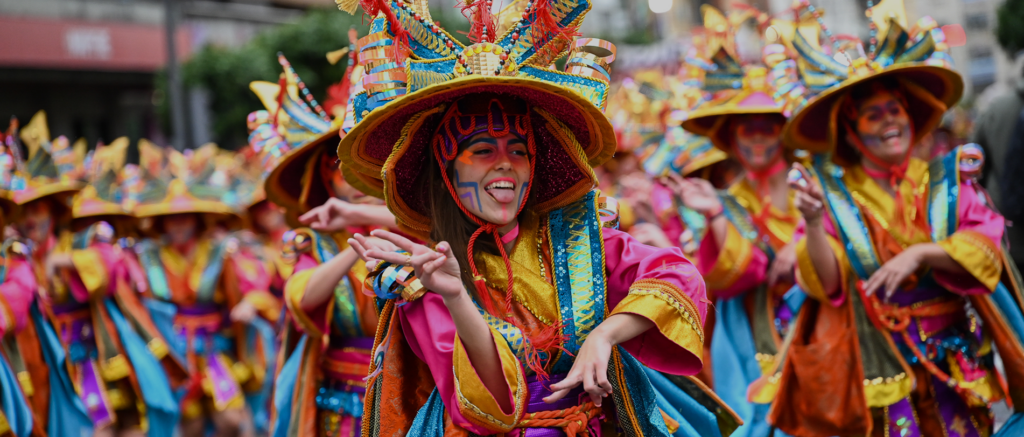
Spain’s Carnaval blends history, satire and spectacle across regions nationwide. Photo Credit: Carnaval de Badajoz
THE MONTH of February sees different areas and municipalities of Spain light up with one of the most highly-anticipated events of the year: the famed Carnaval, characterised by bright colours, glitter, feathers, over-the-top costumes, and blowout performances will be celebrated across the country, in towns both big and small.
Where did the Carnaval originate?
The traditional Carnaval originates from a variety of pagan and Medieval Christian celebrations, dating as far back as the 15th century. While it is celebrated in many countries, including in Latin America, Spanish roots for the tradition date back to the Carnaval del Toro in the 15th century, taking place in Ciudad Rodrigo, a city near the border of Portugal and Spain in the province of Salamanca.
Cadiz is another important centre for the origins and development of the modern-day Carnaval in Spain, heavily influenced by trade with Genoese merchants who brought Italian traditions into Spain. The first documented Carnaval in Cadiz took place during the 17th century, marked by elaborate costumes and sweets. Cadiz also boasts one of the most unique versions of the Carnaval, putting a satirical edge to the spectacle.
Now, the Carnaval is widely recognised as a blowout festival with editions and firmly rooted traditions all across the country. Each region has a twist on the Carnaval to make it their own, but traditions including the Chirigotas, or traditional folk music, Drag Queen Galas, and the Burial of the Sardine are widespread customs that mark this unique, exciting time of the year in Spain.
The biggest Carnaval editions in Spain, and when they will take place
Santa Cruz de Tenerife, Canary Islands
Spain’s famed Canary Islands are second to none during the Carnaval season, and none go so big as the largest of the islands, Tenerife. Costumes, music, rhythm, and joy during this grand event attract thousands of people on a yearly basis to Tenerife’s beautiful shores and charming towns. Each year, Tenerife tends to try to top itself with characteristic themes. For the 2026 edition, taking place between February and March, the theme will be space and parallel universes.
Cadiz, Andalucia
Cadiz, as one of the birthplaces of the Spanish Carnaval, always shoots for spectacle when it comes to the Carnaval … though the approach is a little different compared to the rest of the country. In Cadiz, the Carnaval takes a satirical and humorous spin. The songs, dances, and performances have an ironic twist, meant to criticise the ruling class in a tradition that dates back to the first Carnavals of Spain and which was strengthened after the Franco dictatorship. Nowadays, Cadiz is a main hub for the festival, attracting countless residents and foreigners to the shining, ancient port city.
Aguilas, Murcia
The glittering Costa Calida is also home to one of the most famous Carnavals in the whole of Spain, full of colour, costumes, and over-the-top parades. The Aguilas Carnaval also boasts its own twist on the traditional Carnaval with two standout customs: the throwing of cascarones, which are eggs stuffed with confetti, and drinking cuerva, a drink traditionally described as a “magic potion” that awakens the Carnaval spirit.
Sitges, Catalonia
Catalonia is one of Spain’s main hubs when it comes to tourism, and the charming coastal town of Sitges, located just a train’s ride away from Barcelona, is nothing to sneeze at when it comes to Carnaval celebrations. Known for its glittering coastline and charming towns, Sitges celebrates the Carnaval with two main parades: the Rua de la Disbauxa (Debauchery Parade) and the Rua del Extermini (Extermination Parade). These massive celebrations are characterised by wild, energetic partying that often lasts long into the night.
Las Palmas de Gran Canaria, Canary Islands
Las Palmas de Gran Canaria is the largest city in the Canary Islands, and every year, it gives Tenerife a run for its money when it comes to the Carnaval. Flooded with residents and tourists, as well as colour, fun, and merrymaking, the Gran Canaria’s Great Parade during the Carnaval is known to attract tens of thousands of people. Main highlights of this edition of the Carnaval include the Drag Queen Gala and the Gala of the Carnival Queen, in a flamboyant and fabulous show of feathers and costumes that delight crowds.
The Burial of the Sardine: Spain’s unique, fish-themed Carnaval tradition
Perhaps no Carnaval tradition is more famous than the Entierro de la Sardina, or Burial of the Sardine: an official marker of the end of the Carnaval festivities and the beginning of Lent. It is a symbolic “burial” of the past, oftentimes with a handmade sardine sculpture, and is celebrated on Ash Wednesday. The tradition, popularised from the 18th century, is an ancient custom whose origins historians still theorise about.
Some say the tradition originated from a shipment of spoiled sardines that arrived at the markets of Madrid during the reign of King Charles III. According to the legend, the smell of the fish was so potent that King Charles III ordered the burial of the sardines along the banks of the Manzanares River.
Other scholars say that the custom is linked to Jerónimo Grimaldi, a minister of King Charles III, who was nicknamed “the sardine” due to his extraordinary thinness. When Grimaldi left Madrid around Lent, the people bade him farewell with a grand party not unlike the modern-day Carnaval.
In any case, historians seem to agree the tradition originated in Madrid, though the exact nature of its founding is mysterious. Today, the tradition is celebrated at the end of many Carnaval celebrations, with one of the most famous editions taking place in Murcia, on the Costa Calida.
Celebrating Carnaval this year
Whether in a large tourist hub or a small town, many areas across Spain will be donning costumes, throwing glitter, and gearing up for what is certain to be a celebration to remember. Carnaval season is another reminder that when it comes to Spanish traditions, any town, big or small, will bring the heat for these unforgettable parties.
Read more news from Spain here.
Follow Euro Weekly News on Google News
Get breaking news from Spain, travel updates, and expat stories directly on your Google News feed.
Follow on Google NewsSign up for personalised news
Subscribe to our Euro Weekly News alerts to get the latest stories into your inbox!
By signing up, you will create a Euro Weekly News account if you don't already have one. Review our Privacy Policy for more information about our privacy practices.



Natascha Rivera
Natascha is a Dominican writer based in Spain with a background in audiovisual and marketing communication. A lifelong reader and passionate storyteller, she brings a creative edge to her work at Euro Weekly News. Her multicultural perspective informs her coverage of lifestyle and community stories, offering fresh angles and relatable storytelling that connects with a diverse audience.
Comments