Mass protest grips Madrid as Spain faces escalating housing unrest and strike calls
By Molly Grace • Published: 24 May 2026 • 17:04 • 3 minutes read
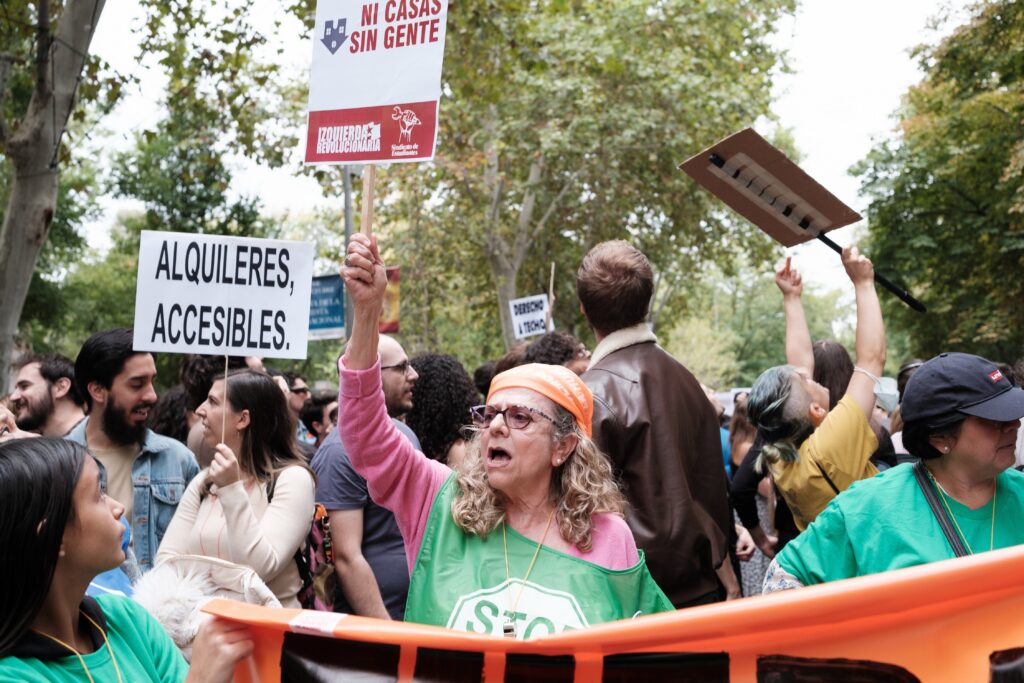
The issue has become a recurring subject of public demonstrations, with similar protests taking place in previous years in Madrid and other Spanish cities. Photo credit: Oscar Gonzalez Fuentes/Shutterstock
Thousands of people gathered in Madrid, Sunday May 24, in a demonstration focused on the cost of housing and access to affordable rental accommodation. According to official estimates cited in reporting, more than 23,000 people took part in the march, which was organised by tenant and housing groups, including the Sindicato de Inquilinas de Madrid. The demonstration took place under the slogan “La vivienda nos cuesta la vida. Bajemos los precios” (“Housing is costing us our lives. Let’s bring prices down”), with participants calling for a reduction in rental prices and stronger intervention in the housing market.
The protest formed part of a wider day of mobilisation across Spain, with simultaneous demonstrations in several cities. Organisers argued that rising rents have made access to housing increasingly difficult, particularly in large cities where prices have risen significantly in recent years. Reporting from the event stated that rents in Madrid have increased sharply over the past five years, with many households reportedly spending a large share of their income on accommodation costs.
Calls for Stronger Measures and Strike Action
During the demonstration, participants demanded a series of measures aimed at reducing housing costs and expanding access to secure rental contracts. These included calls for tighter regulation of rental prices, longer or indefinite rental contracts, and increased public housing provision. Some speakers and organisations involved in the protest also called for broader forms of industrial action. This included references to the possibility of a general strike as a way of increasing pressure on political institutions to address housing affordability.
The call for a general strike was not presented as an official national strike endorsed by Spain’s main trade unions, but as a proposal supported by sections of the housing movement and activist groups present at the demonstration. If a general strike were to take place, it would primarily affect workers across Spain in sectors such as transport, education, retail, hospitality, and public services. It would also have knock-on effects for residents through reduced public transport services, limited school and administrative operations, and disruption to some commercial activity. However, at this stage, no nationwide strike has been formally called by major trade union federations such as CCOO or UGT.
Broader Context of Housing Pressure in Spain
The protest reflects ongoing concerns about housing affordability in Spain, particularly in urban centres such as Madrid, Barcelona and Valencia, where rental prices have risen faster than wages in recent years. Housing campaigners argue that a lack of available long-term rental housing and the growth of short-term tourist accommodation have contributed to increased pressure on the rental market.
These concerns were reflected in chants and slogans during the march, with participants criticising what they described as speculative practices in the housing sector. The issue has become a recurring subject of public demonstrations, with similar protests taking place in previous years in Madrid and other Spanish cities. These events have typically drawn support from tenant unions, neighbourhood associations and some trade union organisations.
What the Protest Could Mean for Residents in Spain
For residents, particularly those living in large cities, the demonstration highlights continuing pressure on household budgets caused by housing costs. If the demands raised by protest groups were to influence policy, potential changes could include tighter regulation of rental pricing mechanisms, longer-term tenancy protections, and increased investment in public housing. These measures would directly affect both tenants and landlords, particularly in high-demand urban areas.
However, any policy changes would depend on legislative decisions at national and regional levels, as housing regulation in Spain is shared between different tiers of government. In the shorter term, continued demonstrations could maintain political pressure on local and national authorities to address affordability concerns, particularly in cities where rental demand remains high.
Political and Social Response
The demonstration included participation from a range of social organisations, including tenant unions and some labour groups. Trade unions such as CCOO and UGT have previously supported housing-related demonstrations, reflecting growing concern over the impact of rental costs on workers and younger people.
Political responses to housing protests in Spain have varied, with different parties proposing contrasting approaches, including expanded public housing programmes and market-based reforms. The call for a general strike, however, remains limited to activist organisations within the housing movement and has not been formally adopted as industrial policy by national trade union federations.
Ongoing Debate Over Housing Policy
Housing remains one of the most debated social issues in Spain, particularly in urban areas where demand continues to outpace supply. The Madrid demonstration adds to a series of recent protests highlighting concerns over affordability, rental security and long-term access to housing.
While the immediate outcome of the protest is unclear, the scale of participation suggests continued public attention on housing policy and its impact on residents across Spain.
Follow Euro Weekly News on Google News
Get breaking news from Spain, travel updates, and expat stories directly on your Google News feed.
Follow on Google NewsSign up for personalised news
Subscribe to our Euro Weekly News alerts to get the latest stories into your inbox!
By signing up, you will create a Euro Weekly News account if you don't already have one. Review our Privacy Policy for more information about our privacy practices.




Molly Grace
Molly is a British journalist and author who has lived in Spain for over 25 years. With a background in animal welfare, equestrian science, and veterinary nursing, she brings curiosity, humour, and a sharp investigative eye to her work. At Euro Weekly News, Molly explores the intersections of nature, culture, and community - drawing on her deep local knowledge and passion for stories that reflect life in Spain from the ground up.
Comments