Game changer for budget air travel as Wizz Air brings Starlink Wi-Fi onboard
By Molly Grace • Updated: 09 Jun 2026 • 23:34 • 3 minutes read
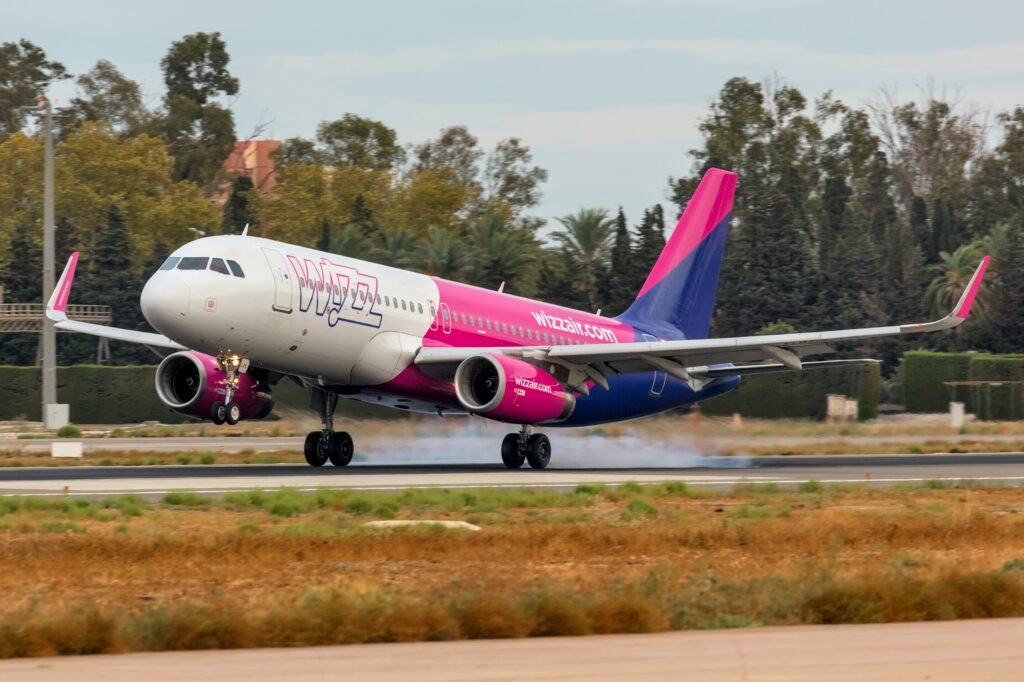
Onboard Wi-Fi has traditionally been limited or chargeable on many low-cost airlines in Europe. Photo credit: Kevin Piechota/Shutterstock
Travellers flying with one of Europe’s largest budget airlines could soon experience a major shift in onboard connectivity, as Wizz Air prepares to introduce high-speed satellite internet powered by Starlink across its fleet. The airline has confirmed plans to roll out the service from 2027, making it the first ultra-low-cost carrier in Europe to commit to offering Starlink Wi-Fi on a fleet-wide basis.
The move places the carrier among a growing number of global airlines investing in satellite-based internet systems designed to improve connectivity at cruising altitude. The announcement comes as airlines increasingly compete on onboard digital services, with internet access becoming a standard expectation rather than a premium extra on many short and medium-haul routes.
Fleet-wide rollout planned from 2027
Wizz Air said the installation programme will begin in 2027 and cover its entire aircraft fleet over time, although it has not confirmed whether the service will be free or paid for passengers. Starlink, operated by Elon Musk’s SpaceX, uses a network of low-Earth orbit satellites to deliver internet coverage with lower latency than traditional satellite systems.
The technology has already been adopted by several major carriers globally, particularly in North America and Asia. The airline did not disclose the financial terms of its agreement with Starlink or the cost of installation across its aircraft. Industry reporting indicates that the system is being widely adopted by full-service airlines, while budget carriers have been more cautious due to cost and operational considerations.
Shift in expectations for low-cost travel
Onboard Wi-Fi has traditionally been limited or non-existent on many low-cost airlines in Europe. Wizz Air’s decision marks a notable shift in how ultra-low-cost carriers approach passenger experience.
While full-service airlines have increasingly integrated free connectivity into loyalty programmes or premium cabins, budget operators have generally prioritised ticket pricing and aircraft utilisation over digital services. The introduction of Starlink suggests a gradual change in that model, with airlines now viewing connectivity as part of the wider travel experience rather than an optional add-on.
What it means for passengers travelling to and from Spain
Spain is one of Wizz Air’s key European markets, with routes connecting cities such as Barcelona, Madrid, Valencia and Málaga to destinations across Europe and beyond. For passengers travelling to and from Spain, the introduction of Starlink Wi-Fi could reduce the gap between low-cost and full-service travel, particularly on medium-haul routes where passengers typically spend several hours onboard.
It may also impact how travellers use flight time, especially for those working remotely or relying on mobile connectivity during trips. Tourism between Spain and other European destinations is expected to benefit from more consistent in-flight internet access, particularly for business travellers and frequent flyers. However, the rollout will not be immediate, and passengers on Spanish routes are unlikely to see the service until installation begins closer to 2027 and is gradually introduced across the fleet.
How Starlink will work in flight:
What is Starlink Wi-Fi on aircraft?
Starlink is a satellite-based internet system operated by SpaceX that uses a network of low-orbit satellites to provide broadband connectivity in areas without traditional ground infrastructure.
How will passengers connect?
Once installed, passengers will typically connect through the aircraft’s onboard Wi-Fi network and log in via a browser or airline app, similar to existing in-flight systems.
Will it work during the entire flight?
Yes. Because Starlink satellites operate in low Earth orbit, coverage is designed to remain stable throughout most stages of flight, including over oceans and remote regions.
Will it be free?
Wizz Air has not confirmed pricing. Other airlines using Starlink have adopted different models, with some offering free access and others linking it to loyalty programmes or paid packages.
Can passengers stream and make calls?
Starlink’s system is capable of supporting streaming, video calls and general browsing, although performance can vary depending on passenger load and network demand.
Growing competition in airline connectivity
The rollout comes amid wider competition among airlines to upgrade onboard connectivity systems. Several carriers worldwide have already committed to Starlink installations, while others are investing in alternative satellite networks.
The sector is increasingly moving towards faster, more reliable internet access as part of standard onboard service, with airlines using connectivity as a way to improve passenger experience and generate additional digital engagement.
Outlook
Wizz Air’s decision to introduce Starlink marks a significant step for the European budget aviation sector. While the full impact will depend on pricing and rollout speed, the move signals a broader shift in expectations around what passengers can expect on short and medium-haul flights.
For now, the service remains in development, but by 2027 it could reshape how millions of travellers across Europe, including those flying to and from Spain, stay connected in the air.
Follow Euro Weekly News on Google News
Get breaking news from Spain, travel updates, and expat stories directly on your Google News feed.
Follow on Google NewsSign up for personalised news
Subscribe to our Euro Weekly News alerts to get the latest stories into your inbox!
By signing up, you will create a Euro Weekly News account if you don't already have one. Review our Privacy Policy for more information about our privacy practices.





Molly Grace
Molly is a British journalist and author who has lived in Spain for over 25 years. With a background in animal welfare, equestrian science, and veterinary nursing, she brings curiosity, humour, and a sharp investigative eye to her work. At Euro Weekly News, Molly explores the intersections of nature, culture, and community - drawing on her deep local knowledge and passion for stories that reflect life in Spain from the ground up.
Comments