“We need tourists but not like this”: Spain’s tourism boom continues, but it sparks Europe’s biggest backlash
By Molly Grace • Published: 09 Jun 2026 • 15:57 • 6 minutes read
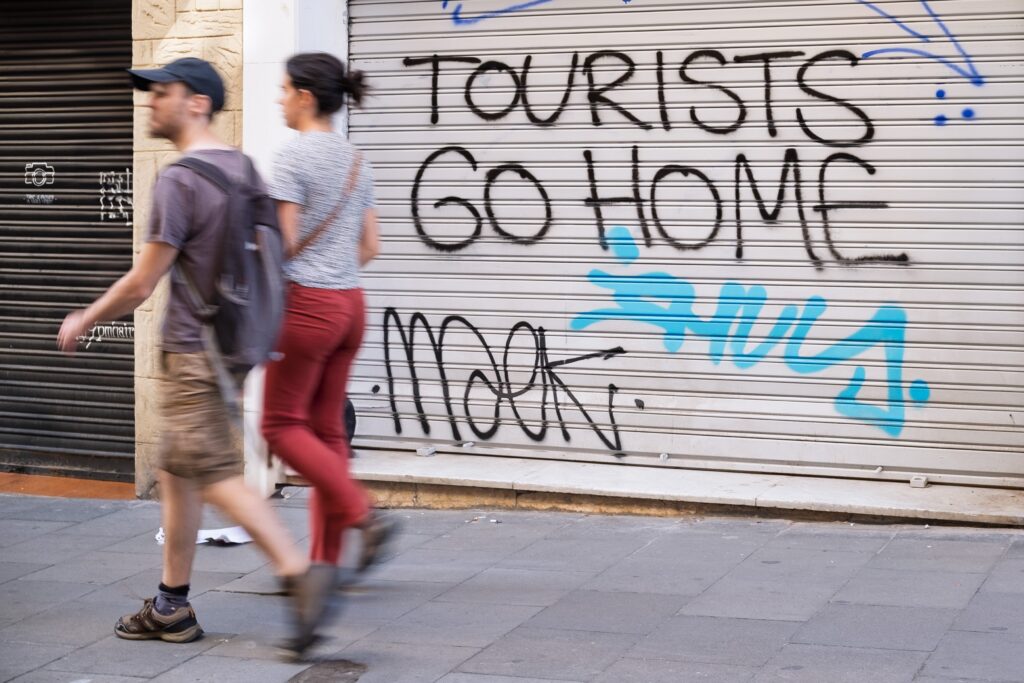
The Spanish government has increasingly linked housing pressures to the expansion of tourist accommodation. Photo credit: Jon LC/Shutterstock
Spain’s tourism industry is one of the country’s greatest economic success stories. It supports millions of jobs, contributes around 13% of national GDP and remains a key driver of growth at a time when much of Europe is experiencing economic uncertainty. Tourism employment alone exceeded three million workers in late 2025, accounting for more than 13% of all jobs in the Spanish economy.
Yet across some of Spain’s most famous holiday destinations, from Mallorca and Malaga to Barcelona and the Canary Islands, protests against mass tourism continue to grow. Demonstrators have marched through city centres, displayed anti-tourism banners and called for stricter controls on visitor numbers, holiday rentals and property purchases by foreigners.
The apparent contradiction raises an obvious question: if Spain relies so heavily on tourism, why are so many residents in tourism-dependent areas protesting against it?
Spain Tops European Study on Tourism Backlash
The debate was reignited by a recent study from digital platform JB.com, which ranked Spain as the European country showing the strongest resistance to mass tourism.
The study examined factors including anti-tourism protests, media coverage, tourist taxes and the ratio of visitors to local residents. Spain ranked ahead of Italy and France, reflecting growing tensions in some of the country’s most visited destinations.
However, the ranking does not suggest that Spaniards are rejecting tourists themselves. Rather, it highlights growing concerns about the impact of tourism on housing, infrastructure and quality of life in areas where visitor numbers have risen sharply.
The Housing Crisis at the Centre of the Debate
For many residents, the issue is not tourism but what tourism has done to local housing markets.
Across parts of Spain, particularly the Balearic Islands, Canary Islands, Barcelona and Malaga, housing costs have risen significantly in recent years. Local campaign groups argue that the rapid growth of short-term holiday rentals has removed housing stock from the long-term market, making it increasingly difficult for residents to find affordable homes.
Some Euro Weekly News readers argue that the housing pressures seen in Spain reflect a wider issue affecting major cities across Europe rather than tourism alone. Reader Sharon Dashey drew comparisons with the UK property market, where foreign investment has also been blamed for reducing housing availability.
“I understand it’s frustrating being unable to buy in your own country. London has the same problem, many properties are bought by foreign investors. Who don’t even let them out, for others to rent and enjoy visiting our capital. These properties are simply left empty, waiting for the house price increase making them tons more money for people who are already very wealthy. That’s also frustrating!”
The Spanish government has increasingly linked housing pressures to the expansion of tourist accommodation. In response, authorities have introduced stricter regulations on short-term rentals and intensified enforcement against illegal holiday lets. In 2025, Spain moved against tens of thousands of Airbnb listings that authorities considered non-compliant with tourism regulations. The government later confirmed a €64 million fine against Airbnb linked to more than 65,000 allegedly non-compliant advertisements.
Airbnb Restrictions and Tourist Taxes
The crackdown on short-term rentals is part of a broader effort to address concerns over over-tourism. New registration requirements have been introduced for many holiday rentals, while several regions and municipalities have tightened licensing rules. Ibiza has experienced one of the sharpest reductions in tourist rental properties following increased enforcement measures, while Barcelona has announced plans to phase out tourist apartment licences by 2028.
At the same time, tourist taxes have become increasingly common across Spain. The Balearic Islands already levy a sustainable tourism tax, while other destinations have introduced or expanded visitor charges as local authorities seek to manage tourism’s impact on public services and infrastructure. Supporters argue these measures help protect housing supply and fund local services. Critics counter that they risk undermining an industry that remains essential to regional economies.
Many have also questioned whether short-term rentals are being unfairly blamed for Spain’s housing problems. Robert Riley argued that many holiday rental properties are owned by individuals rather than large investment firms.
“Considering 79% of all Airbnb hosts own single units and a substantial majority are Spanish, it seems weird to see immigrants such as myself living here lauding this move.”
His comment raises questions over whether current restrictions target the main drivers of housing pressure or focus too heavily on one part of the market.
The British Connection
The debate carries particular significance for British travellers.
The United Kingdom remains Spain’s largest source market for international tourism. Between January and August 2025, Spain received 13.2 million British visitors, representing roughly one in every five international arrivals. British tourists continue to dominate visitor numbers in destinations such as the Balearic Islands, Canary Islands, Benidorm and the Costa del Sol.
For many coastal towns and islands, British tourism supports hotels, restaurants, bars, transport companies, retail businesses and thousands of jobs. Any significant decline in visitor numbers would have economic consequences extending well beyond the tourism sector itself.
Talking to Euro Weekly News, Linda Barnett argues that tourism remains essential for local employment and everyday business activity.
“Less tourists means less people eating in cafes and restaurants, less tourist spending money in supermarkets etc… and that equals unemployment for staff in these businesses. I don’t think tourism is the actual problem here, I would point my fingers more at the current socialist Spanish government.”
Her opinion that the pressure on local economies may be driven more by policy and structural decisions than by visitor numbers themselves, is one shared by many. This creates a dilemma for policymakers. Spain wants to maintain strong visitor numbers while also responding to residents who feel that the benefits of tourism are not being shared evenly.
Questions Tourists Are Asking
Why are anti-tourism protests happening in Spain?
The protests are largely driven by concerns over housing affordability, rising rents and pressure on local infrastructure in some of Spain’s most visited destinations. Campaign groups argue that the rapid growth of holiday rentals has reduced the supply of homes available to local residents, particularly in cities and islands where housing demand already exceeds supply.
Many demonstrators stress that they are not opposed to tourists themselves. Instead, they are calling for changes to the tourism model, including tighter controls on short-term rentals and measures aimed at limiting the impact of over-tourism on local communities.
How can tourists avoid placing pressure on local communities?
Travellers can help by choosing licensed accommodation, respecting local regulations and supporting local businesses. Some destinations are encouraging visitors to travel outside peak summer periods or explore lesser-known areas to reduce pressure on overcrowded hotspots.
Using registered holiday rentals or hotels, respecting noise regulations and being mindful of local residents can also help ensure tourism benefits communities without contributing to some of the problems that have fuelled recent protests.
Will tourist taxes affect my holiday?
Possibly. Several Spanish destinations, including the Balearic Islands and parts of Catalonia, already charge tourist taxes, while other regions are considering similar measures.
The amount varies depending on the destination and type of accommodation, but the charges are generally intended to help fund local services and manage the impact of high visitor numbers rather than discourage tourism altogether.
An Economic Contradiction
Without a doubt the current tension marks one of the defining economic challenges facing modern Spain.
Tourism generates billions of euros in revenue and provides employment for millions of people. The sector is expected to continue growing during 2026, with tourism accounting for around 13% or more of GDP.
At the same time, residents in some of the country’s most popular destinations argue that the success of tourism has contributed to rising rents, housing shortages and growing pressure on local infrastructure. Protest groups frequently insist that they are not opposed to visitors but to a model of tourism that they believe has expanded beyond sustainable levels.
That distinction is increasingly important. Spain is not turning its back on tourism, nor is it likely to do so given the industry’s economic importance. Instead, authorities are attempting to find a balance between maintaining a sector that supports millions of livelihoods and addressing the social pressures that have fuelled growing discontent in some of the country’s most visited destinations.
Whether stricter rental rules, tourist taxes and licensing reforms can achieve that balance remains one of the most significant questions facing Spain’s tourism industry today.
Follow Euro Weekly News on Google News
Get breaking news from Spain, travel updates, and expat stories directly on your Google News feed.
Follow on Google NewsSign up for personalised news
Subscribe to our Euro Weekly News alerts to get the latest stories into your inbox!
By signing up, you will create a Euro Weekly News account if you don't already have one. Review our Privacy Policy for more information about our privacy practices.



Molly Grace
Molly is a British journalist and author who has lived in Spain for over 25 years. With a background in animal welfare, equestrian science, and veterinary nursing, she brings curiosity, humour, and a sharp investigative eye to her work. At Euro Weekly News, Molly explores the intersections of nature, culture, and community - drawing on her deep local knowledge and passion for stories that reflect life in Spain from the ground up.
Comments