Goodbye to Spain’s longest toll road
By John Ensor • Published: 27 Jan 2024 • 17:14 • 1 minute read
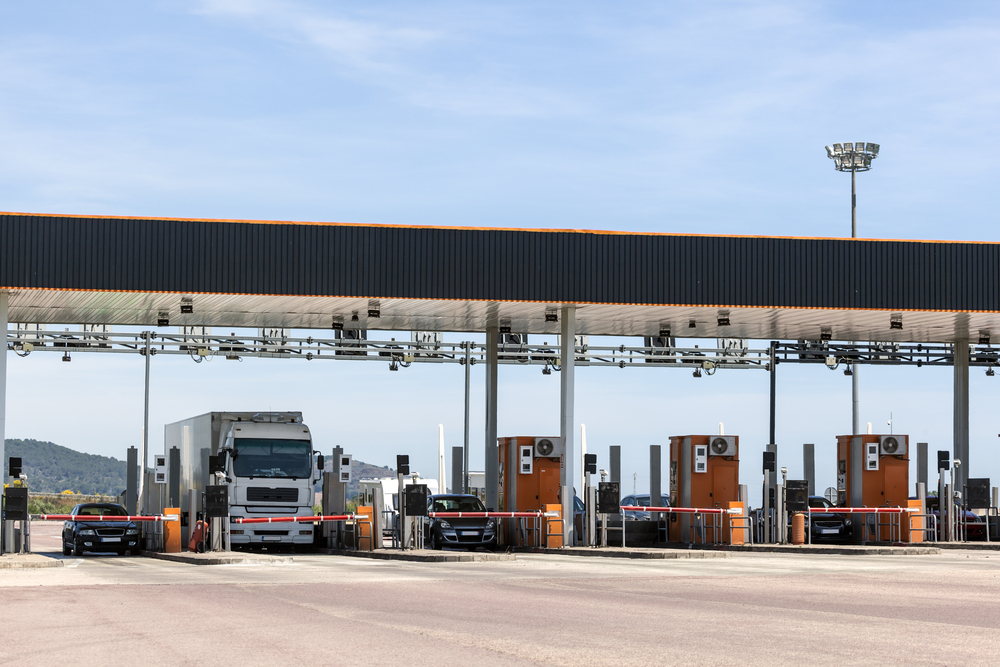
Toll station in Spain. Credit: Philip Lange/Shutterstock.com
Is there a more satisfying journey than a toll-free one? News has emerged of the imminent change to one of Spain’s most extensive and expensive toll highways, although eager drivers will have to be patient for the time being.
On April 20, 2020, the Spanish Government announced that the duration of individual tolls on Spain’s highways was to be limited to 30 years.
Hence, the toll on the AP-6 highway which connects Madrid with Castilla y Leon and incorporates the Guadarrama tunnel, is due to be removed before November 19, 2029, and as such will impact thousands of daily commuters.
Upcoming toll-free highways
The liberating wave doesn’t stop at the Guadarrama tunnel. Additional sections including the AP-61, linking San Rafael and Segovia, and the AP-51, connecting Villacastin with Avila, will also see tolls lifted. This move will ensure free travel across these vital arteries to the northern plateau.
Other highways in Spain are following suit, with varying concession periods ranging from 30 to 50 years. AP-9 (Atlantic Highway) between Ferrol and the Portuguese border, the AP-36 between Ocaña (Toledo) and the Roda (Albacete), and the AP-68 are on the list to become toll-free by 2026.
Moreover, Madrid’s radial highways and the AP-15 in Navarra are scheduled to end their toll concessions in 2032 and 2029, respectively. However, tolls remain active on the Catalan C-16 and C-32 highways.
Innovations in toll collection: The Basque model
Turning to the Basque Country, an innovative, booth-less toll system on the A-636 is revolutionising travel between Beasain and Bergara. Utilising ‘Free-Flow’ technology, this system identifies vehicles through cameras mounted on arches at Beasain, Ezkio, and Desakarga.
Motorists must register for charging via the Bidegui app, join ABIATU, or use the ViaT electronic toll. The system offers discounts based on highway usage and eliminates the need for traditional toll booths, streamlining travel and reducing congestion.
This approach, akin to systems in Portugal, could be a precursor to broader implementation across Spain in the near future.
Sign up for personalised news
Subscribe to our Euro Weekly News alerts to get the latest stories into your inbox!
By signing up, you will create a Euro Weekly News account if you don't already have one. Review our Privacy Policy for more information about our privacy practices.





John Ensor
Originally from Doncaster, Yorkshire, John now lives in Galicia, Northern Spain with his wife Nina. He is passionate about news, music, cycling and animals.
Comments
Andrew Cremona
28 January 2024 • 17:50What about the AP-7? Malaga to Estepona?
Comments are closed.