Fewer flights, fewer jobs: Ryanair exit hits Billund hard
By Marina Bruce • Published: 03 May 2025 • 19:18 • 3 minutes read
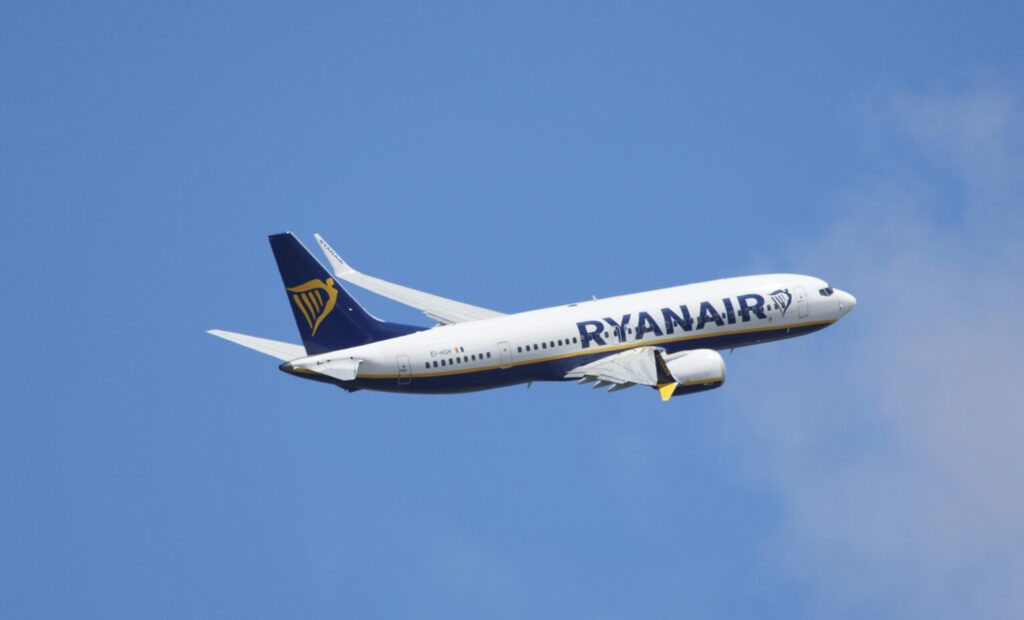
Ryanair flight taking off. Credit: Andrew Cutajar
The decision by Ryanair to pull out of Billund Airport has had a significant impact. Passenger numbers have dropped sharply, jobs have been lost, and the future remains uncertain for the second-largest airport in Denmark.
In April, just over 217,000 people passed through Billund Airport. That’s nearly 100,000 fewer passengers than in the same month last year. According to newly released airport traffic figures, the drop represents a 31.4% decrease. The numbers clearly show what many feared when Ryanair closed its base at the airport on April 1.
For travellers in Jutland, Ryanair has become a popular option. The airline offered 24 different routes from Billund and carried thousands of passengers monthly. But that is now in the past.
Why did Ryanair leave Billund?
Ryanair announced it would close its base in Billund in February due to the new Danish passenger tax. The new rule adds up to 50 kroner to the price of every flight ticket from Denmark. Ryanair has been critical of the tax, calling it bad for customers and tourism.
At the same time, Billund Airport and Ryanair could not agree on a new deal to keep the airline’s base running. Without a new agreement, Ryanair pulled out, cancelling all planned routes from the airport.
The last Ryanair flight from Billund took off at the end of March. Since then, the airport has seen a significant drop in traffic.
Jobs lost as summer season approaches
The fall in passenger numbers has led to tough decisions at the airport. In April, 22 employees were let go, and 100 seasonal workers typically hired for the busy summer months will not be taken on this year.
This is a big blow for the region, as Billund Airport is an important employer and travel hub for central Jutland.
“We had hoped to avoid layoffs, but the drop in traffic made it necessary,” said airport CEO Jan Hessellund in a press release.
A slight rise without Ryanair
While the headline numbers look bad, there is a small silver lining. When looking at the figures excluding Ryanair passengers, Billund Airport has seen a 4.5% increase in travellers during the first four months of the year. This shows that other airlines are still attracting passengers.
Around 130,000 Ryanair passengers disappeared in April alone, confirming the airline’s strong role in Billund’s overall numbers.
“It will take time to close the gap completely,” said Jesper Klausholm, Director of Route Development at Billund Airport. “But it also creates new chances for other low-cost airlines to enter the market.”
Other airlines step in
Despite the loss of Ryanair, Billund Airport has not stood still. British Airways has increased its flights to London, while low-cost airline Wizz Air has added routes to Gdansk in Poland, Vilnius in Lithuania, and Iasi in Romania.
Air Greenland has also launched new twice-weekly flights to Nuuk, the capital of Greenland. Meanwhile, SAS is flying between Billund and Copenhagen four times a day again.
These changes bring hope that Billund can slowly recover, even without Ryanair.
The long road ahead
Ryanair’s departure is a big change for Danish travellers, especially those in West Denmark. For years, the Irish budget airline has helped Danes travel easily and affordably to many European destinations. Its exit means fewer cheap options and fewer direct routes from Jutland.
The situation is being watched closely by Danes living abroad, including those on the Costa del Sol and across Spain, who often fly back to Denmark for holidays, family visits, or work. Passengers will need to rely on other airlines, and likely face higher ticket prices and fewer choices.
The full effect of the new passenger tax is yet to be seen. However, Ryanair’s fast decision to pull out of Billund shows how sensitive low-cost airlines can be to extra costs. Other Danish airports could also feel the impact if more carriers react the same way.
A chance for new growth?
Billund’s leadership remains hopeful. The airport is actively looking for new airline partners and routes to fill the gap left by Ryanair.
“It’s a setback, no doubt,” Klausholm said, “but we’re working hard to bring in new options for our passengers.”
For now, travellers and airport staff alike are adjusting to a new reality, one without Ryanair, and one with a little less buzz at Billund.
Sign up for personalised news
Subscribe to our Euro Weekly News alerts to get the latest stories into your inbox!
By signing up, you will create a Euro Weekly News account if you don't already have one. Review our Privacy Policy for more information about our privacy practices.





Marina Bruce
Marina is a former teacher turned content writer who has called the Costa del Sol home on and off for many years. She covers a wide range of topics at Euro Weekly News, from local community events to global developments, always aiming to inform and connect with readers. Her work is shaped by a passion for clear communication and a strong interest in the stories that bring people together.
Comments