Mother’s Day 2025 in Spain: When, why and a few fun facts
By Farah Mokrani • Published: 04 May 2025 • 15:30 • 2 minutes read
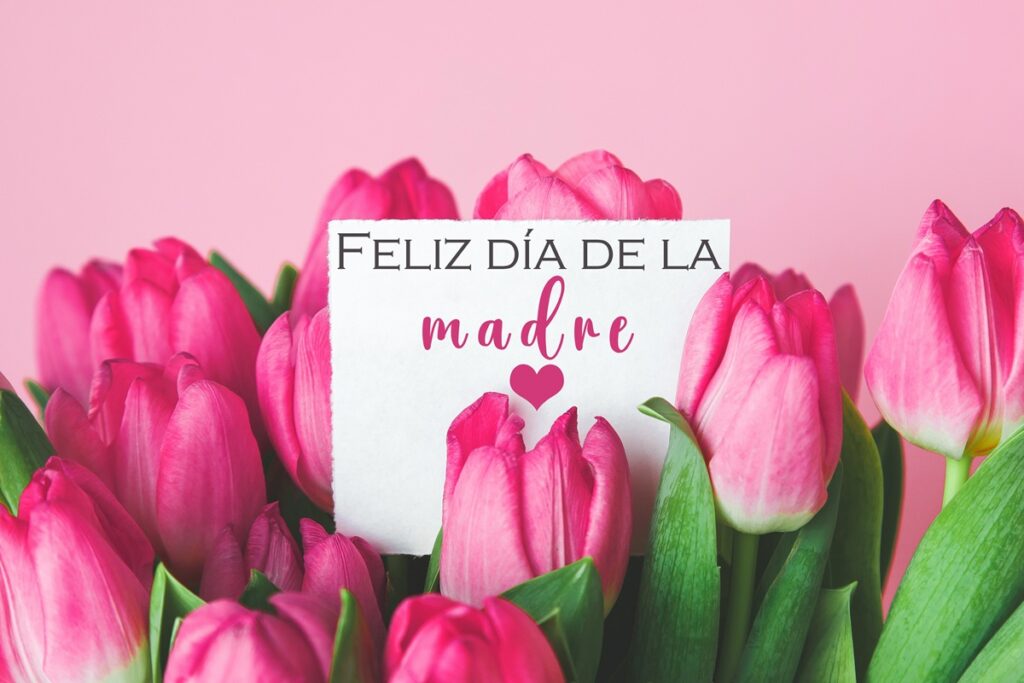
Mother’s Day in Spain is celebrated with flowers, love and heartfelt messages. Credit : Evgeniia Primavera, Shutterstock
Let’s be honest — if there’s one day in the year when clichés are allowed, it’s Mother’s Day. After all, “Whoever has a mother has a treasure” isn’t just a saying — it’s a universal truth.
In Spain, that treasure is celebrated on the first Sunday of May, and while the flowers and hugs are timeless, the history behind the date might surprise you.
Spain’s Mother’s day origins
It all started back in 1926, and oddly enough, not in May at all. That year, on October 4th, Spanish children were encouraged to give flowers to their mums. It wasn’t an official holiday, just a beautiful gesture to teach kids to honour and respect their mothers — and others’ too.
The idea came from a rather unexpected source: a postal worker and poet named Julio Menéndez García. Inspired by the growing Mother’s Day movement in the U.S., he wanted to bring something similar to Spain and Latin America. He published his proposal in a Madrid newspaper in 1925, and it quickly caught on. The very next year, Spain saw its first informal celebration.
Still, the date wasn’t set in stone. Over the following decades, Mother’s Day in Spain bounced around the calendar — even landing on December 8th at one point, lining up with the Catholic Feast of the Immaculate Conception. It wasn’t until 1965 that the country officially settled on the first Sunday of May — and that’s where it’s stayed ever since.
Different dates, same love — Why it varies worldwide
If you’re wondering why your friends in the UK celebrated Mother’s Day back in March while others will wait until later in May — you’re not alone. Turns out, it all depends on where you live.
In the United States, Mother’s Day became official in 1914, thanks to Anna Jarvis, a woman who fought to honour her own mother’s efforts during the Civil War. Her campaign worked — President Woodrow Wilson declared it a national holiday, setting the date on the second Sunday of May. Many other countries followed suit.
But some traditions run deeper. In the UK, for example, Mothering Sunday has roots that go all the way back to the 1600s. It was a religious occasion where kids went home after church and brought gifts to their mums. It’s still celebrated in March, long before most countries start buying flowers.
Spain decided to go its own way — and it’s in good company. Countries like Portugal, Hungary, South Africa, Andorra and Lithuania also mark Mother’s Day on the first Sunday in May.
Little things you might not know about Mother’s Day
- Mum, mamá, maman… However you say it, the word “mum” sounds oddly similar in almost every language. It’s one of those rare, beautiful things we all seem to agree on.
- Phones light up: In the UK, Mother’s Day is one of the busiest days of the year for phone calls — proof that even grown-ups remember to call their mum.
- Roses rule: When in doubt, go for roses. They’re the number one flower choice for Mother’s Day across the globe.
- England did it first (sort of): Long before the modern version of Mother’s Day arrived, England already had a tradition of kids giving gifts to their mums after church on Mothering Sunday.
No matter the country, the language, or the day on the calendar — it’s clear: there’s nothing quite like a mother’s love. And if there’s ever a time to celebrate that, it’s now.
Stay tuned with Euro weekly news for the latest news from Spain
Sign up for personalised news
Subscribe to our Euro Weekly News alerts to get the latest stories into your inbox!
By signing up, you will create a Euro Weekly News account if you don't already have one. Review our Privacy Policy for more information about our privacy practices.

Farah Mokrani
Farah is a journalist and content writer with over a decade of experience in both digital and print media. Originally from Tunisia and now based in Spain, she has covered current affairs, investigative reports, and long-form features for a range of international publications. At Euro Weekly News, Farah brings a global perspective to her reporting, contributing news and analysis informed by her editorial background and passion for clear, accurate storytelling.
Comments