Spain’s squatter danger map: the regions where you’re most at risk this summer
By Ion Axinescu • Updated: 18 Jul 2025 • 14:37 • 2 minutes read
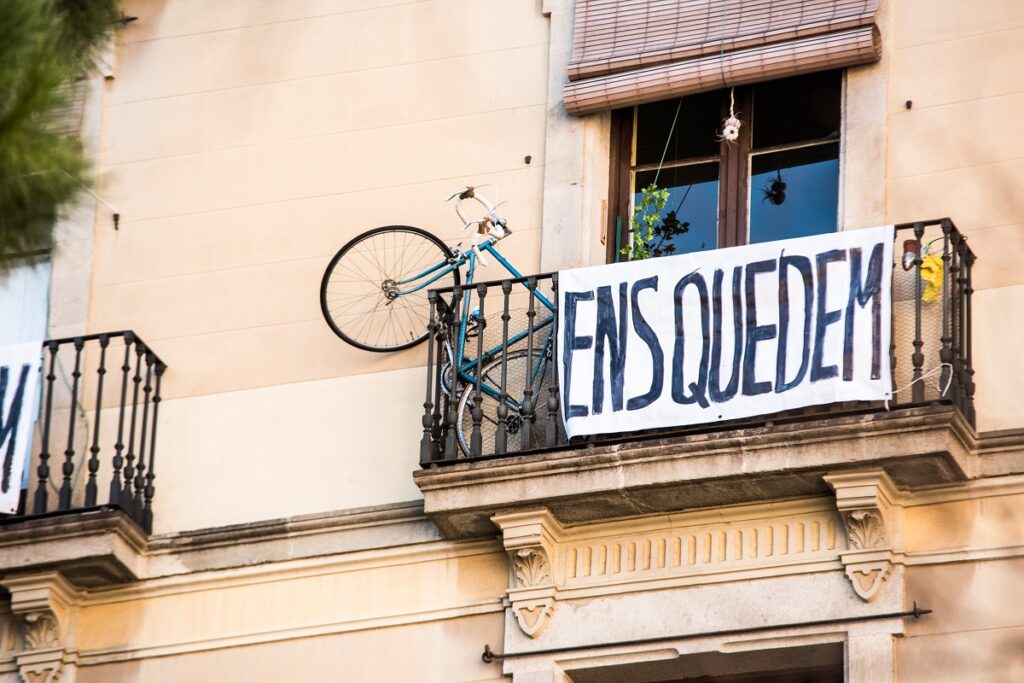
Barcelona city alone had 5,077 reported okupas. Credit: Shutterstock
Summer in Spain is about slowing down, whether it’s heading to the coast or the mountains.
But here’s a growing problem in Spain: while you’re relaxing on holiday, someone might be breaking into your home (literally, unfortunately).
Illegal home occupation (known as “okupación“) has become a national issue in Spain. And things got worse in 2024. 16,426 cases of illegal occupation were reported last year, according to Spain’s Ministry of the Interior. In numbers, that’s a 7.4 per cent rise compared to the previous year and the third-highest annual figure ever recorded.
Catalunya is the region with the most occupied homes
Catalunya, with 7,009 cases, is the hardest hit region. That’s nearly 42 per cent of the national total. Of those cases, Barcelona city alone had 5,077 reported okupas. It seems more like a crisis than a trend.
Here are the other regions where squatters operate most:
- Andalusia: 2,207
- Comunidad Valenciana: 1,767
- Madrid: 1,451
- Canary Islands: 663
- Castilla-La Mancha: 538
- Baleares: 514
Even a quiet region like Castilla y Leon saw 306 cases last year.
Summer is open season for squatters
You leave your house empty, so they move in. It sounds too easy and dramatic, but it’s increasingly common. Especially in summer, when more and more homes sit empty for days or weeks at a time.
In fact, okupa complaints rose 55 per cent during the summer of 2024 compared to the same time in 2023, say Spain’s Judicial Council.
The truth is that squatters do their homework. They move in fast, claim they’re actually living there, and suddenly, getting them out of your house becomes a legal maze.
So, can’t you just kick them out?
Well, no. It’s complicated and illegal.
The plan to sneak in, change the locks, and take your house back might feel justified. But under Spanish law, that’s a criminal offence and you could be charged with unlawful entry. Yes, even if you’re the rightful owner of that property.
What’s changed with the 2025 anti-okupa law?
Thankfully, 2025 brought hope for homeowners. The newly implemented Ley de Medidas de Eficiencia Procesal, aka the Anti-Okupa Law, speeds up evictions.
Now, occupying a primary residence is considered a criminal offence, so you can request a fast-track eviction. In the case of squatters in a second home (or vacant property), that’s now ‘usurpation’ and it can be solved with a fast trial. You could get a ruling in under 15 days.
If these options don’t work, then you’ll need to go the civil route. The bad news? It’s slower, more expensive, and full of legal red tape.
So what can homeowners actually do?
Protecting their home, either with old-school methods or modern ones. For instance,
installing an anti okupa alarm (some systems are specifically designed to detect early signs of unlawful entry).
You should also get insurance, as “okupa insurance” is a thing now and it can cover legal fees, eviction processes, and property damage.
And you can always join a neighbourhood watch group, because community vigilance is strong in many parts of Spain.
The bigger picture
Many Spaniards see the okupa crisis as a symptom of some deeper issues, such as housing inequality, bureaucratic delays, and outdated rental laws.
And while squatting used to be associated with activism or political statements, today’s okupas are often part of criminal networks who know how to exploit legal loopholes.
So, be aware: leaving your house unattended in Spain comes with a risk. The law is evolving, true, but for now, prevention is still the best weapon.
Read here more articles about life in Spain.
Follow Euro Weekly News on Google News
Get breaking news from Spain, travel updates, and expat stories directly on your Google News feed.
Follow on Google NewsSign up for personalised news
Subscribe to our Euro Weekly News alerts to get the latest stories into your inbox!
By signing up, you will create a Euro Weekly News account if you don't already have one. Review our Privacy Policy for more information about our privacy practices.





Ion Axinescu
Ion is a journalist with over a decade of experience, including previous work for Vice Romania. Since relocating to Spain in 2022, he has brought a strong sense of place and curiosity to his work with Euro Weekly News. Passionate about football and enthusiastic about all aspects of Spanish culture, Ion covers local news, lifestyle, and cultural features—delivering engaging, accessible storytelling that connects with readers across communities.
Comments