Asian seaweed action plan
By Adam Woodward • Published: 24 Jul 2025 • 17:19 • 2 minutes read
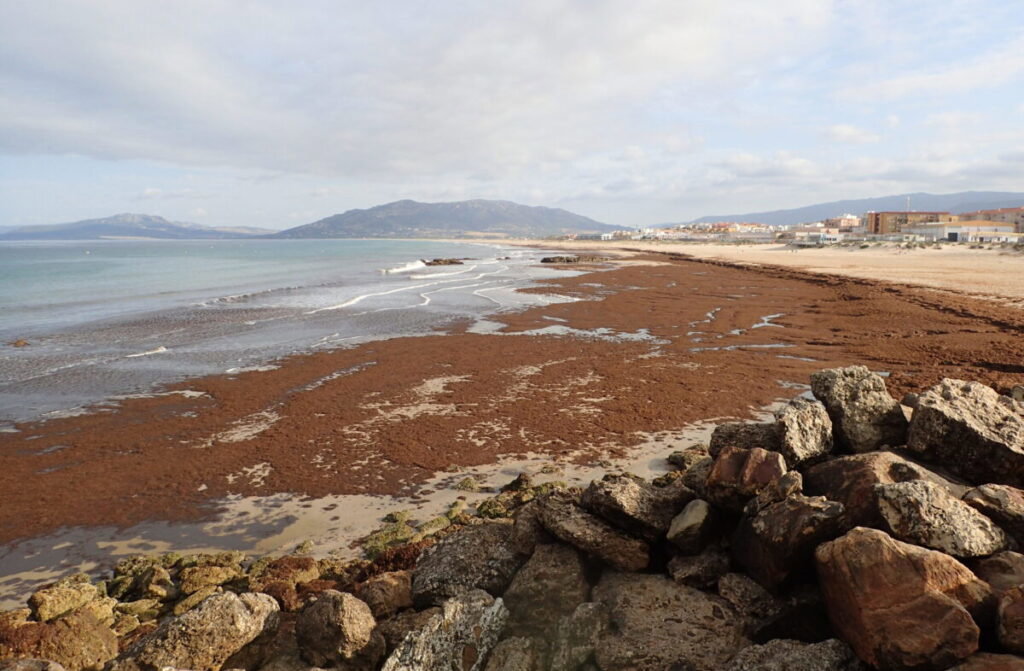
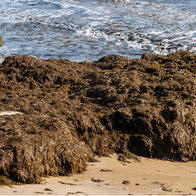
Invasive Asian seaweed on Tarifa beach. Credit: Junta de Andalicía
The Andalusian Regional Government has approved a management plan to combat the invasive Asian seaweed (Rugulopteryx okamurae) we see along the Costa del Sol’s beaches, hoping to mitigate its ecological and economic impacts while exploring opportunities to transform the invasion into a resource.
The plan was endorsed during a recent government meeting to address one of Southern Europe’s most pressing marine environmental challenges.
First detected in 2016 near the Strait of Gibraltar following seaweed accumulations on Ceuta’s coast, Rugulopteryx okamurae has since spread rapidly across Andalusia’s shores, from Cabo de Gata in Almería to El Puerto de Santa María. Its aggressive colonisation has disrupted ecosystems, smothered native species and protected habitats, and impacted vital coastal industries such as fishing and tourism. The seaweed’s biomass, carried by currents, clogs beaches and ports and has created an unprecedented ecological change.
Asian seaweed recognised as invasive species
Recognised as an invasive exotic species in Spain’s records in 2020 and classified by the European Union as a continent-wide concern in 2022, the seaweed’s eradication has proven unfeasible in the short to medium term. In response, Andalusia’s Department of Sustainability and Environment has developed a multi-faceted plan based on scientific research, institutional coordination, and long-term commitment.
Key components of the plan include a monitoring and mapping system to track the seaweed’s spread, biomass accumulation, and environmental impact. The initiative also places scientific research into more deeply understanding the seaweed’s biology, ecology, and behaviour, which is vital for addressing its ecological and socioeconomic effects. Measures to protect native species, threatened habitats, and designated conservation areas are central to the strategy.
Plan to remove and prevent more Asian seaweed
To manage the seaweed’s biomass, the plan outlines specific protocols for its safe removal, handling, and disposal to prevent further spread during cleanup operations. These procedures cover everything from collection on beaches and ports to the disinfection of tools and containers used in the process.
In a forward-thinking approach, the plan explores the seaweed’s potential as a raw material for sustainable products, such as compost and fertilisers. With the efforts of groups like Macroalgae, which recently completed a two-year project that showed significant advances in transforming Andalusian macroalgae into agricultural biostimulants and biocides, there is a strong chance of creating environmentally and economically viable solutions.
The plan’s scope extends beyond currently affected areas to include preventive monitoring of regions at risk of future invasion. Early detection is said to be a critical factor in containing the seaweed’s spread and minimising damage.
Follow Euro Weekly News on Google News
Get breaking news from Spain, travel updates, and expat stories directly on your Google News feed.
Follow on Google NewsSign up for personalised news
Subscribe to our Euro Weekly News alerts to get the latest stories into your inbox!
By signing up, you will create a Euro Weekly News account if you don't already have one. Review our Privacy Policy for more information about our privacy practices.

Adam Woodward
Adam is a writer who has lived in Spain for over 25 years. With a background in English teaching and a passion for music, food, and the arts, he brings a rich personal perspective to his work at Euro Weekly News. As a father of three with deep roots in Spanish life, Adam writes engaging stories that explore culture, lifestyle, and the everyday experiences that shape communities across Spain.
Comments