Belgium restricts family visas and asylum seekers
By Olivier Acuña Barba • Updated: 23 Aug 2025 • 11:25 • 2 minutes read
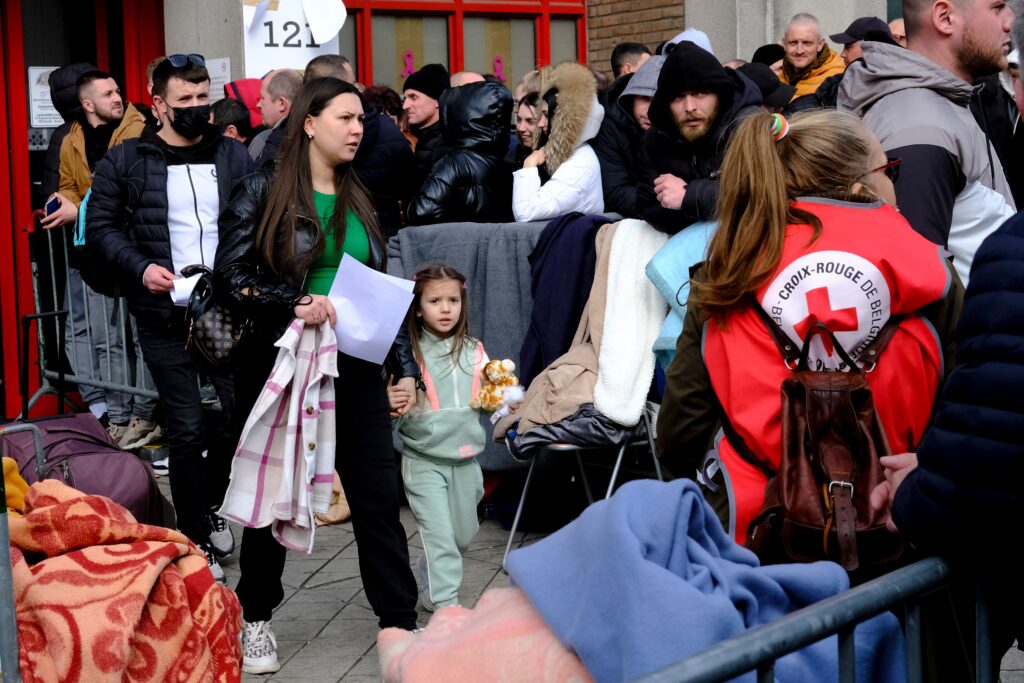
Measures restricting family reunification and asylum in Belgium came into force this week | Credit: Alexandros Michailidis
Belgium’s stricter conditions for family reunification came into force this week, as the federal government cracks down on migrants and asylum applicants who seek to settle in the country, according to The Brussels Times. The immigration revision of the criteria is far from an isolated case in Europe, with Portugal and Germany adopting similar measures.
With the new rules having been agreed on as part of the government’s so-called Easter Agreement, Migration Minister Anneleen Van Bossuyt (N-VA) has argued that the changes are necessary to reduce pressure on social services. “Our rules were far too lax, making Belgium a magnet for migrants and asylum seekers,” Ms Van Bossuyt said. “With these measures, we are stopping that pull-factor.” Under the new rules, the minimum income required to sponsor family members has been raised to 2,300 euros a month, which amounts to at least 110 per cent of the guaranteed minimum wage. There’s an additional 10 per cent for each additional dependent. Previously, it was 2,089 net per month, 120 per cent of Belgium’s minimum wage.
“Anyone who wants to bring their family here must be financially capable of supporting them. This can no longer come at the cost of our society,” Ms. Van Bossuyt said. Thomas Willekens, policy officer for the Brussels-based NGO Vluchtelingenwerk Vlaanderen, explained that “if someone wants to bring in their partner and two children, they have to prove they earn at least 2,700 euros net per month.” Belgian authorities have also decided to increase the application fee for naturalisation, up from 150 euros to 1,000 euros.
Covert way to make family reunification impossible
For Thomas Willekens, these new rules are above all a covert way of making family reunification impossible, at the risk of plunging these families into an even more dangerous situation, according to Euro News.
“The consequences for refugees in Belgium will be prolonged separation from their families, which will have an impact on their integration and inclusion in Belgian society. It’s difficult to learn the language if you’re worried about your partner in Afghanistan, for example,” he explains.
The minimum age to apply for family reunification has also been raised from 18 to 21, which N-VA claims is aimed at preventing forced and child marriages. “A marriage must never be a tool to obtain residence rights,” the migration minister added. Under the new guidelines, refugees will only have six months to submit their application. Beneficiaries of subsidiary protection, those who do not have refugee status, will have to wait two years before they can submit their application.
Last week, Portugal also adopted more stringent measures for granting family reunification. German MPs approved the suspension of the family reunification scheme in the previous month for people with “subsidiary protection,” in other words, those who do not have refugee status. Austria has suspended family reunification for six months. In practical terms, applications can be submitted to the Austrian authorities, but they will not be processed.
Follow Euro Weekly News on Google News
Get breaking news from Spain, travel updates, and expat stories directly on your Google News feed.
Follow on Google NewsSign up for personalised news
Subscribe to our Euro Weekly News alerts to get the latest stories into your inbox!
By signing up, you will create a Euro Weekly News account if you don't already have one. Review our Privacy Policy for more information about our privacy practices.




Olivier Acuña Barba
Olivier is a veteran journalist with over 40 years of experience writing in both English and Spanish. His career has covered a wide spectrum of topics—including organised crime, politics, business, entertainment, and international affairs—with work published by major outlets such as The Guardian, ITV News, and the Associated Press. At Euro Weekly News, Olivier brings depth and insight to stories that inform and engage international readers, drawing on decades of frontline reporting and interviews with world leaders, ministers, and renowned cultural figures.
Comments