Ryanair slashes routes across Europe: full list of countries facing flight cuts
By Farah Mokrani • Updated: 21 Oct 2025 • 15:37 • 4 minutes read
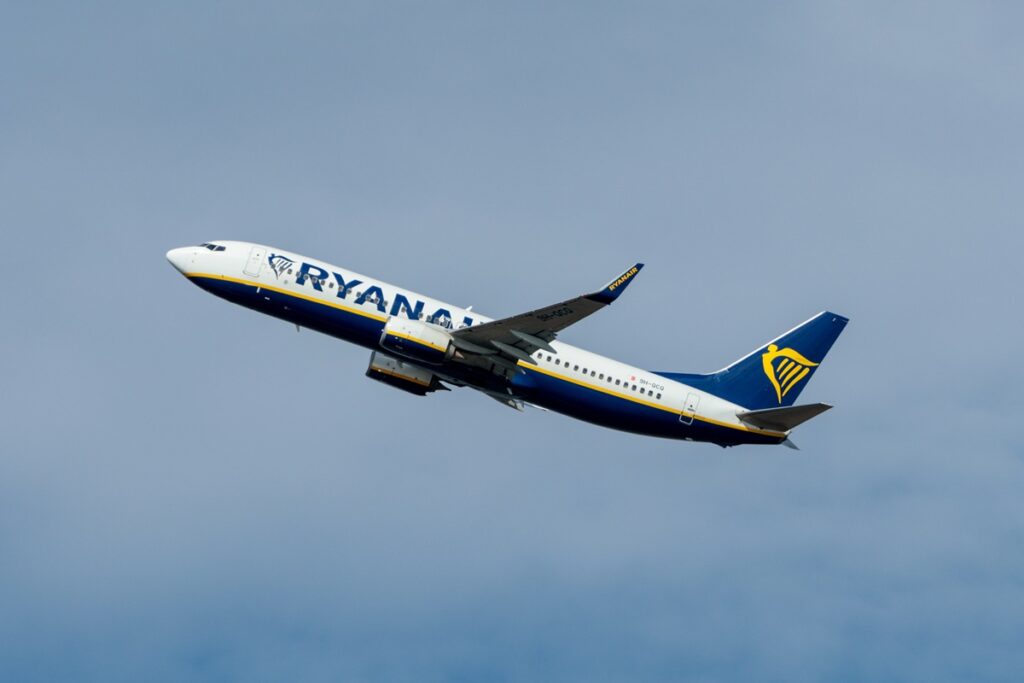
A Ryanair plane climbs after take-off as the airline cuts flights across Europe. Credit : Acuestagr, Shutterstock
Budget airline giant Ryanair is making waves across Europe – but not in a good way if you fly from some of its higher-cost gateways.
The Irish carrier has announced sweeping service reductions, blaming what it calls ‘excessive access costs’ at airports in several countries. For passengers, this means fewer routes, shrinking seat availability and uncertainty for regional airports.
Here’s everything you need to know: which countries are affected, what Ryanair means by ‘expensive airports’, and how this tug-of-war may affect your next holiday.
What’s happening and why?
Ryanair says it is reducing capacity in markets where airport charges, air traffic control fees and taxes make flying uncompetitive for its low-cost business model.
In Germany, the airline will remove more than 800,000 seats and cancel 24 routes across nine airports for its Winter 2025 schedule, citing high “access costs” and a 24 per cent aviation tax rise. Dortmund, Dresden and Leipzig remain closed. “These cuts were entirely avoidable,” said Ryanair’s marketing chief Dara Brady, blaming the German government for “killing air travel with taxes.”
In Spain, Ryanair announced in January 2025 that it would slash around 800,000 summer seats. At the end of the summer, Ryanair announced it would cut 1 million seats in Spain before adding another million to the total, reaching 2 million seats cut overall, shutting down operations at Jerez and Valladolid after accusing state operator Aena of ‘excessive’ fees. Aena replied that the rise amounted to only €0.68 per passenger and accused Ryanair of spreading ‘lies.’
Then came France, where Ryanair has decided to cut roughly 13 per cent of its capacity for Winter 2025/26 – around 750,000 seats and 25 routes. Airports such as Bergerac, Brive and Strasbourg are among the biggest losers, following a rise in France’s TSBA air tax. The carrier says the increase makes French domestic and short-haul routes unprofitable.
And now Latvia joins the list: Ryanair has announced it will reduce its Riga Winter 2025 capacity by 160,000 seats (–20 per cent) and cut seven international routes, citing rising airport charges and ‘uncompetitive access costs’ at Riga International Airport.
The full list: where Ryanair is cutting back
Ryanair’s ‘expensive airports’ campaign now affects multiple European countries. Here’s a complete rundown of those confirmed or officially flagged for reductions due to high access costs, plus where the airline is shifting its aircraft instead.
Countries hit by cuts:
- Germany: 800,000 seats removed, 24 routes cancelled, 9 airports affected.
- France: 750,000 seats cut, 25 routes dropped, 13 per cent capacity reduction.
- Spain: 2 M seats removed, bases closed in Jerez and Valladolid.
- Estonia: 40 per cent reduction at Tallinn Airport following a 70 per cent fee hike.
- Lithuania: “Zero growth” this winter due to higher costs.
Countries gaining Ryanair capacity:
Italy, Hungary, Sweden, Croatia, Ireland, and Morocco – all singled out by the airline as ‘growth markets’ offering better fee conditions or government support for aviation recovery.
What counts as “expensive” airports?
Ryanair’s definition covers everything from landing and passenger service charges to national aviation taxes, air traffic control fees and airport security costs.
The airline argues that these “access costs” can add up to €20–€30 per ticket in some markets, eroding its famously thin margins. Airports and regulators counter that such fees fund sustainability, infrastructure and safety projects – and that fares, not airport charges, have risen fastest across Europe.
“Airport charges include landing, parking, lighting, and passenger service fees,” notes ACI Europe. “They reflect the real cost of providing safe and modern facilities.”
Analysts: Ryanair flexes its low-cost muscles
Industry analysts describe Ryanair’s cuts not as retreat but as realignment. OAG data shows that despite losses in France, Germany and Spain, the airline’s overall winter capacity is up 6 million seats compared to the previous year.
“Ryanair can move aircraft faster than any airline in Europe,” says aviation analyst John Grant. “It’s an aggressive strategy: punish high-cost markets and reward those that play ball.”
The local fallout
The immediate effect for passengers is fewer choices and potentially higher fares at affected airports. Smaller regional airports are hit hardest — losing Ryanair often means losing their busiest carrier altogether.
In Spain, tourism boards warn of “severe economic impact” on smaller cities now cut from Ryanair’s network. In Germany, officials fear slower post-pandemic recovery for regional airports, while French operators say the new tax could backfire by reducing overall traffic.
What’s next?
This standoff between Europe’s biggest low-cost airline and its airports is unlikely to end soon. The EU Airport Charges Directive, which governs how airports set fees, is under review, and Ryanair is lobbying for tougher regulation. Airports, for their part, argue they must fund green upgrades and can’t operate at a loss just to satisfy budget carriers.
Meanwhile, Ryanair is expanding aggressively in friendlier markets like Italy and Hungary, where governments have frozen or reduced aviation taxes.
What travellers should do
If you usually fly from regional airports in Germany, France or Spain, check your future bookings — some routes may disappear or have fewer weekly frequencies. Compare nearby airports, and sign up for alerts from Ryanair, which often announces new routes on short notice when redeploying aircraft.
Despite the current shake-up, the low-cost model isn’t going anywhere. Ryanair is simply doing what it does best: squeezing costs, shifting planes, and using publicity to pressure airports and governments into lowering fees.
So before you plan your next European getaway, take a quick look at where those blue-and-yellow jets are still flying. The list may look a little shorter this winter — unless, of course, your airport has learned to play cheap.
Stay tuned with Euro Weekly News for more news about Travel
Sign up for personalised news
Subscribe to our Euro Weekly News alerts to get the latest stories into your inbox!
By signing up, you will create a Euro Weekly News account if you don't already have one. Review our Privacy Policy for more information about our privacy practices.





Farah Mokrani
Farah is a journalist and content writer with over a decade of experience in both digital and print media. Originally from Tunisia and now based in Spain, she has covered current affairs, investigative reports, and long-form features for a range of international publications. At Euro Weekly News, Farah brings a global perspective to her reporting, contributing news and analysis informed by her editorial background and passion for clear, accurate storytelling.
Comments
Mark
22 October 2025 • 08:08Interesting that this ploy appears to be determined in the belief that budget airline passengers book tickets to destinations that have cheap ticket prices, not on where travellers want to go to visit for other reasons, like sight seeing or visiting family or friends So watch out for flights to Timbuktu at a fiver! Extraordinary way of dealing with an operational cost when the airline is champion at fare cost management.
Comments are closed.