No tip required – Uber Eats rolls out robot deliveries December 2025
By Adam Woodward • Published: 20 Nov 2025 • 21:39 • 2 minutes read
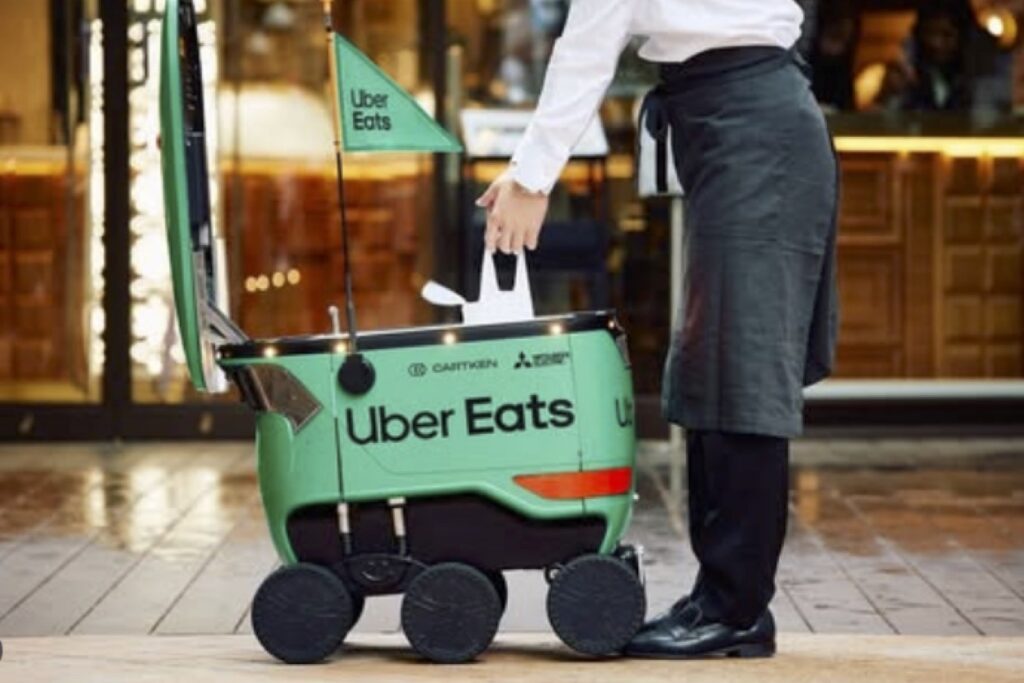
New robots being trialed now. Credit: GoCarten - Instagram
Uber Eats has accelerated its autonomous delivery programme for late 2025, by deploying thousands of pavement robots in partnership with Serve Robotics, Avride, and Starship Technologies. The electric bots are now active in multiple major markets and are set to launch in the UK before the end of the year. There is no word so far if the delivery bots will actually carry the right change, unlike their human counterparts.
How Uber Eats delivery robots actually work
Customers ordering through the Uber Eats app in participating zones might now see a robot option at checkout. Once the restaurant loads the insulated compartment, the robot navigates pavements and pedestrian crossings using LIDAR, cameras, and AI, travelling at 6 to 15 kilometres per hour. The customer receives a push notification, goes outside and unlocks the secure lid via the app upon arrival. Remote human tele-operators monitor each journey and can intervene if needed.
“Only the recipient can open the robot – it stays locked the entire trip,” explains Megan Jensen, Head of Autonomous Delivery Partnerships at Uber Eats.
Cities where robot delivery is live in 2025
As of November 2025, robot deliveries are available in:
- Los Angeles (since 2023)
- Miami
- Dallas – Fort Worth
- Atlanta
- Chicago (14 neighbourhoods)
- Jersey City (first East Coast location)
- Tokyo has been testing the service since May 2024, while Leeds in the UK is scheduled to go live in December 2025 through a partnership with Starship Technologies, with further European cities planned for 2026.
Safety, speed and the “No-Tip” advantage
The robots are designed to be hyper-cautious around pedestrians, automatically slowing or stopping when people are detected. Serve Robotics reports over 100,000 daily road crossings with no serious incidents. Delivery times for short trips (under 2 miles) typically range from 10–25 minutes.
Unlike human couriers, robots cannot be tipped. Any tip added at checkout is automatically refunded. This has lowered the total cost for customers in robot zones while sparking debate among gig workers about future earnings.
Environmental impact and job concerns
Early pilots in Los Angeles reportedly cut CO₂ equivalent to removing 1,000 cars annually. Although, no figures have been released about increased emissions elsewhere. However, drivers on Reddit and LinkedIn worry that scaling to 2,000+ robots by 2026 could displace a significant portion of urban delivery jobs. And, how long will it last? When Uber introduced their taxi service to Europe in 2016 / 2017, the cars were kept immaculate inside, drivers wore back suits, complimentary bottles of mineral water were available to all passengers, the option of phone charging was offered with a variety of charger types, and even complimentary umbrellas were gifted if it was raining at the passengers destination. How does that compare to the same service in 2025?
Uber insists the technology complements rather than replaces human couriers, handling only simple, high-density routes that are often low-paying for drivers. There’s no explanation of what might happen with erroneous deliveries, cold hamburgers, or for that matter trip hazards with little droids zipping along the streets with a vegetarian biriani sloshing around inside.
Sign up for personalised news
Subscribe to our Euro Weekly News alerts to get the latest stories into your inbox!
By signing up, you will create a Euro Weekly News account if you don't already have one. Review our Privacy Policy for more information about our privacy practices.





Adam Woodward
Adam is a writer who has lived in Spain for over 25 years. With a background in English teaching and a passion for music, food, and the arts, he brings a rich personal perspective to his work at Euro Weekly News. As a father of three with deep roots in Spanish life, Adam writes engaging stories that explore culture, lifestyle, and the everyday experiences that shape communities across Spain.
Comments