Do cars with foreign number plates get fined for entering Spanish towns with low-emission zones?
By Adam Woodward • Published: 08 Jan 2026 • 17:08 • 3 minutes read
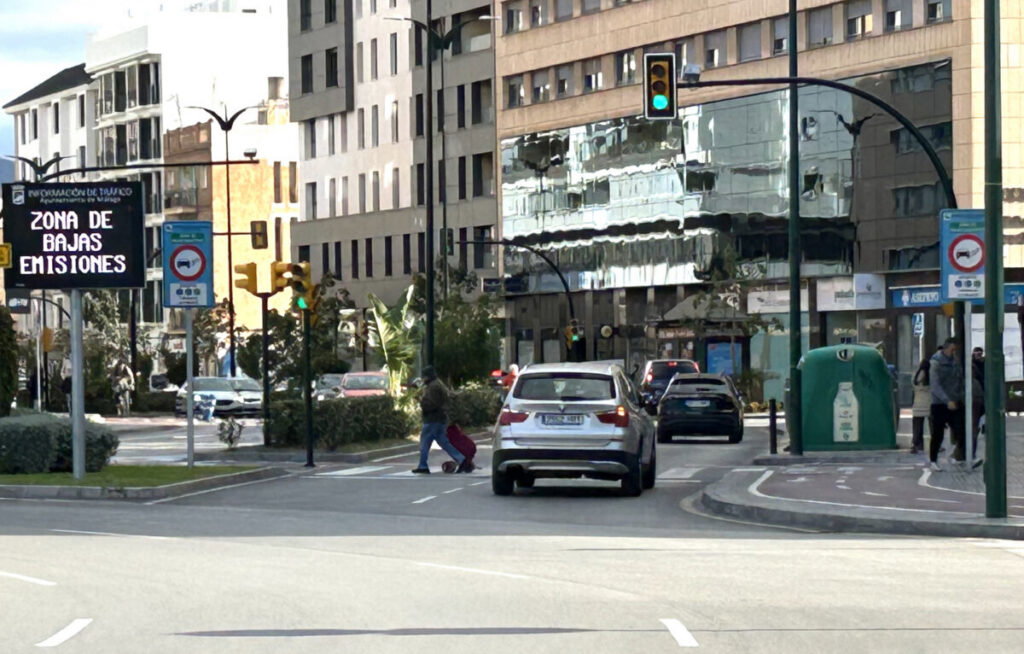
Entry into Malaga low-emissions zone. Credit: EWN
Spain’s Zonas de Bajas Emisiones (ZBEs, or Low-Emissions Zones) restrict high-polluting vehicles in many cities to improve air quality. As of 2026, over 50 Spanish towns and cities with more than 50,000 inhabitants enforce these zones, including popular destinations like Madrid, Barcelona, and Malaga. Foreign-registered vehicles, such as UK-plated cars, must legally comply with the exact same emissions rules as Spanish ones in low-emissions zones. However, the risk of receiving a fine is generally low for the moment due to technical limitations in automatic enforcement.
In Madrid, in the first half of 2025, €265,000 in fines was collected for non-compliance with the limitations, a number expected to rise beyond €400,000 when the year end’s figures come in. In Malaga, the figures are not in yet, but are projected to be in excess of €400,00 per year.
Legal requirements for foreign vehicles
Foreign cars face the same restrictions based on emissions standards (equivalent to Spain’s DGT environmental labels: 0, ECO, C, B, or none for older vehicles). Non-compliant vehicles risk bans or limited access, whether they are from abroad or not.
Cities like Barcelona require all foreign vehicles to pre-register via the Metropolitan Registry, even if compliant, for up to 2-year authorisation or limited daily permits. Madrid often mandates similar registration for full access. Failure to comply can lead to fines of €200 (reduced if paid promptly). Cross-border agreements now allow fines to be sent abroad, including to the UK, similar to parking or speeding tickets. Normally, an independent agency based in Brussels will chase up non-payment.
Why automatic fines are currently unlikely in many cities
Most ZBEs rely on cameras that read number plates and cross-check with the Dirección General de Tráfico (DGT) database for emissions data. Spanish-plated vehicles link directly to this database, enabling automated fines.
However, foreign plates pose particular issues: While cameras do capture them, the DGT lacks emissions data for non-Spanish registrations, halting automatic processing. As well, the configuration of the cameras might not be calibrated to detect the precise number and nationality of the vehicle. In most cases, those operated by the DGT on motorways and roads between big towns are set up to read most foreign number plates, including those from Morocco with Arabic text, a common sight on Spanish roads. Within towns and cities, however, the cameras are operated by the local council, and there is little knowledge of whether those cameras are actually able to read the number plates.
For cameras in Malaga City, operational since late 2025, this situation means no fines for foreign polluting vehicles despite 97 cameras monitoring the zone, creating potential unequal treatment compared to local drivers. Similar challenges affect other cities without mandatory pre-registration systems. While readability issues (e.g., certain UK plates with reflective modifications) can complicate camera detection.
When fines are More likely
In strict cities like Barcelona, Madrid and Palma de Mallorca, pre-registration is enforced as there are online portals available specifically for them. In most others, such as Malaga, there is nothing set up yet. If those foreign cars do not show the European window sticker (equivalent to CERO/ECO/C), they risk being fined no matter how eco-friendly their motor is. The biggest sticking point, however, remains on whether Malaga City’s cameras are specifically calibrated for reading foreign number plates. The big test will be Retro Auto & Moto Malaga 2026, a massive classic vehicles exhibition on the outskirts of the city which draws hundreds of older vehicles from Spain and abroad, and whether those foreign drivers will be clued in enough to realise there are new restrictions within the city centre.
Manual enforcement is still possible anywhere: local police or Guardia Civil can stop vehicles, assess compliance, and issue on-the-spot fines. This situation is rarer but increasing for non-compliant or suspicious foreign plates. In simple terms, vehicles with foreign number plates, especially British ones with left-hand drive, stick out like a sore thumb, and police will be on the look-out.
Advice for drivers
Check specific city rules on official sites:
- DGT general info: dgt.es
- Barcelona registry: zberegistre.ambmobilitat.cat
- Madrid ZBE: madrid.es
Register in advance if possible, verify your vehicle’s equivalence, or use public transport/parking outside zones to avoid risks.
While legally possible, automatic fines for foreign-plated cars in many Spanish ZBEs remain unlikely in 2026 due to ongoing technical hurdles, though this could change with future EU data-sharing improvements.
Follow Euro Weekly News on Google News
Get breaking news from Spain, travel updates, and expat stories directly on your Google News feed.
Follow on Google NewsSign up for personalised news
Subscribe to our Euro Weekly News alerts to get the latest stories into your inbox!
By signing up, you will create a Euro Weekly News account if you don't already have one. Review our Privacy Policy for more information about our privacy practices.





Adam Woodward
Adam is a writer who has lived in Spain for over 25 years. With a background in English teaching and a passion for music, food, and the arts, he brings a rich personal perspective to his work at Euro Weekly News. As a father of three with deep roots in Spanish life, Adam writes engaging stories that explore culture, lifestyle, and the everyday experiences that shape communities across Spain.
Comments