Sánchez and Feijóo to meet over possible deployment of troops to Ukraine
By Molly Grace • Published: 13 Jan 2026 • 15:17 • 3 minutes read
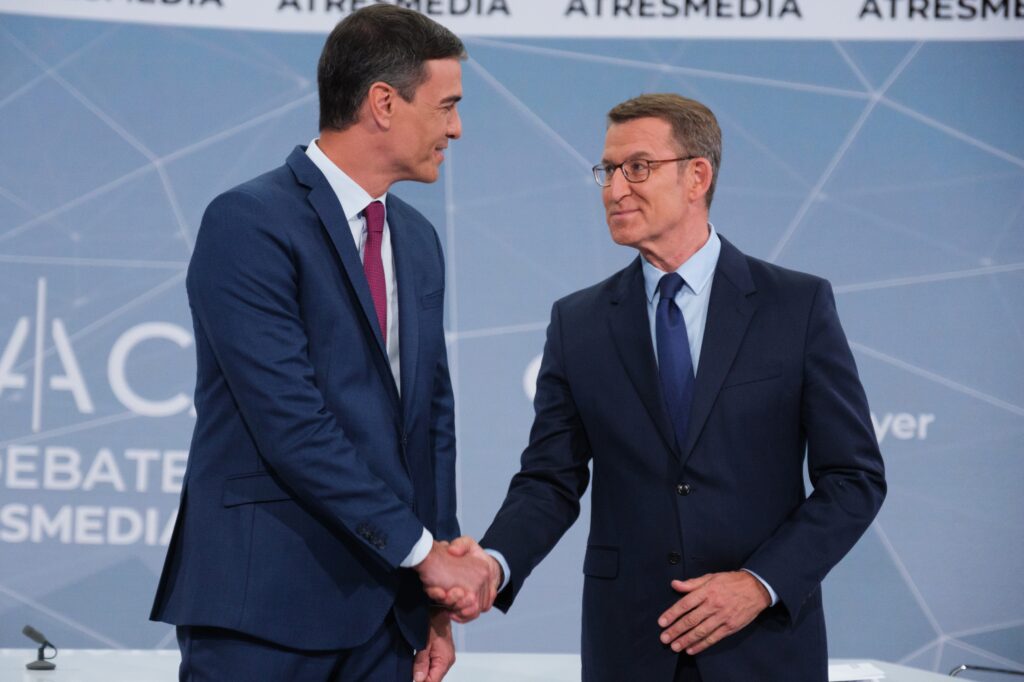
Feijóo has also underlined the need for parliamentary involvement. Photo credit: OSCAR GONZALEZ FUENTES/Shutterstock
Spain’s Prime Minister Pedro Sánchez and the leader of the opposition, Alberto Núñez Feijóo, are scheduled to meet on Monday, January 19 at La Moncloa to discuss Spain’s position on Ukraine, including the potential deployment of Spanish troops as part of an international mission. The meeting comes amid growing diplomatic activity among European allies over security guarantees for Ukraine and follows Sánchez’s recent contacts with other political leaders on defence and foreign policy.
The talks will focus on Spain’s role within NATO and the European Union, as well as the conditions under which Spanish forces could participate in a future military or peacekeeping deployment linked to Ukraine. Government sources have stressed that no formal decision has yet been taken and that any involvement would depend on international agreements and parliamentary procedures.
Defence and foreign policy at the centre
Government seeks cross-party backing
The Sánchez administration has framed the meeting as part of a broader effort to keep opposition parties informed on matters of national security. Spain’s constitution and political convention place particular importance on consensus when it comes to military deployments abroad, especially in sensitive geopolitical contexts.
The government argues that the evolving situation in Ukraine requires close coordination among European partners and transparency at home. Officials insist that Spain’s commitments would be aligned with international law and multilateral frameworks, ruling out any unilateral action. Any deployment would require clear objectives, legal safeguards and coordination with allies.
PP demands clarity and conditions
Feijóo calls for full information
Alberto Núñez Feijóo has confirmed his attendance at the meeting but has made clear that the Popular Party (PP) will not offer blanket support. The opposition leader has insisted on receiving detailed information about the nature, scope and legal basis of any potential deployment before taking a position.
Feijóo has also underlined the need for parliamentary involvement, arguing that decisions of this magnitude must be debated openly in Congress. The PP has warned against ambiguity, stressing that Spain should not commit troops without a defined mission, clear timelines and guarantees regarding personnel safety and funding.
Ukraine and the European context
Growing coordination among allies
The meeting takes place against a backdrop of intensified discussions across Europe on long-term support for Ukraine. Several countries are assessing options ranging from training missions and logistical assistance to peacekeeping roles should conditions on the ground allow.
Spain has so far contributed through military aid, training programmes and humanitarian assistance, while avoiding direct combat involvement. Any shift in this position would mark a significant development in Spanish foreign policy and would place the country alongside other European states considering deeper engagement.
Government sources have emphasised that discussions remain exploratory and that Spain’s stance is shaped by coordination with NATO and EU partners rather than independent initiatives.
Domestic political implications
Coalition and opposition dynamics
The issue of troop deployment has the potential to generate internal political friction. Within the governing coalition, left-wing partners have traditionally taken a cautious stance on military missions abroad, prioritising diplomatic solutions and humanitarian support.
At the same time, Sánchez’s outreach to Feijóo reflects an attempt to avoid turning foreign policy into a partisan battleground. Analysts note that securing at least tacit opposition cooperation could strengthen Spain’s credibility abroad while reducing domestic political risk.
What is at stake in Monday’s meeting
- Pedro Sánchez and Alberto Núñez Feijóo will meet on Monday at La Moncloa.
- Talks will address Spain’s position on Ukraine, including the possibility of troop deployment.
- No formal decision has been taken and any move would depend on international coordination.
- The PP has demanded full transparency and parliamentary involvement.
- Any deployment would be framed within NATO, EU and international law.
The meeting underscores how the war in Ukraine continues to shape political agendas across Europe, forcing governments to balance international commitments with domestic consensus. Spain’s cautious approach reflects both its alliance obligations and the political sensitivity surrounding military involvement abroad.
For now, the focus remains on dialogue rather than decisions. Monday’s talks are expected to clarify positions, outline conditions and set the parameters for future discussions, rather than announce immediate action.
Outlook
Decision-making still at an early stage
While the Sánchez–Feijóo meeting marks a significant step in domestic consultation, any potential deployment of Spanish troops would still face multiple hurdles, including parliamentary debate, coalition negotiations and international agreement.
As European discussions evolve, Spain’s role will likely continue to be shaped by multilateral diplomacy rather than unilateral moves. The outcome of Monday’s meeting will signal whether a broader political consensus is possible on one of the most sensitive foreign policy issues facing Spain today.
Sign up for personalised news
Subscribe to our Euro Weekly News alerts to get the latest stories into your inbox!
By signing up, you will create a Euro Weekly News account if you don't already have one. Review our Privacy Policy for more information about our privacy practices.




Molly Grace
Molly is a British journalist and author who has lived in Spain for over 25 years. With a background in animal welfare, equestrian science, and veterinary nursing, she brings curiosity, humour, and a sharp investigative eye to her work. At Euro Weekly News, Molly explores the intersections of nature, culture, and community - drawing on her deep local knowledge and passion for stories that reflect life in Spain from the ground up.
Comments