DGT is not sending this email warning of a fine pending payment – Current email and text message scams in Spain
By Adam Woodward • Published: 02 Feb 2026 • 9:26 • 3 minutes read

Don't fall for the scam. Credit: Matt Fowler KC - Shutterstock
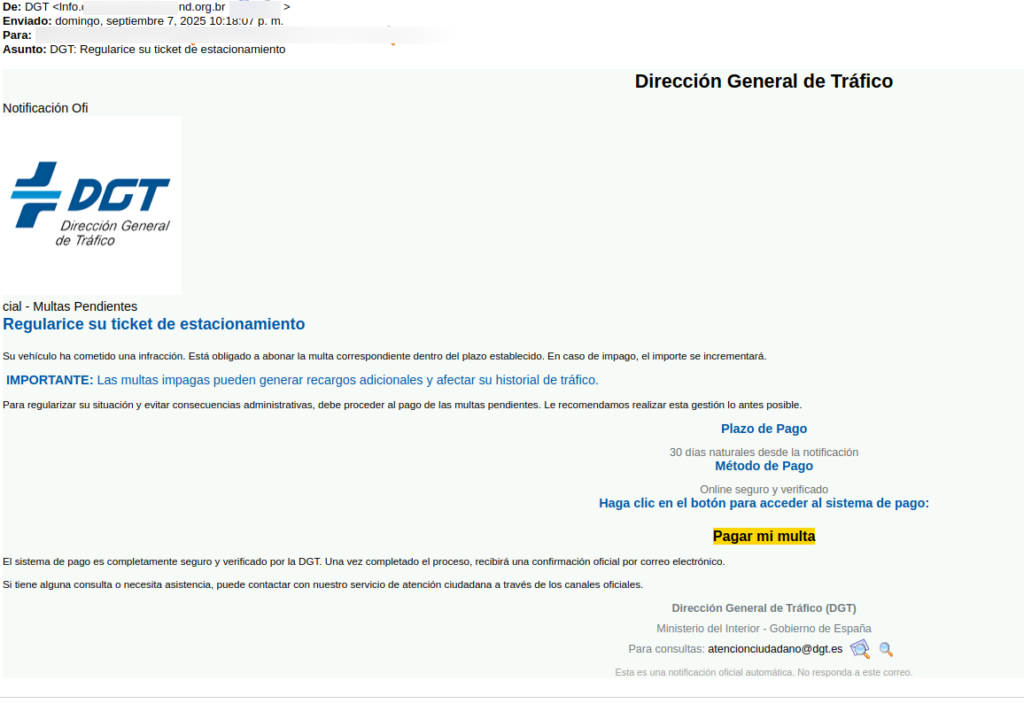
No, the DGT is not sending this email warning of a fine pending payment. This is a classic case of phishing currently circulating in Spain, as confirmed by fact-checkers like Maldita.es and official warnings from the Dirección General de Tráfico (DGT) and the Instituto Nacional de Ciberseguridad (INCIBE).
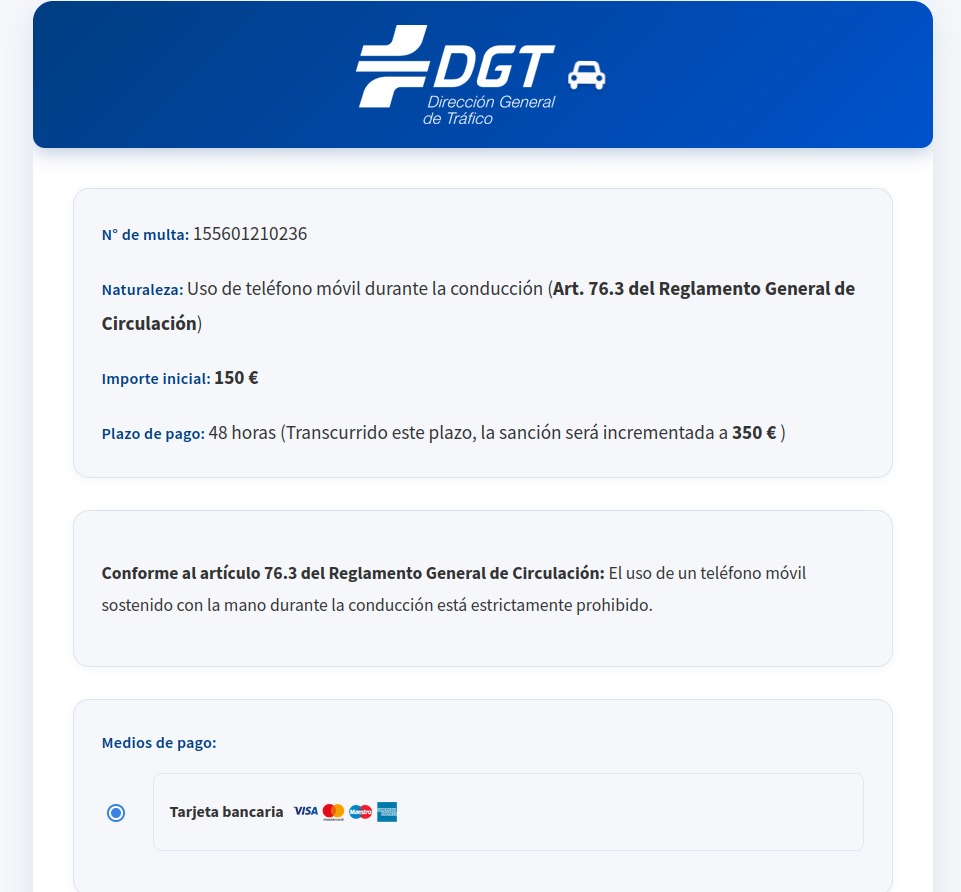
People have reported receiving emails purporting to come from the DGT, claiming a traffic fine remains unpaid. The message creates a strong sense of urgency, pressuring recipients to act quickly, often stating that failure to pay within 24 hours will automatically increase the amount (e.g., to €400). It includes a link directing to a fake website mimicking the official DGT site, where victims are goaded into entering personal details, bank information, or card data to “settle” the supposed debt.
Key red flags include:
- The sender’s email address does not match official DGT domains (e.g., anything@dgt.es).
- Unsolicited urgent demands for payment or personal information via email or links are also considered red flags.
- Threats of automatic penalties or vehicle blocking.
The DGT has repeatedly stated it never notifies fines via email or SMS. Official notifications occur only through postal mail or the Dirección Electrónica Vial (DEV) electronic mailbox. INCIBE and the DGT classify this as fraudulent phishing, aimed at stealing sensitive data for identity theft or unauthorised charges.
Credit: INCIBE
If you’ve received such an email and clicked the link or shared information, immediately contact your bank to block accounts/cards, preserve evidence (screenshots) if possible, and report to authorities via INCIBE’s incident mailbox or the police.
Recent phishing and smishing trends in Spain (late 2025–early 2026)
Phishing (via email) and smishing (via text message) cases have rocketed in Spain, with INCIBE reporting a 25 per cent increase in 2025, particularly targeting trusted entities like government bodies, banks, and delivery services. Here’s an overview of prominent recent campaigns:
DGT fine impersonation (ongoing into 2026)
This scam, active since at least September 2025 (with alerts updated in early 2026), combines phishing emails and smishing SMS. Messages claim a pending traffic fine, urge immediate payment via link, and threaten escalation (e.g., added fees or licence points). INCIBE’s September 2025 alert highlighted active campaigns, while DGT’s October 2025 statement noted massive fraudulent sends impersonating public bodies. Maldita.es debunked a specific January 2026 email variant on January 28, 2026, emphasising fake sender addresses and urgent language.
Package delivery scams (paquetería fraud)
Yes, this old chestnut. A major December 2025 campaign impersonated companies like Correos or Amazon, claiming a delivery issue due to a missing house number. Message insisted on the recipient clicking a link to “update” details or pay a small fee, leading to data-theft sites. INCIBE flagged this smishing wave, noting it exploits holiday/logistics peaks.
Bank impersonation alerts
September 2025 onwards saw SMS pretending to be from banks, warning of unauthorised high-value transfers or blocked cards. Recipients were told to call a fraudulent number or click links for “verification”. These vishing/smishing hybrids aimed to extract credentials or card info.
Tax authority (AEAT) refund scams
Multiple late-2025 campaigns (including September) sent phishing emails/SMS about tax refunds or required updates, linking to fake forms demanding IBAN, card details, or personal data.
Toll road (peaje) fraud increase
McAfee and others called attention to a dramatic rise in 2025 (up to 900% in some reports) for fake unpaid toll SMS messages pressuring quick payments via malicious links.
All of these scams often use a sense of urgency, official-looking designs, and spoofed senders. Authorities stress: Never click unsolicited links, verify directly via official apps/websites, and report to INCIBE (017 helpline or online) or police (091/062). With new rules in mid-2026 blocking unregistered SMS sender aliases, smishing may ,hopefully, decline, but vigilance remains the most important thing against evolving threats.
Follow Euro Weekly News on Google News
Get breaking news from Spain, travel updates, and expat stories directly on your Google News feed.
Follow on Google NewsSign up for personalised news
Subscribe to our Euro Weekly News alerts to get the latest stories into your inbox!
By signing up, you will create a Euro Weekly News account if you don't already have one. Review our Privacy Policy for more information about our privacy practices.


Adam Woodward
Adam is a writer who has lived in Spain for over 25 years. With a background in English teaching and a passion for music, food, and the arts, he brings a rich personal perspective to his work at Euro Weekly News. As a father of three with deep roots in Spanish life, Adam writes engaging stories that explore culture, lifestyle, and the everyday experiences that shape communities across Spain.
Comments