New EU data reveals where Schengen visas are easiest to get in 2026
By Dora Urbancsek • Updated: 11 Feb 2026 • 9:39 • 2 minutes read
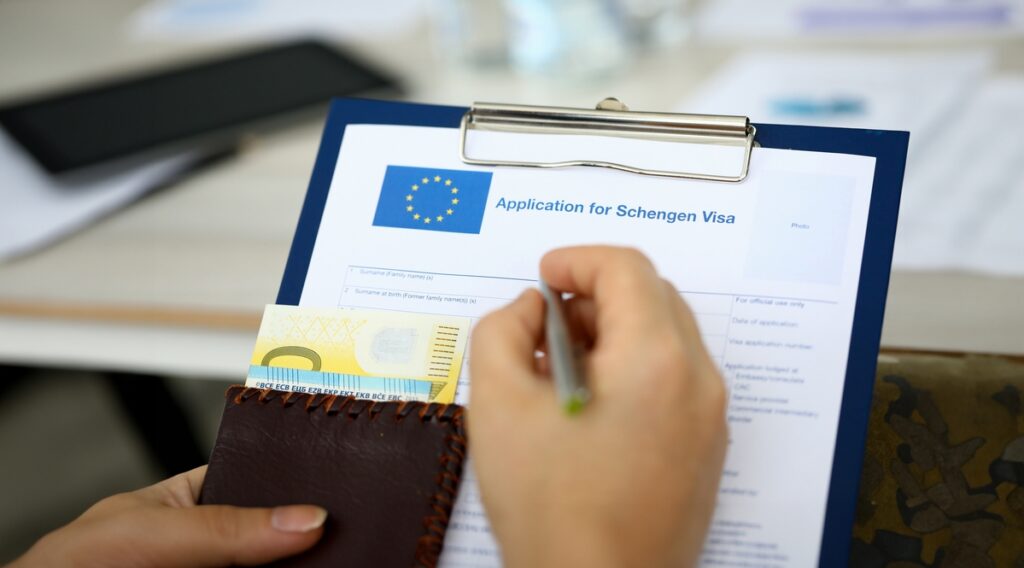
Applicants must complete a Schengen visa application form before submitting their documents to the relevant consulate. Credit: Shutterstock/H_Ko
For many travellers, the most stressful part of planning a European trip is not booking flights or hotels, but waiting for a Schengen visa decision. In 2026, new European Commission data shows that approval chances vary sharply depending on which country handles the application.
Some Schengen states refuse far fewer visas than others. That difference alone can determine whether an application is approved or rejected.
For readers considering a longer stay or relocation after travelling, our Moving to Spain 2026 guide explains residency options, paperwork, and practical steps in detail.
Why approval rates differ across the Schengen Area
A Schengen visa allows travel across 29 European countries, but each application is processed by a national consulate. Some countries handle lower volumes and make quicker decisions, while others process large numbers but still maintain relatively low refusal rates.
Because the visa grants access to the entire Schengen Area, applicants can legally apply through the country that is their main destination or first point of entry. This makes choosing the right country far more important than many travellers realise.
The contrast becomes clear when the numbers are compared directly.
Schengen countries with the strongest visa approval records
According to official European Commission consular statistics, these countries recorded the lowest refusal rates in the most recent consolidated data.
| Country | Estimated Refusal Rate | Approval Outlook |
|---|---|---|
| Iceland | 2.2 percent | Very high approval likelihood |
| Switzerland | 10.7 percent | High approval likelihood |
| Latvia | 11.7 percent | Strong approval performance |
| Italy | 12 percent | Consistent approvals at high volume |
| Luxembourg | 12.7 percent | Predictable and efficient processing |
| Lithuania | 12.8 percent | Positive outcomes with full documentation |
| Slovakia | 12.9 percent | Above-average success rates |
| Germany | 14.3 percent | Thorough but fair assessment |
| Austria | 14.3 percent | Strong approvals for prepared applicants |
| Greece | 14.7 percent | Moderate scrutiny with good success |
Source: European Commission Directorate General for Migration and Home Affairs. 2024 Schengen short stay visa statistics based on official consular data by issuing Member State.
What this means for travellers in 2026
While no Schengen country guarantees approval, the data shows clear differences in refusal rates. Applicants who submit complete documentation and apply through countries with stronger approval records often face fewer delays and fewer follow-up requests.
Travellers should ensure they provide proof of accommodation, travel insurance, sufficient financial means, and clear ties to their home country, such as employment or family commitments. Applying early remains one of the simplest ways to reduce risk.
A wider Schengen Area in 2026
The Schengen Area now fully includes Bulgaria and Romania, meaning a single approved visa unlocks even more travel options across Europe. For travellers planning multi country trips, approval has never been more valuable.
Final advice before applying
A Schengen visa does not need to be a gamble. Understanding approval trends, choosing the right country to apply through, and preparing a complete application can significantly improve the odds.
For official requirements and visa application details see the European Union official travel and visa information.
As travel demand continues to rise in 2026, knowing where approvals are strongest may be the difference between confirmed plans and cancelled trips.
Sign up for personalised news
Subscribe to our Euro Weekly News alerts to get the latest stories into your inbox!
By signing up, you will create a Euro Weekly News account if you don't already have one. Review our Privacy Policy for more information about our privacy practices.





Dora Urbancsek
Dora Urbancsek is an SEO writer with over eight years of experience producing high-quality, search-optimised journalism and digital content. Based in Spain for more than five years, she covers a wide range of topics concerning Spain and Europe, including current affairs, community stories, culture, and lifestyle. Dora is known for accurate, well-researched reporting that keeps readers informed and engaged.
Comments