Man behind Spain’s 1981 coup attempt dies as 23-F files are reopened
By Molly Grace • Updated: 28 Feb 2026 • 9:01 • 3 minutes read
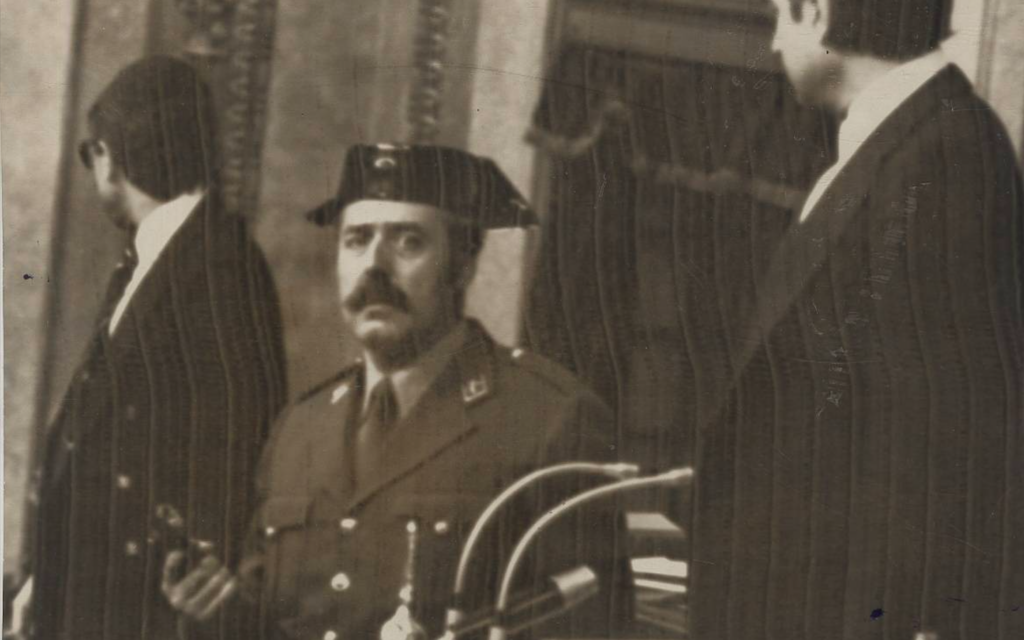
Tejero’s death coinciding with the release of declassified government documents on the 23-F incident. Photo credit: CC Bibilioteca virtual del patrimonio bibiliografico
Antonio Tejero Molina, the former lieutenant colonel of the Guardia Civil whose armed seizure of the Spanish Parliament on 23 February 1981 became one of the most consequential episodes in modern Spanish history, has died at the age of 93. The family announced his death on February 25, a day that also saw the Spanish government make public previously classified documents on the failed coup attempt.
Tejero passed away in Alzira, Valencia, in the presence of his family at about 06:49pm, according to statements relayed by legal representatives and relatives. His surviving family described his passing as peaceful and noted that he had received the sacraments and the blessing of Pope León XIV shortly before his death. They also expressed gratitude for his life and asked for prayers for his eternal rest.
A defining moment in Spanish democracy
Tejero’s name became indelibly linked to the 23-F coup attempt when, on February 23 1981, he led a contingent of armed Guardia Civil officers into the Congreso de los Diputados (Congress of Deputies) in Madrid. The dramatic entry occurred during a session to confirm Leopoldo Calvo-Sotelo as prime minister, at a moment of political tension in Spain’s young democracy. With a pistol in hand, Tejero famously commanded “¡Quieto todo el mundo!” (“Everyone stay still!”), encapsulating the gravity of the situation that unfolded. Members of Parliament and government officials were held hostage for nearly 18 hours.
The coup attempt sent shockwaves through Spain and beyond, prompting fears that the country might regress to authoritarian rule less than a decade after the end of Francisco Franco’s dictatorship. The standoff ended without broader military support for Tejero’s actions, in large part due to a decisive televised intervention by King Juan Carlos I, who reaffirmed his commitment to the Constitution and democratic rule.
Legal consequences and later life
In the wake of the failed coup, Tejero was prosecuted along with other key participants in 1982. Military courts found him guilty of military rebellion, and he received a 30-year prison sentence. He was formally expelled from the Guardia Civil as part of his conviction.
During his imprisonment, Tejero engaged in several activities beyond confinement, including founding a political party, Solidaridad Española. The party stood in the 1982 general elections under the slogan “¡Entra con Tejero en el Parlamento!” (“Enter Parliament with Tejero”). Despite this effort, the party won a very small share of the vote and failed to secure representation.
Health issues later influenced Tejero’s detention regime. He was granted third-degree prison status in 1993, and by 1996 he was released on conditional liberty after serving roughly 15 years of his sentence. In subsequent decades, his public profile declined, though he remained a figure of particular interest to those nostalgic for the pre-transition era.
Public presence and final years
Although largely withdrawn from public life, Tejero did make sporadic appearances. Notably, in October 2019 he attended the reinhumation ceremony of Francisco Franco at Mingorrubio cemetery in Madrid following the exhumation of Franco’s remains from the Valley of the Fallen, an event that drew media attention.
In later years, Tejero faced health struggles and was reportedly living near family members. His declining condition had reduced his visibility in Spain’s public discourse.
Historical significance
Historians view the 23-F coup attempt as a critical stress test for Spain’s fledgling democratic institutions in the early 1980s. The crisis underscored the fragility of the country’s democratic transition but ultimately strengthened constitutional order and civilian control over the military. Tejero’s role has remained a potent symbol in Spanish collective memory of the dangers facing democratic governance.
Tejero was the last of the principal military figures directly involved in the 23-F events to pass away; other key participants, such as generals Jaime Milans del Bosch and Alfonso Armada, had died in earlier years.
Coincidence of timing
Tejero’s death coinciding with the release of declassified government documents on the 23-F incident adds a poignant historical footnote to his legacy. These archives offer scholars and the public access to internal records from Spanish ministries related to the 1981 events, aiming to shed further light on one of the most turbulent moments in Spain’s post-dictatorship era.
Sign up for personalised news
Subscribe to our Euro Weekly News alerts to get the latest stories into your inbox!
By signing up, you will create a Euro Weekly News account if you don't already have one. Review our Privacy Policy for more information about our privacy practices.



Molly Grace
Molly is a British journalist and author who has lived in Spain for over 25 years. With a background in animal welfare, equestrian science, and veterinary nursing, she brings curiosity, humour, and a sharp investigative eye to her work. At Euro Weekly News, Molly explores the intersections of nature, culture, and community - drawing on her deep local knowledge and passion for stories that reflect life in Spain from the ground up.
Comments
Charles Thomas
28 February 2026 • 08:38I think you may want to rephrase this; “might regress to authoritarian rule decades after the end of Francisco Franco’s dictatorship”, this was 1981, Franco only died 6 years (1975) previously, so where is the “Decade”? We have enough “misinformation” from mainstream media due to a lack of research and thought in writing, please don’t go down that route.
Comments are closed.