Spain faces ripple effects from Iran War tensions. How will a Middle Eastern conflict affect life in the west?
By Adam Woodward • Published: 28 Feb 2026 • 12:09 • 2 minutes read
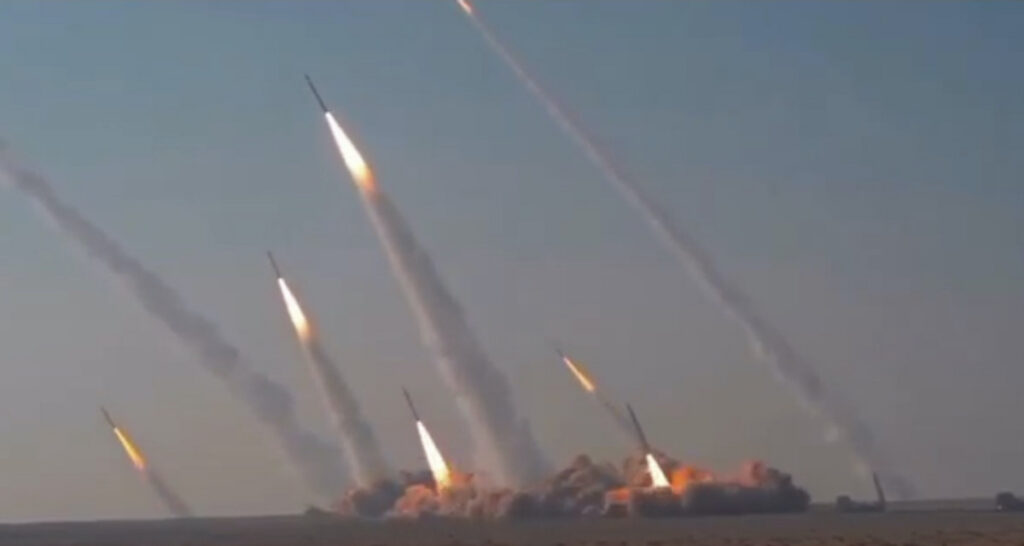
Iranian missiles being fired indiscriminately on Middle Eastern countries, 28/2/26 Credit: RKM X
Escalating conflict involving Iran, Israel, and US involvement threatens plenty of distant but tangible, real impacts on daily life across Spain and Europe.
Energy costs are bound to climb as global oil markets react to threats against key shipping routes. Diplomatic stances evolve amid calls for restraint. Migration pressures will be looming while Iranian expatriates voice solidarity with the exiled king through protests. Ordinary Spaniards brace for higher bills, supply uncertainties, and subtle security shifts without direct involvement.
Rising energy prices hit households hard
Oil markets are jittery with fears of disruptions in the Strait of Hormuz, through which roughly 20 to 30 per cent of global seaborne crude flows. Brent crude prices will no doubt spike toward $80 per barrel or higher in escalation scenarios, pushing fuel and heating costs upward. As a result, Spanish consumers face elevated petrol prices at pumps and increased electricity bills tied to imported energy dependencies. Analysts warn prolonged tensions could add inflationary pressure, squeezing budgets already strained by post-pandemic recovery.
Diplomatic balancing act shapes Spain’s response
Madrid has condemned military escalations while calling for de-escalation from all parties. Foreign Minister José Manuel Albares has stressed peaceful coexistence over war, rejecting unilateral actions that destabilise the whole region. Spain supports EU measures like designating Iran’s Revolutionary Guard as a terrorist group following domestic repression in Iran. Balanced diplomacy safeguards alliances without committing troops, prioritising stability to shield economic interests.
Due to reported missile attacks, British nationals in Bahrain, Kuwait, Qatar and United Arab Emirates should immediately shelter in place.
Remain indoors in a secure location, avoid all travel and follow instructions from the local authorities. pic.twitter.com/pjdFAQMMji
— Foreign, Commonwealth & Development Office (@FCDOGovUK) February 28, 2026
Potential migration waves strain borders
Prolonged instability in Iran and surrounding areas now risks new migratory flows toward Europe, including Spain’s southern routes. Existing pressures from North Africa will intensify if regional chaos spills over, challenging border management and social services. Spain’s recent regularisation of undocumented migrants suggests proactive adaptation, yet fresh inflows could stretch resources further with broader EU hardening on asylum policies.
Iranian expats rally in Spanish cities
Communities in Barcelona and Madrid have staged solidarity protests against regime violence back home. Demonstrators demand freedom and reject foreign interventions that prolong suffering. These gatherings show growing diaspora activism, encouraging awareness but occasionally leading to local tensions with other protest groups. Public displays reveal human costs visible even far from the conflict zone.
Broader economic and security ripples emerge
Global trade faces delays and higher premiums if maritime routes suffer threats, indirectly raising import costs for Spanish industries. Security concerns rise modestly for citizens abroad or from potential asymmetric risks, though direct threats remain low. Renewables offer partial buffer against oil volatility, yet short-term shocks could dent growth forecasts. Spaniards watch closely as distant war reshapes pocketbook realities at home.
Footage of an Iranian ballistic missile slamming into the headquarters of the US Navy’s 5th Fleet at Naval Support Activity (NSA) Bahrain earlier today. pic.twitter.com/6omkCrLy2u
— OSINTtechnical (@Osinttechnical) February 28, 2026
Follow Euro Weekly News on Google News
Get breaking news from Spain, travel updates, and expat stories directly on your Google News feed.
Follow on Google NewsSign up for personalised news
Subscribe to our Euro Weekly News alerts to get the latest stories into your inbox!
By signing up, you will create a Euro Weekly News account if you don't already have one. Review our Privacy Policy for more information about our privacy practices.



Adam Woodward
Adam is a writer who has lived in Spain for over 25 years. With a background in English teaching and a passion for music, food, and the arts, he brings a rich personal perspective to his work at Euro Weekly News. As a father of three with deep roots in Spanish life, Adam writes engaging stories that explore culture, lifestyle, and the everyday experiences that shape communities across Spain.
Comments
Bob
01 March 2026 • 11:25Spain like the uk are energy stupid.
They have the uranium underground to power all of Europe but will not let the company start work to bring it out
Now there being sued for 2.5 billion by Berkeley energia for refusing to give them a licence . . But no one reports this
John
01 March 2026 • 22:55Why should electricity prices rise when Spain, we are told, is nearly 100% green energy producing ?
Roddy Macdowell
02 March 2026 • 09:44The price gougers will be out in force, they love a good war even if it has no genuine effect on them they have a great excuse for raising their prices and profits.. If you have the cash around buy essentials now because the prices will rise. And as for fuel and power, this is when you really understand the utter madness of the net zero nonsense. We in Europe cannot really defend ourselves, we have no REAL POWER SUPPLY, while our countries are surrounded by oil and gas fields we are not allowed to use it, utter madness, and we have all the nutters saying OH Look how green we are, isn’t lovely while our enemies are drilling for gas and oil, while building coal power stations and still ´´polluting´´ the same air we breath, it would be funny if it was not so sad.
Comments are closed.