Spain hit by bizarre ‘mud rain’: Meteorologists reveal when the dusty showers will stop
By Farah Mokrani • Published: 06 Mar 2026 • 11:21 • 4 minutes read
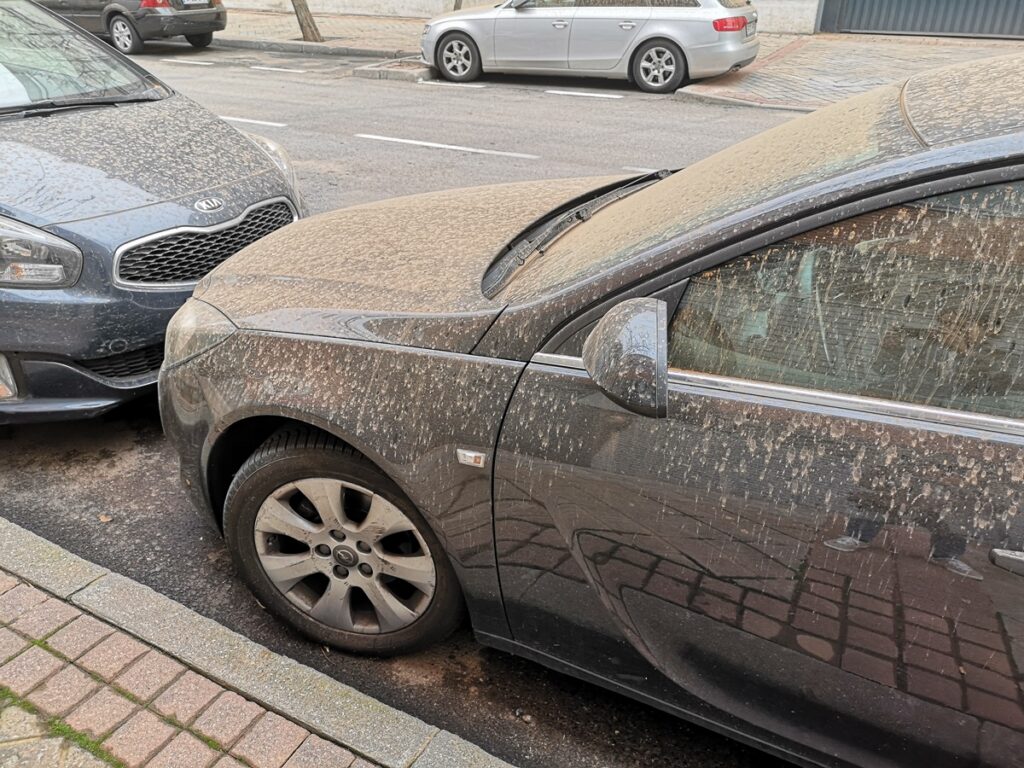
Cars coated in mud after Saharan dust mixed with rain across Spain. Credit : Natalia de la Rubia, Shutterstock
If you’ve looked out at your car this week and wondered why it suddenly looks like it drove through a construction site, you’re not alone. Across large parts of Spain – especially
in the south – residents have been waking up to vehicles, terraces and streets coated in a thin layer of brown dust after overnight rain. Meteorologists say the messy weather is the result of Saharan dust mixing with storm system Regina, and the muddy showers could continue for a few more days before conditions start to improve.
For many people living in Spain, including thousands of expats along the Mediterranean coast, the phenomenon is both familiar and frustrating. You wash the car, the rain arrives, and by morning everything is covered in streaks of dried mud again.
So what exactly is happening in the atmosphere – and when will Spain finally get normal rain again?
Why Spain is seeing muddy rain from the Sahara
The unusual showers hitting parts of Spain this week are the result of a very specific weather combination.
A storm system named Regina has been moving across the south of the Iberian Peninsula, bringing rainfall, gusty winds and cooler temperatures. At the same time, a large plume of dust from the Sahara Desert has travelled north and is now suspended in the atmosphere over Spain.
When rain falls through this dusty air, the droplets collect the tiny sand particles and carry them down to the ground. Instead of clear rainwater, what lands on cars, pavements and outdoor furniture is muddy rain – sometimes called “calima rain”.
Meteorologist José Miguel Viñas explained that a weather front moving through the southern half of Spain has been dragging these dust-laden showers across the country. As long as rain and Saharan dust coincide, the muddy effect continues.
Weather platform Meteored also points out that these episodes often occur when Atlantic weather fronts interact with warm, dusty air masses coming from North Africa.
It’s not a rare event in Spain – but it always manages to catch people off guard.
Which parts of Spain are being hit the hardest
So far, the most noticeable impact has been in Andalusia, where many towns woke up this week to cars completely covered in brown residue after overnight rain.
But the weather system isn’t staying in the south.
Forecasts suggest the muddy rain will gradually move northwards through Castilla-La Mancha and into the Madrid region, with Extremadura and parts of the Mediterranean coast also likely to see the same dusty showers.
For expats living along popular coastal areas like the Costa del Sol, Costa Blanca or Costa Cálida, this type of weather is something of a seasonal nuisance.
It often appears after a few days of hazy skies caused by calima, the Spanish term for the dusty air that drifts across from Africa.
For newcomers to Spain, the first muddy rainfall can be surprising. One moment it looks like a perfectly normal shower, and the next morning the car – and everything else outdoors – looks as though it has been splashed with clay.
When meteorologists say the mud rain should finally end
The good news is that the worst of the muddy rain may not last much longer.
According to meteorologists, the most intense phase of this episode has taken place during the first half of the week, when both rainfall and the concentration of Saharan dust were particularly high.
Forecasts suggest that the muddy showers could continue until around Friday, especially in areas where the dust cloud remains present in the atmosphere.
After that, the situation should gradually improve.
José Miguel Viñas explained that dust levels are expected to start falling, which means that although rain may continue in some areas, it will no longer carry the same amount of sand particles.
In practical terms, that means the rain over the weekend should be cleaner, even if it still falls.
But another weather system is already on the way
Just as the dusty rain begins to ease, another change in the weather is expected.
Meteorologists warn that a new DANA (an isolated high-level depression) could arrive on Saturday, bringing fresh showers to parts of Spain over the weekend.
According to Rubén del Campo, spokesperson for Spain’s national weather agency AEMET, storm Regina will continue to affect much of the country for the rest of the week, particularly southern and eastern regions.
Heavy showers are expected in some areas, and storms may bring very strong gusts of wind capable of knocking down branches or loose objects.
Forecasters have also warned that hail and sudden intense downpours could briefly disrupt traffic in certain areas.
While the incoming system may bring more rain, it is not expected to carry the same high concentration of Saharan dust.
A messy but familiar Spanish weather phenomenon
For long-term residents of Spain, muddy rain is simply one of those quirks of the Mediterranean climate.
It tends to appear when dust from the Sahara drifts northwards and coincides with rainstorms – something that happens several times a year.
For expats who are new to the country, however, it often comes as a surprise the first time they see it.
And if there’s one lesson seasoned residents quickly learn, it’s this: never rush to wash the car during a calima episode.
Because until the dust cloud disappears from the skies, the next rain shower might undo all the effort by morning.
Follow Euro Weekly News on Google News
Get breaking news from Spain, travel updates, and expat stories directly on your Google News feed.
Follow on Google NewsSign up for personalised news
Subscribe to our Euro Weekly News alerts to get the latest stories into your inbox!
By signing up, you will create a Euro Weekly News account if you don't already have one. Review our Privacy Policy for more information about our privacy practices.





Farah Mokrani
Farah is a journalist and content writer with over a decade of experience in both digital and print media. Originally from Tunisia and now based in Spain, she has covered current affairs, investigative reports, and long-form features for a range of international publications. At Euro Weekly News, Farah brings a global perspective to her reporting, contributing news and analysis informed by her editorial background and passion for clear, accurate storytelling.
Comments
David
09 March 2026 • 08:50Nothing bizarre about it in Spain – it happens nearly every year. It *is* bizarre when it reaches the UK, as happens occasionally.
Comments are closed.