A 1,700-year-old Roman shipwreck lying metres from a Spanish beach is finally being lifted
By Dora Urbancsek • Updated: 11 Mar 2026 • 16:53 • 2 minutes read
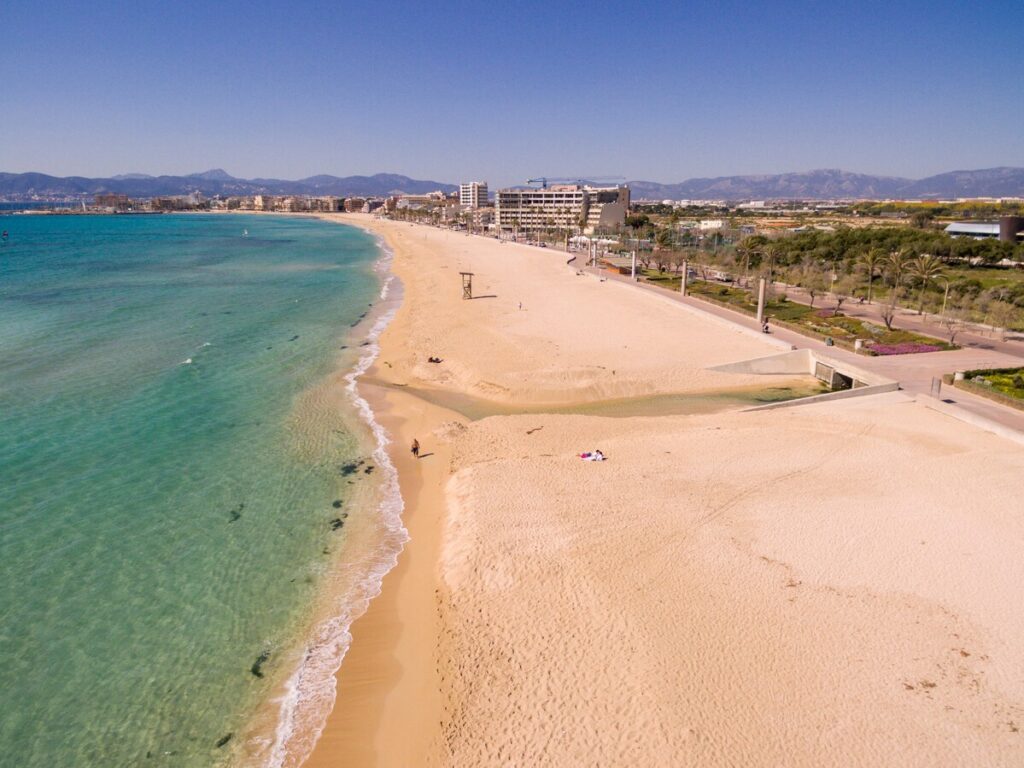
The Ses Fontanelles Roman shipwreck was discovered just metres from the shoreline near Playa de Palma in Mallorca. Credit: Shutterstock/tolobalaguer.com
A major archaeological operation has begun off the coast of Mallorca as specialists start extracting the Ses Fontanelles Roman shipwreck, a vessel believed to be nearly 1,700 years old. The recovery work began on March 10 near Playa de Palma, where the remains of the ancient ship lie buried beneath the sand just metres from the shore.
The wreck, discovered in 2019 by a diver, has been studied for several years by archaeologists. Now, experts are beginning the delicate process of removing the ship and its cargo from the seabed in one of the most significant underwater archaeological projects in the Balearic Islands.
When the extraction operation began
The recovery of the Ses Fontanelles wreck officially started on March 10, led by archaeologists working under the supervision of the Consell de Mallorca.
The ship lies approximately 65 metres from the shoreline at a depth of around 2.5 metres, unusually shallow for a Roman wreck. This has helped preserve parts of the vessel and its cargo under layers of sand for centuries. Researchers believe the ship sank during the 4th century AD, carrying trade goods across the western Mediterranean.
What archaeologists have found inside the wreck
One of the most remarkable discoveries inside the wreck is a cargo of hundreds of amphorae, the ceramic containers used in Roman times to transport food and liquids.
Initial studies suggest the amphorae once held products such as olive oil, wine and garum, a fermented fish sauce that was widely traded throughout the Roman Empire. For historians, these objects provide valuable insight into Mediterranean trade routes and everyday life during the late Roman period.
Mallorca’s role in Roman Mediterranean trade
The Ses Fontanelles wreck is considered one of the best preserved Roman shipwrecks discovered in the Balearic Islands.
Its location near Palma also highlights the historical importance of Mallorca as a maritime crossroads linking Roman trading routes between the Iberian Peninsula, North Africa and Italy. Once the recovery process is complete, many of the artefacts are expected to be conserved and eventually displayed in museums, allowing residents and visitors to see objects that have remained underwater for nearly two millennia.
What visitors near Playa de Palma should know
Although the excavation is taking place close to the shoreline, the work is being carried out by specialised teams and the site itself remains protected. Beachgoers may notice archaeological vessels or equipment operating offshore while the excavation continues. The operation is expected to last several months, as each piece must be carefully documented, stabilised and transported to conservation facilities before further study.
Common questions about the Mallorca Roman shipwreck
How old is the Ses Fontanelles shipwreck?
Archaeologists believe the vessel dates back to the 4th century AD, making it roughly 1,700 years old.
Why is it considered an important discovery?
Because of the large number of amphorae and the preservation of parts of the ship, the wreck offers rare insight into Roman maritime trade in the western Mediterranean.
Will the artefacts be displayed in Mallorca?
After conservation work is completed, many of the recovered artefacts are expected to form part of future exhibitions on the island.
What happens next in the recovery project
The excavation will continue in stages over the coming months as archaeologists gradually uncover the ship and its cargo. Once removed from the seabed, the artefacts will undergo long-term conservation so researchers can study them in detail. For Mallorca, the project represents an opportunity to preserve a unique piece of ancient history hidden beneath one of its busiest tourist beaches.
Sign up for personalised news
Subscribe to our Euro Weekly News alerts to get the latest stories into your inbox!
By signing up, you will create a Euro Weekly News account if you don't already have one. Review our Privacy Policy for more information about our privacy practices.





Dora Urbancsek
Dora Urbancsek is an SEO writer with over eight years of experience producing high-quality, search-optimised journalism and digital content. Based in Spain for more than five years, she covers a wide range of topics concerning Spain and Europe, including current affairs, community stories, culture, and lifestyle. Dora is known for accurate, well-researched reporting that keeps readers informed and engaged.
Comments