Spain driving warning: Guardia Civil reveals the everyday habits that cause crashes
By Farah Mokrani • Published: 14 Mar 2026 • 14:46 • 4 minutes read
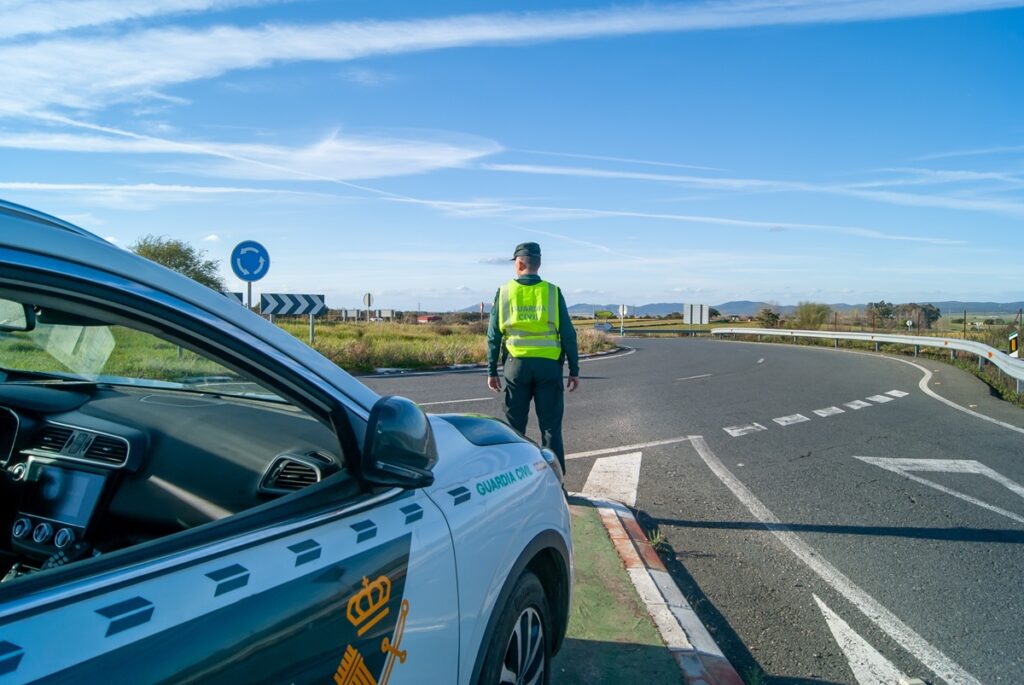
Guardia Civil officer monitoring traffic on a Spanish road as authorities warn drivers about dangerous distractions behind the wheel. Credit : Ivanb.photo, Shutterstock
Most drivers assume the biggest danger on the road is speeding or alcohol. But Spain’s traffic police say the reality is different. According to the Guardia Civil Traffic Division, the main cause of road accidents in Spain is still driver distraction – and it’s not always about mobile phones.
While smartphones remain the most common distraction detected by traffic officers, authorities say many accidents are also linked to everyday habits drivers rarely think about. Checking the GPS, searching in the glove compartment, eating while driving or even arguing with passengers can all take attention away from the road for just a few seconds — sometimes long enough to cause a crash.
For the millions of residents and expats who drive regularly across Spain’s roads – from busy city streets to coastal motorways – the warning is simple: even a brief distraction behind the wheel can quickly turn dangerous.
Mobile phones remain the biggest distraction on Spanish roads
There’s no doubt that mobile phones continue to be the number one issue for traffic authorities.
In one recent analysis, the Guardia Civil examined more than 404,000 vehicles, and mobile phone use was the most common distraction recorded by officers.
The risk is easy to underestimate. Looking down at a phone for just a few seconds may not seem like much, but at motorway speeds it can mean travelling dozens of metres without properly watching the road.
Because of the dangers involved, Spain strengthened its traffic laws in 2022, introducing stricter penalties for mobile phone use while driving.
Today, drivers can receive a €200 fine and lose six points from their licence simply for holding a mobile phone in their hand while driving — even if they are not actively using it.
Authorities say the rule is intentionally strict because phone-related distractions have become one of the most frequent causes of accidents on Spanish roads.
The distractions many drivers ignore
However, traffic officers stress that mobile phones are only part of the problem.
In a recent awareness campaign shared on social media, the Guardia Civil highlighted several common behaviours that also distract drivers, even if they seem harmless at first glance.
One of the most frequent examples is adjusting the GPS while driving.
Modern vehicles increasingly rely on touchscreen systems for navigation, climate controls and entertainment. While these features are convenient, they also encourage drivers to interact with the screen while the car is moving.
Ideally, a passenger should handle these adjustments. But when someone is driving alone, even a quick tap on the screen can mean taking your eyes off the road at the wrong moment.
Traffic officers say they regularly see drivers distracted by small actions such as:
- Opening the glove compartment to search for something
- Eating or drinking while driving
- Looking at a mobile phone mounted on a dashboard holder
- Turning around to speak to passengers
- Arguing or becoming distracted during conversations inside the car
None of these actions may seem serious on their own. But the Guardia Civil warns that a few seconds of lost concentration is often enough for an accident to occur.
Why accidents often happen on short journeys
Another important detail highlighted by traffic authorities is where accidents tend to happen.
Many drivers assume crashes are more likely during long motorway journeys. In reality, a large number of accidents happen during short, familiar trips.
This might be the daily drive to work, a quick trip to the supermarket or a routine school run.
Because drivers know the route well, they often feel more relaxed and less alert. That familiarity can create a false sense of security.
It’s during these routine journeys that people are most likely to check their phone, adjust the radio or reach for something in the car.
But traffic conditions can change in seconds – a pedestrian crossing, sudden braking or unexpected traffic can appear at any moment.
For expats living in Spain, this is particularly important. Many international residents drive frequently between coastal towns, residential areas and nearby cities, often using roads they travel every day.
Even when the route feels predictable, authorities say drivers should remain fully focused.
What penalties drivers can face
Spanish traffic law allows authorities to fine drivers for a variety of distractions behind the wheel.
As mentioned earlier, holding or using a mobile phone while driving carries a €200 fine and the loss of six points from a driving licence.
Other distractions – such as eating, drinking, adjusting the GPS or searching for objects in the vehicle – can also lead to fines.
In these cases, penalties typically range between €80 and €200, depending on the situation observed by traffic officers.
Unlike phone use, these offences usually do not result in points being removed from the licence, but authorities still treat them seriously because they reduce driver attention.
Traffic police emphasise that these fines are not only meant to punish drivers but also to remind them how quickly distractions can lead to dangerous situations.
A reminder that safe driving starts with attention
Despite years of road safety campaigns across Spain, distracted driving remains one of the most common causes of accidents.
Traffic authorities say the solution is straightforward: drivers must keep their attention fully on the road at all times.
That means setting the GPS before starting a journey, avoiding the temptation to check messages and resisting the urge to multitask while driving.
For residents and expats alike, Spain’s roads are generally safe – but only when drivers remain focused.
As the Guardia Civil often reminds motorists, it only takes a few seconds of distraction for a routine journey to become a serious accident.
Sign up for personalised news
Subscribe to our Euro Weekly News alerts to get the latest stories into your inbox!
By signing up, you will create a Euro Weekly News account if you don't already have one. Review our Privacy Policy for more information about our privacy practices.



Farah Mokrani
Farah is a journalist and content writer with over a decade of experience in both digital and print media. Originally from Tunisia and now based in Spain, she has covered current affairs, investigative reports, and long-form features for a range of international publications. At Euro Weekly News, Farah brings a global perspective to her reporting, contributing news and analysis informed by her editorial background and passion for clear, accurate storytelling.
Comments