British schoolgirl stranded in Denmark after UK border rules block return flight
By Molly Grace • Published: 19 Mar 2026 • 23:55 • 3 minutes read
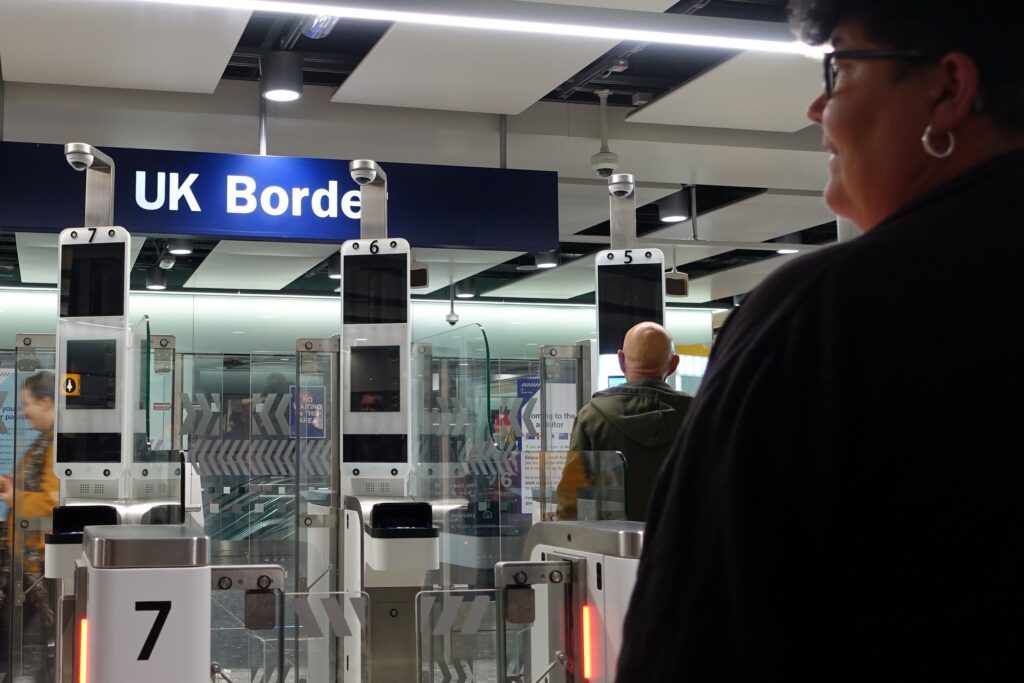
Officials told the family that because Hanne was now overseas, her existing British passport application would be cancelled. Photo credit: 1000 words/Shutterstock
A 16‑year‑old British schoolgirl from Sussex has been left stranded in Denmark after she was prevented from boarding her return flight to the United Kingdom because of recently introduced UK border requirements affecting dual nationals. The teenager, who’s name has not been disclosed, was detained by airline staff at Copenhagen Airport when her British nationality could not be verified under the updated rules that came into force in late February.
The teen had travelled to Copenhagen with her Norwegian‑born mother for a weekend visit to see her British father, who is working at a university in the city. Although she was a British citizen by birth and has lived in the UK all her life, she did not yet have a valid British passport at the time of the trip and was still awaiting its arrival from the UK Passport Office.
When the family attempted to check in for their flight home, she was initially allowed to check in for the journey on the airline’s mobile app, but the system then blocked her boarding pass. At the airport, she was barred from boarding the flight by Norwegian airline staff because she could not present the documentation now required by the new border rules.
New documentation requirements and family’s predicament
Under the updated Home Office guidance, British dual nationals must present a valid British passport or a certificate of entitlement in order to check in for flights, ferries or train services to the UK. The certificate, which can cost £589, is an alternative proof of citizenship for those who hold dual nationality when they do not have a British passport.
Although British citizens have a statutory right to enter the UK, airlines are responsible for checking that passengers have the required documentation before travel. In practice, this means that carriers may deny boarding if they believe a passenger lacks the appropriate credentials, even in the case of minors.
The teens mother, said the family had been unaware of the precise details of the rule change before attempting to fly home. At the airport, she and her daughter were separated when her daughter was denied boarding, while her mother and her younger siblings were allowed to travel back to Britain.
School, exams and mounting stress
The disruption has had significant personal consequences for the teenage. She had been due to sit her GCSE examinations in May, but has already missed two weeks of school as a result of being unable to return home. Her school headteacher wrote to the Home Office to highlight the impact that prolonged absence could have on her education, emphasising the disruption across core subjects and upcoming assessments.
Her mother subsequently travelled back to Britain to collect school books and a laptop so that she could continue her studies remotely, while her daughter remains in Denmark living with family friends during the delay.
The Passport Office has complicated the situation further. Officials told the family that because the teen was now overseas, her existing British passport application would be cancelled. She was informed that she would have to reapply from abroad, a process that could take up to six weeks, prolonging her time away from school and family.
Political response and welfare concerns
The young woman’s local Liberal Democrat MP, James MacCleary, has called on the UK government to intervene, describing the situation as the result of “the government’s mishandling of this situation” and warning that other dual nationals could face similar problems. He urged Home Secretary Shabana Mahmood and Prime Minister Keir Starmer to take urgent action to provide a quicker, low‑cost solution for dual citizens stranded abroad because of the border rule changes.
Critics of the rule change have raised concerns about the welfare implications for children caught up in the new requirements. An immigration lawyer cited by The Guardian suggested that UK authorities may have insufficiently considered the needs of minors, pointing to legal obligations under Section 55 of the Borders, Citizenship and Immigration Act 2009 to safeguard children’s welfare when exercising immigration powers.
While British dual nationals can use an expired UK passport as proof of citizenship, acceptance of such documentation is ultimately at the discretion of the airline, and the guidance has been updated to clarify that EU citizens with settled status may continue to use their EU passport to enter the UK without replacing it immediately.
Home Office statement
In response to the case, the Home Office said that information about the documentation requirements for dual nationals travelling to the UK has been available on the government’s official website since October 2024, and guidance has been updated to reflect circumstances such as the use of expired passports by British citizens or the ability of EU citizens with settled status to use their EU passport.
The Home Office advised that travellers should ensure they meet the entry documentation requirements before attempting to board travel to the UK, highlighting that carriers are responsible for checking travel credentials at the point of departure
Sign up for personalised news
Subscribe to our Euro Weekly News alerts to get the latest stories into your inbox!
By signing up, you will create a Euro Weekly News account if you don't already have one. Review our Privacy Policy for more information about our privacy practices.





Molly Grace
Molly is a British journalist and author who has lived in Spain for over 25 years. With a background in animal welfare, equestrian science, and veterinary nursing, she brings curiosity, humour, and a sharp investigative eye to her work. At Euro Weekly News, Molly explores the intersections of nature, culture, and community - drawing on her deep local knowledge and passion for stories that reflect life in Spain from the ground up.
Comments