Eat, drink and “break old people”. Mojacar celebrates Dia de la Vieja tradition
By Elli Freeman • Updated: 19 Mar 2026 • 12:49 • 1 minute read
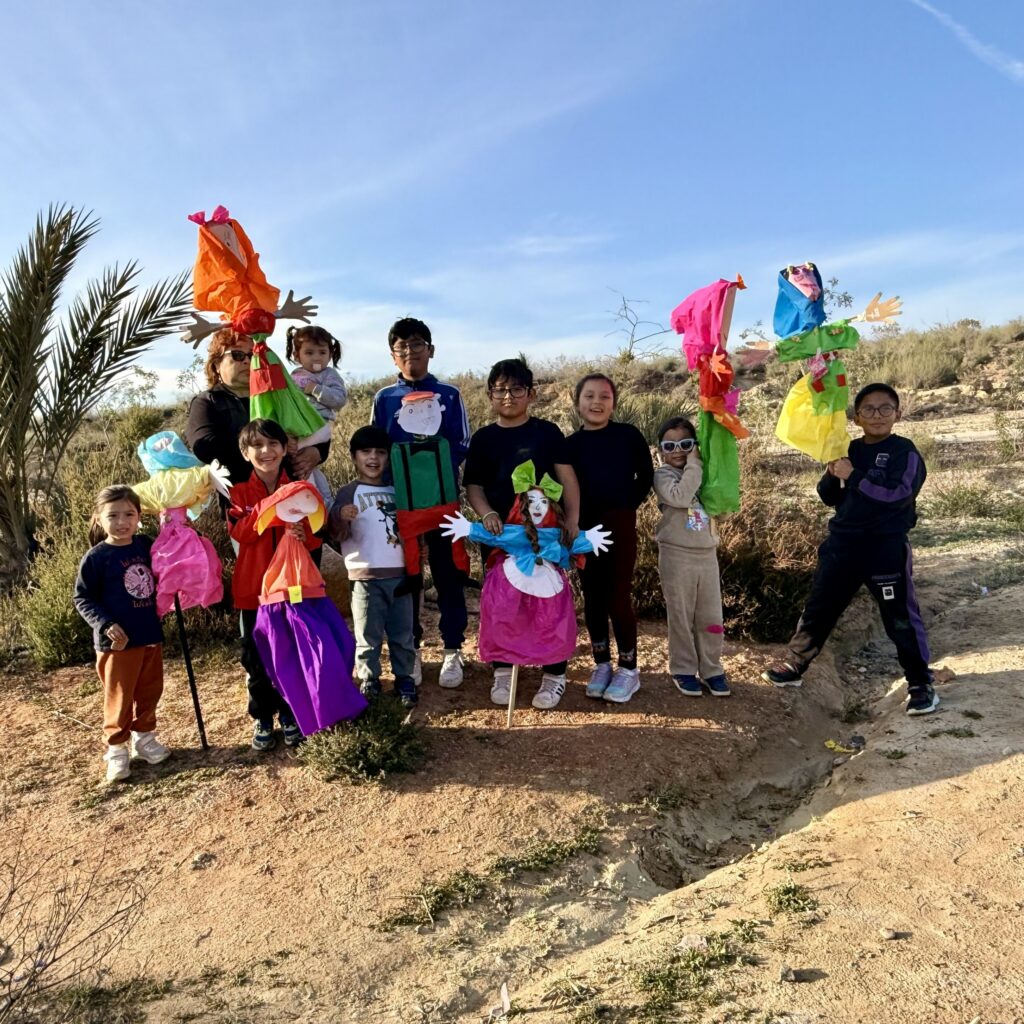
Children stand with their Vieja piñata creations Credit: Mojacar Informa / Facebook
Mojacar residents recently joined hundreds across Almeria in celebrating Dia de la Vieja, a beloved tradition in the Levante Almeriense region. Every year, in the middle of lent people gather in the countryside or at the beach to eat, drink and “break old people”.
No old people harmed on Dia de la Vieja
Of course, no old people are actually harmed in the festivities, rather it is piñata’s designed to look like the elderly that become the targets. These effigies are readily available to buy across the region, many prefer to make their own, adding a creative originality to each one.
Mojacar residents were especially imaginative this year, their colourful creations perfectly encapsulating the spirit of the event. The handmade “viejas” often vary in size, detail and humour, with some designed to reflect traditional clothing or exaggerated caricatures. This creative element has become one of the most anticipated aspects of the celebration, encouraging families and neighbours to take part together in preparation days before the event.
Treats and traditional food
After making the piñata, the only thing left to do is break it. Mojacar youngest residents lined up to threw rocks and sticks at the “viejas” until they broke apart. The children made quick work of the destruction and were soon rewarded with the sweets that spilled from the piñatas.
The day is also often celebrated with a communal lunch. Hornazos, a sweet braided bed which has a hard-boiled egg baked into the centre, is a typical traditional dish, made especially for the celebration.
The origin of tradition
Outside of Mojacar, Dia de la Vieja is most popular in municipalities such as Vera, Turre and Pulpi, to name a few, which host yearly events to mark the day. Each town adds its own variations, but the central idea of gathering, sharing food and symbolically “breaking” the viejas remains consistent throughout the region.
The origins of this slightly bizarre tradition are unknown. Although some believe the act of breaking the “viejas” to be a symbol of leaving behind what is broken in the past in order to start anew.
Sign up for personalised news
Subscribe to our Euro Weekly News alerts to get the latest stories into your inbox!
By signing up, you will create a Euro Weekly News account if you don't already have one. Review our Privacy Policy for more information about our privacy practices.

Elli Freeman
Originally from the UK, Elli has lived in Spain for more than half of her life. She holds a B.A in English Literature and Creative Writing. Before joining the Euro Weekly News team, Elli was an avid traveller, with a keen interest in exploring new cultures.
Comments