Schools closed and emergency measures taken: Storm Therese disrupts Canary Islands and spreads across mainland Spain today
By Dora Urbancsek • Updated: 20 Mar 2026 • 10:46 • 3 minutes read
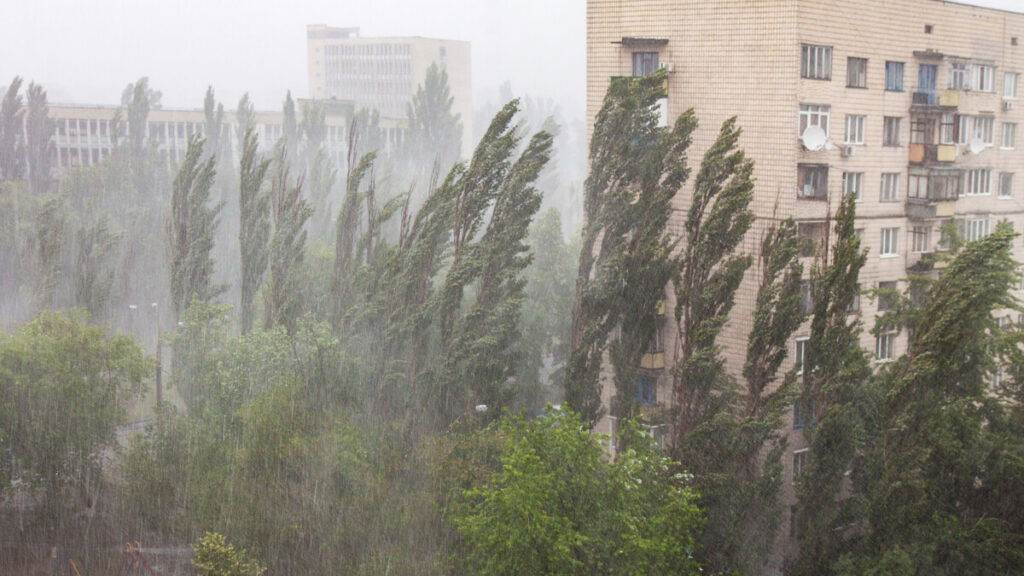
Storm Therese is now spreading inland, with rain affecting multiple regions across mainland Spain at once Credit: Shutterstock/Vadym Zaitsev
Regional authorities have officially suspended classes and closed high-risk roads across the Canary Islands as Storm Therese pushes into mainland Spain this Friday, March 20. With rainfall levels reaching record highs in mountainous terrain, emergency protocols are now active to prevent flooding in vulnerable barrancos and coastal zones. The storm is currently tracking toward Madrid, Castilla-La Mancha, and the Mediterranean, where AEMET has issued new alerts for intensifying rainfall.
For residents and expats, the immediate consequence is a suspension of daily services and a government mandate to limit unnecessary travel until the system begins to weaken.
Where it is raining across Spain today
Rainfall linked to Storm Therese is no longer isolated. Instead, it is forming a broad band of precipitation moving inland.
Across western parts of mainland Spain, cloud cover is increasing as the system moves inland. According to forecasts from AEMET, conditions are becoming more unstable across parts of Extremadura, with cloud build-up and showers increasing through the day.
Further east, rain is beginning to extend into central Spain, including areas around Madrid and Castilla-La Mancha, where skies are turning overcast and intermittent rainfall is expected to intensify later.
Meanwhile, the Mediterranean coast and the Balearic Islands, including Valencia, Alicante and Palma, are experiencing lighter and more scattered showers for now, although conditions are expected to become more unsettled as the system continues to move eastwards.
Rather than remaining a localised system, the storm is now developing into a wider rain pattern affecting several regions simultaneously, with intensity varying depending on terrain and location.
Canary Islands and mainland Spain: prevention and monitoring
The most advanced prevention measures are currently in place on the Canary Islands. Rainfall totals in some locations have been exceptionally high, raising the risk of flooding, particularly in mountainous terrain and along barrancos.
In response, regional authorities have activated emergency protocols, suspending classes, closing high-risk roads and restricting access to exposed areas. In several vulnerable coastal and low-lying zones, temporary barriers and sand walls have been put in place to help control water flow and reduce the impact of surface flooding, especially where heavy rain coincides with rough sea conditions.
On mainland Spain, the approach is currently more focused on monitoring and early-stage preparation rather than active intervention. Meteorological alerts issued by AEMET are guiding regional responses, with local authorities tracking rainfall levels, river conditions and drainage capacity as the system moves inland.
In some areas services are preparing for potential escalation by reviewing emergency protocols, monitoring flood-prone zones and advising residents to limit unnecessary travel. While large-scale physical measures like those seen in the Canary Islands have not been widely deployed, authorities remain on alert as rainfall continues to move across the country.
People are asking when will Storm Therese pass Spain?
Today marks the point at which the storm becomes more widespread, with rainfall moving beyond isolated areas and affecting multiple regions at the same time. Conditions are expected to remain unsettled in the short term, although intensity will vary significantly depending on location.
Conditions are expected to gradually stabilise from Sunday (March 22) as the storm weakens and moves away. However, meteorologists warn that localised heavy rain could persist even as the main system fades.
Another frequently asked question: is the storm affecting all of Spain?
Not all areas are equally impacted, but rainfall is becoming increasingly widespread, with only some eastern and Mediterranean zones seeing lighter conditions for now.
What this means for residents and expats in Spain right now
Storm Therese is no longer a localised weather event but a system moving steadily across the country, meaning conditions will not stay static from one region to another. Areas that begin the day dry may see rain arrive later, particularly as the front advances from the southwest towards central and eastern Spain.
According to current forecasts, the most unsettled conditions are expected to persist through today, before gradually easing from Sunday as the system weakens and moves away from Spain.
Sign up for personalised news
Subscribe to our Euro Weekly News alerts to get the latest stories into your inbox!
By signing up, you will create a Euro Weekly News account if you don't already have one. Review our Privacy Policy for more information about our privacy practices.



Dora Urbancsek
Dora Urbancsek is an SEO writer with over eight years of experience producing high-quality, search-optimised journalism and digital content. Based in Spain for more than five years, she covers a wide range of topics concerning Spain and Europe, including current affairs, community stories, culture, and lifestyle. Dora is known for accurate, well-researched reporting that keeps readers informed and engaged.
Comments