Baby from Frigiliana battles ultra-rare neurodegenerative disease as family launches urgent funding appeal
By Adam Woodward • Published: 24 Mar 2026 • 13:27 • 2 minutes read
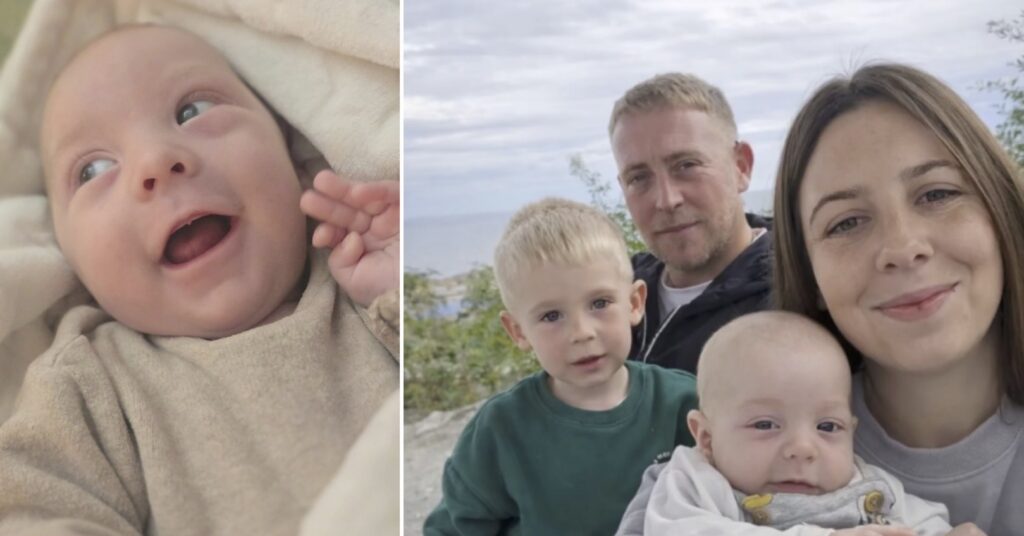
Baby Nahel and family. Credit: Ylenia FL
Frigiliana parents Ylenia and David faced unimaginable fear on December 12, 2025, when their four-month-old son Nahel suddenly suffered convulsions at home in the early hours. Emergency hospital transfers, extensive tests and anxious waiting led to a devastating diagnosis: IRF2BPL-related disorder, also known as NEDAMSS syndrome.
Condition affecting fewer than 40 people worldwide
Nahel entered the world on August 25, 2025, at Hospital Comarcal de la Axarquia without complications and developed normally at first. Doctors later identified the extremely rare genetic neurodegenerative condition, which disrupts neurological development and risks causing regression in acquired skills such as speech or movement, alongside epilepsy and motor disorders. Only about 40 cases exist globally, with roughly 15 in Spain and two in Andalusia. At seven months old, Nahel functions at the level of a two- or three-month-old infant, though he has begun smiling again and shows small daily gains through early intervention.
Seizures and a journey to Madrid for answers
Initial seizures brought a 10-day hospital stay in Malaga with medication that gradually stabilised him. Further episodes in mid-January prompted a trip to Madrid for a second opinion, where specialists helped control the crises. Confirmation of the IRF2BPL diagnosis brought a wave of uncertainty, yet the family has stayed strong. Nahel continues attending early intervention sessions at El Taller de la Amistad in Nerja for physiotherapy and stimulation while receiving epilepsy treatment.
Experimental gene therapy offers sole hope to halt progression
No approved cure currently exists for this disorder. Experts consider an experimental gene therapy developed in the United States the only intervention capable of slowing or stopping neurological decline. Families across Spain, including another child in Granada, have joined forces to access the treatment, which carries a prohibitive total cost of around €1.5 million. Nahel’s parents need approximately €350,000 more to reach their share.
The unity campaign hopes to make Nahel’s future safe.
Ylenia and David established the association ‘Por la sonrisa de Nahel’ to channel donations and organise support events. Significant funds have already arrived through community generosity, but the target remains pressing. “We refuse to live with the regret of never having tried,” David explains. The couple stress that Nahel’s story centres on love, small victories and unwavering determination rather than the diagnosis alone.
How to support Nahel’s smile
Generous individuals can contribute via bank transfer to ES11 2100 5613 8702 0016 4123, referencing ‘Por la sonrisa de Nahel’. Further details and updates appear on the association’s social media channels. Every donation helps bring the pioneering therapy closer and sustains hope for Nahel and other children facing this rare condition.
Rare diseases like IRF2BPL touch thousands of families who rely heavily on scientific research and collective kindness. Ylenia and David remain committed to fighting for their son’s brightest possible tomorrow. “Nahel’s future remains unwritten, and we will do everything in our power for him.”
Sign up for personalised news
Subscribe to our Euro Weekly News alerts to get the latest stories into your inbox!
By signing up, you will create a Euro Weekly News account if you don't already have one. Review our Privacy Policy for more information about our privacy practices.


Adam Woodward
Adam is a writer who has lived in Spain for over 25 years. With a background in English teaching and a passion for music, food, and the arts, he brings a rich personal perspective to his work at Euro Weekly News. As a father of three with deep roots in Spanish life, Adam writes engaging stories that explore culture, lifestyle, and the everyday experiences that shape communities across Spain.
Comments