DGT Easter warning: Phone zombies risk everything crossing Spanish streets
By Adam Woodward • Published: 25 Mar 2026 • 9:49 • 2 minutes read
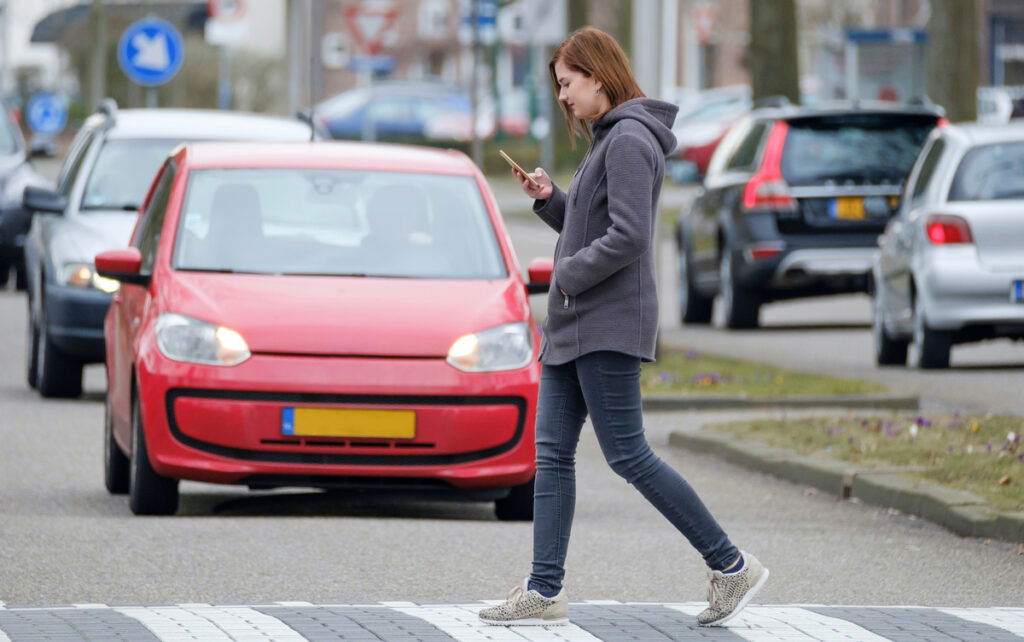
Crossing while gawping at phone. Credit: itsajoop - Shuttersock
Distracted walkers fill Spanish streets daily, a natural effect of tourism, eyes glued to screens instead of potential obstacles, especially traffic. Spain’s traffic authority (DGT) is now confronting this growing menace head-on through a powerful new campaign timed for the busy Easter period.
DGT campaign warns pedestrians to look away from phone before crossing
Officials at the Dirección General de Tráfico (DGT) launched their Easter safety drive on March 24 under the hard-hitting slogan “No quieres perderte nada y terminas perdiéndolo todo” – translated as “You don’t want to miss anything and end up missing everything”. The campaign runs until April 13 across television, radio, print, digital platforms and social media.
Statistics reveal one in three pedestrians crosses while staring at a mobile device, sharply multiplying collision risks since surroundings go unnoticed. And don’t think this is just carefree teenagers; A common risk factor is the middle-aged more often than not playing Candy Crush or similar – particularly when getting off a bus. Compounding the danger is the number of electric and hybrid cars on the road, when just 10 years ago, much noisier diesels dominated Spanish streets that could be heard at a greater distance. Experts warn such careless habits as crossing, listening, but not looking, often end tragically when vehicles strike without warning.
Asturias leads with ground-level lights to alert ‘zombie’ walkers
Innovative LED beacons embedded in the pavement are now being trialled in Mieres, Asturias, making this the first deployment of this technology in Spain. Synchronised with conventional traffic signals, the luminous strips glow red or green and flash before changing phase to grab the attention of anyone walking head-down. Other major towns including Oviedo and Gijón are actively studying costs and locations for similar installations. Local authorities introduced the system precisely to tackle rising pedestrian casualties in a region that records high fatality rates from such incidents.
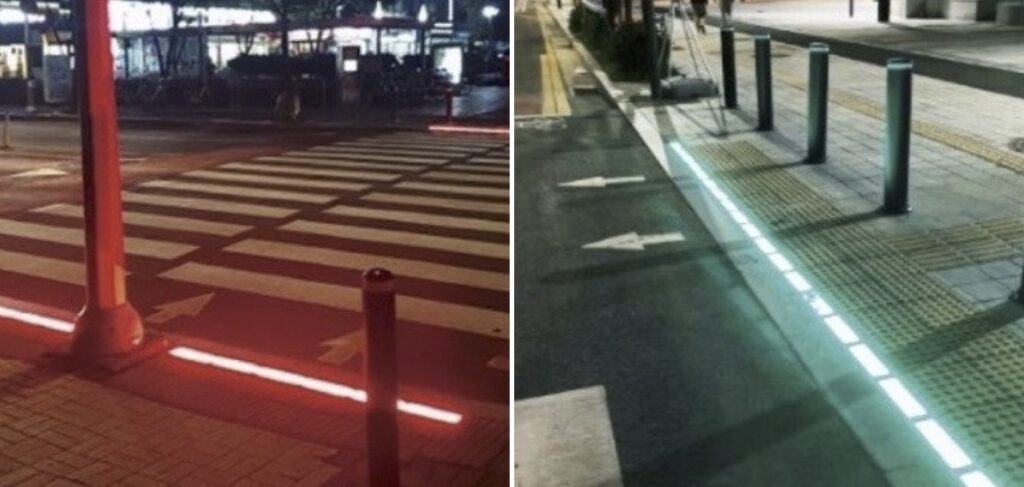
Credit: Iamnazza Naz FB
Deadly distractions create nationwide problem at busy crossings
Phone fixation while crossing creates a serious safety crisis because pedestrians fail to check for approaching traffic or changing lights. Risks escalate dramatically in crowded urban areas where vehicles and foot traffic mix constantly. And on busy promenades at popular coastal spots the situation is extremely worrying.
Local police forces will monitor crossings closely throughout the campaign, watching specifically for individuals stepping out with phones in hand, headphones on, or eyes fixed downward instead of scanning the road. Officers hope to issue advice on the spot, rather than directly issue fines, and deter dangerous behaviour before accidents occur.
Clear advice for pedestrians and drivers to prevent tragedy
Pedestrians can gain vital protection simply by pocketing devices at crossings, looking both ways and staying alert until safely on the opposite pavement. Motorists contribute equally by slowing down near zebra crossings, anticipating sudden movements and allowing extra time for anyone who might not notice them. Mutual awareness dramatically reduces collision chances during the busy Easter travel season.
What happens next for Spanish pedestrian safety?
Expansion of the smart beacon system could reach additional high-risk cities within months if current pilots prove effective. If accident figures fail to drop noticeably after the current awareness push and beacon trials, authorities might consider modest fines for repeated reckless phone use at crossings, though the present tone remains firmly educational. Nationwide guidelines for installing ground-level signals could emerge, making the technology standard rather than experimental. Overall, pedestrian safety appears set to gain more consistent attention through a mix of low-cost infrastructure, ongoing public campaigns, improved driver education, and smart urban design. Early results from Asturias and the response to the Easter initiative will heavily influence how quickly and widely these measures spread across Spain in 2026 – 2027.
Sign up for personalised news
Subscribe to our Euro Weekly News alerts to get the latest stories into your inbox!
By signing up, you will create a Euro Weekly News account if you don't already have one. Review our Privacy Policy for more information about our privacy practices.



Adam Woodward
Adam is a writer who has lived in Spain for over 25 years. With a background in English teaching and a passion for music, food, and the arts, he brings a rich personal perspective to his work at Euro Weekly News. As a father of three with deep roots in Spanish life, Adam writes engaging stories that explore culture, lifestyle, and the everyday experiences that shape communities across Spain.
Comments