Radar scans spark debate over possible second Sphinx beneath Giza plateau
By Molly Grace • Published: 27 Mar 2026 • 23:50 • 3 minutes read
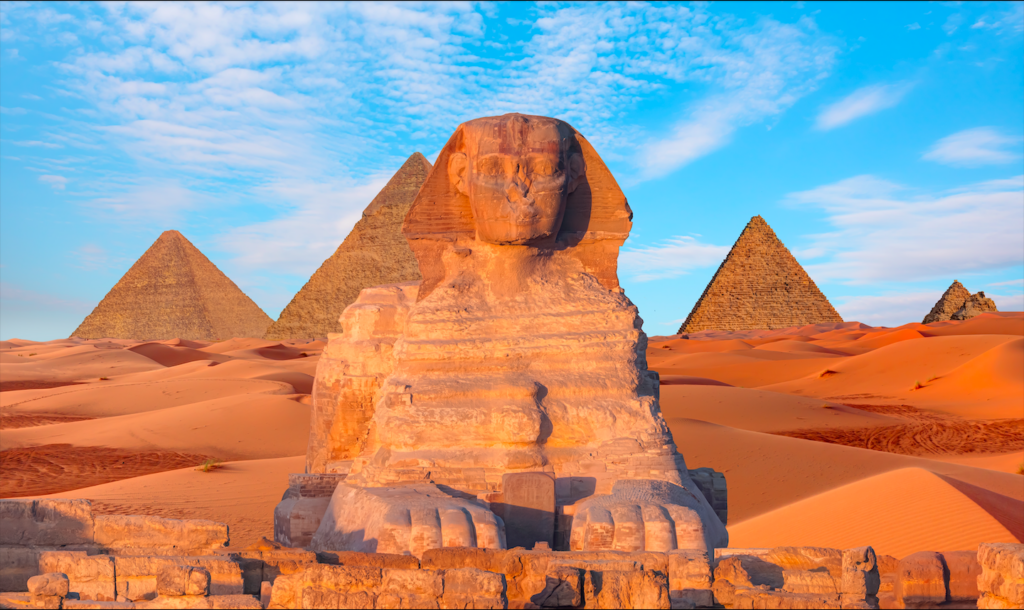
Experts have emphasised that radar data alone cannot confirm the existence of monumental structures beneath the surface. Photo credit: Muratart/Shutterstock
Recent claims that a “massive underground structure” beneath the Giza Plateau in Egypt could indicate a second Sphinx‑like monument have reignited global archaeological discussion, though experts stress that the evidence remains unverified and controversial.
The speculation centres on data interpreted from satellite radar scans conducted by an Italian researcher, Filippo Biondi, and his team. According to media reports, the scans suggest the presence of a large subsurface anomaly roughly 50 metres below ground near the Great Sphinx of Giza, a limestone monument carved some 4,500 years ago that stands on the Giza Plateau, on the west bank of the Nile in Egypt.
Biondi, a specialist in Synthetic Aperture Radar (SAR) technology, described the detected formation as “massive” and potentially reminiscent of the Sphinx’s profile, prompting some to suggest it may represent a previously unknown companion structure. He and his collaborators have highlighted perceived geometrical alignments between the anomaly and known monuments on the plateau, including the Pyramids of Khufu and Khafre. These claims build on earlier hypotheses that advanced radar and satellite imaging can reveal hidden features beneath ancient sites. Radar techniques like SAR measure reflected electromagnetic signals and can produce indirect models of subsurface variations.
Archaeological context and controversy
The Great Sphinx itself is one of Egypt’s most iconic ancient monuments, believed by mainstream Egyptologists to have been carved from a single limestone ridge during the reign of Khafre, a pharaoh of the Old Kingdom around 2500 BC. It measures about 73 metres in length and 20 metres in height.
While the idea of undiscovered structures at Giza is not new, various fringe theories have circulated for decades, what sets recent claims apart is the use of modern remote‑sensing technology. Similar radar‑based interpretations have been applied to subsurface studies elsewhere, but their archaeological significance in this context remains unproven.
Experts have emphasised that radar data alone cannot confirm the existence of monumental structures beneath the surface. Rather, such scans may detect anomalous patterns in soil density or rock composition that could stem from natural formations as easily as human‑made features. Independent Egyptologists have criticised media headlines for overstating the implications without further validation.
Mainstream archaeology’s view
Prominent figures in Egyptian archaeology, including former Minister of Antiquities Zahi Hawass, have dismissed sensational interpretations of a “second Sphinx” as lacking empirical support. They note that the Giza Plateau has been extensively surveyed and excavated over many years, with no prior confirmation of such a structure.
The archaeological community generally agrees that new discoveries must be validated through controlled excavation and peer‑reviewed research before they can be accepted as factual. Remote sensing can be a valuable tool in identifying potential targets for investigation, but it cannot by itself establish the existence of specific monuments.
Further complicating the debate, much of the public fascination draws on longstanding myths and speculative ideas about hidden chambers or libraries beneath Giza, such as the legendary Hall of Records, a mythical archive some claimed might lie under the Sphinx, a notion widely regarded as pseudohistory.
What the data actually shows
The radar data that sparked recent headlines is primarily interpreted by some researchers as indicating subsurface features with notable geometry. Depending on the specific scan and processing method, these could include discontinuities or anomalies in the underground signal return.
However, such interpretations are not universally accepted among scientists. Independent experts have pointed out that without ground‑truthing through physical excavation or corroboration by multiple methodologies, radar anomalies cannot be conclusively linked to constructed spaces or statues.
Next steps and ongoing investigation
The team behind the radar analysis has reportedly sought permission from Egyptian authorities to conduct further investigation, including direct examination of the site where the anomaly was detected. Such approval would be necessary for any archaeological excavation or onsite testing.
For now, the claim remains a hypothesis rather than established fact. It has sparked renewed interest in the application of advanced imaging technologies to archaeology, even as mainstream scholars urge caution and rigorous scientific standards.
Conclusion
The idea of a second Sphinx or extensive hidden chambers beneath the Giza Plateau captures the imagination and continues to remind us of the enduring mystery of Egypt’s ancient monuments. Yet, based on current evidence, the claim rests on preliminary interpretations of radar data that have not been independently verified. Without further research and archaeological validation, there is no accepted scientific confirmation that a second Sphinx exists beneath Giza, and the longstanding understanding of the site’s historical structures remains unchanged.
Sign up for personalised news
Subscribe to our Euro Weekly News alerts to get the latest stories into your inbox!
By signing up, you will create a Euro Weekly News account if you don't already have one. Review our Privacy Policy for more information about our privacy practices.



Molly Grace
Molly is a British journalist and author who has lived in Spain for over 25 years. With a background in animal welfare, equestrian science, and veterinary nursing, she brings curiosity, humour, and a sharp investigative eye to her work. At Euro Weekly News, Molly explores the intersections of nature, culture, and community - drawing on her deep local knowledge and passion for stories that reflect life in Spain from the ground up.
Comments