Most dangerous roads in Spain revealed as Easter exodus brings millions back on the road
By Adam Woodward • Updated: 28 Mar 2026 • 10:35 • 3 minutes read
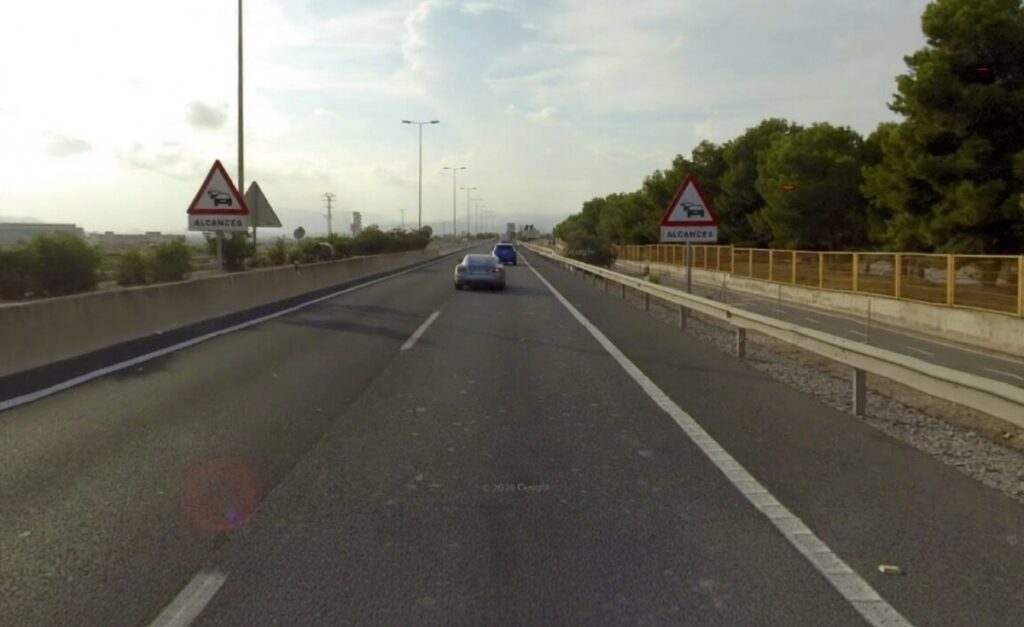
The most dangerous stretch of road in Spain. Credit: Google Maps
The 2026 Easter holidays have filled the roads from the biggest cities with cars full of families heading to the coasts for some rest and relaxation during Spain’s first big holiday of the year since Christmas. Many hours of negotiating curvy motorways, bottlenecks in traffic and answering “Are we nearly there yet?” The danger of a prang or sudden hard brake on a long drive is at its highest during what the Spanish refer to as “operación salida”.
A major new report highlights alarming black spots where accidents cluster far above national averages. For a driver, it’s good to know on which roads to be at one’s most attentive.
295 kilometres flagged for extreme danger
Analysis by Automovilistas Europeos Asociados (AEA) has identified 295 kilometres of conventional roads and dual carriageways across 67 routes in 45 Spanish provinces where drivers need to be on the lookout. These stretches recorded an average danger index at least ten times higher than the national average between 2020 and 2025. Authorities counted 1,752 accidents resulting in 2,497 victims in those zones alone. The statistics go to show some serious safety challenges despite overall improvements in Spanish road infrastructure. Conventional roads continue to pose particular threats compared with high-capacity motorways.
Kilometre zero of A-77a tops the accident league.
Data singles out kilometre zero (the start) of the A-77a dual carriageway in Alicante as the single most incident-heavy location on Spain’s state road network. Officials logged a shocking 93 accidents and 141 victims there over the five-year period. No other stretch matches this raw volume of crashes and injuries.
Nearby sections follow closely in severity. Kilometre 17 of the T-11 near Tarragona saw 79 accidents and 113 victims, while kilometre 15 on the same route recorded 85 crashes and 103 people affected. Kilometre 12 of the A-55 near Mos in Galicia also ranks high, with 57 accidents and 95 victims. But, Alicante Province is still not the worst place to drive in Spain.
Asturias’ roads show the highest relative risk.
Certain conventional roads stand out for their extreme danger index rather than sheer numbers. Stretches at kilometres 55 and 59 on the N-632, linking Villaviciosa and Gijon in Asturias, register a peril level 167 times above the national average. Such elevated ratios signal serious design or usage problems that demand urgent attention.
Toll motorways harbour hidden dangers.
High-capacity toll roads also feature worrying black spots. AEA researchers pinpointed around 100 motorway sections with danger indices at least double the national figure of 4.4. These areas produced 502 accidents and 846 victims, mostly minor in outcome.
Particularly notable remains kilometre 17 of the AP-41 toll motorway in Toledo province. Its danger index reaches 74.3, exceeding the national benchmark by a factor of 16. Heavy traffic volumes combined with specific layout issues likely contribute to repeated incidents.
Call for urgent action on persistent black spots
Experts at AEA compiled the findings using the official Mean Danger Index drawn from state road data for 2020-2025. The organisation urges drivers to exercise extra caution in identified zones while pressing regional and national authorities to eliminate longstanding hazards through targeted engineering works, improved signage, and speed management.
Spain maintains strong overall road safety records in Europe, yet these concentrated high-risk pockets reveal where further investment could save lives. Motorists benefit from staying alert, respecting limits, and planning routes around known trouble areas.
For those unaccustomed to driving on Spanish roads, they may appear hair-raising to some drivers, but they are far from the most dangerous in Europe in 2026.
Most dangerous countries to drive in Europe
Top 10 European Countries with Highest Road Fatality Rates (approx. 2024 data, deaths per million inhabitants)
- Serbia – 78. Tops lists as Europe’s most dangerous for driving overall. High rates reflect busy rural routes and challenging highways like the Ibar Highway.
- Romania – 77 (2024) / around 68 (preliminary 2025) – Frequently ranks among the worst in the EU, with poor road quality in many areas contributing to elevated risks, especially on rural stretches.
- Bulgaria – 74 (2024) / around 71 (2025) Consistently high, with southeastern regions showing particularly elevated local rates well above the EU average.
- Greece – around 64. Has seen some increases or fluctuations, placing it in the upper levels of riskier European nations.
- Croatia – around 62–67. Groups with other high-rate southeastern countries in both EU and broader European assessments.
- Portugal – around 60. Appears in extended high-risk groupings for southern Europe.
- Italy – around 51. Higher than the EU average despite advanced infrastructure in parts of the country.
Other notable higher-than-average countries include certain years’ data for nations like Latvia, Lithuania, or Poland, though they generally fall below the top cluster. Non-EU countries such as Montenegro or Moldova sometimes show elevated rates in broader WHO or global statistics, but comprehensive pan-European comparisons focus heavily on the above.
Sign up for personalised news
Subscribe to our Euro Weekly News alerts to get the latest stories into your inbox!
By signing up, you will create a Euro Weekly News account if you don't already have one. Review our Privacy Policy for more information about our privacy practices.





Adam Woodward
Adam is a writer who has lived in Spain for over 25 years. With a background in English teaching and a passion for music, food, and the arts, he brings a rich personal perspective to his work at Euro Weekly News. As a father of three with deep roots in Spanish life, Adam writes engaging stories that explore culture, lifestyle, and the everyday experiences that shape communities across Spain.
Comments