Spain’s 2026 bullfighting report: How a 75% attendance decline is being offset by record funding and youth vouchers
By Dora Urbancsek • Published: 28 Mar 2026 • 17:49 • 3 minutes read
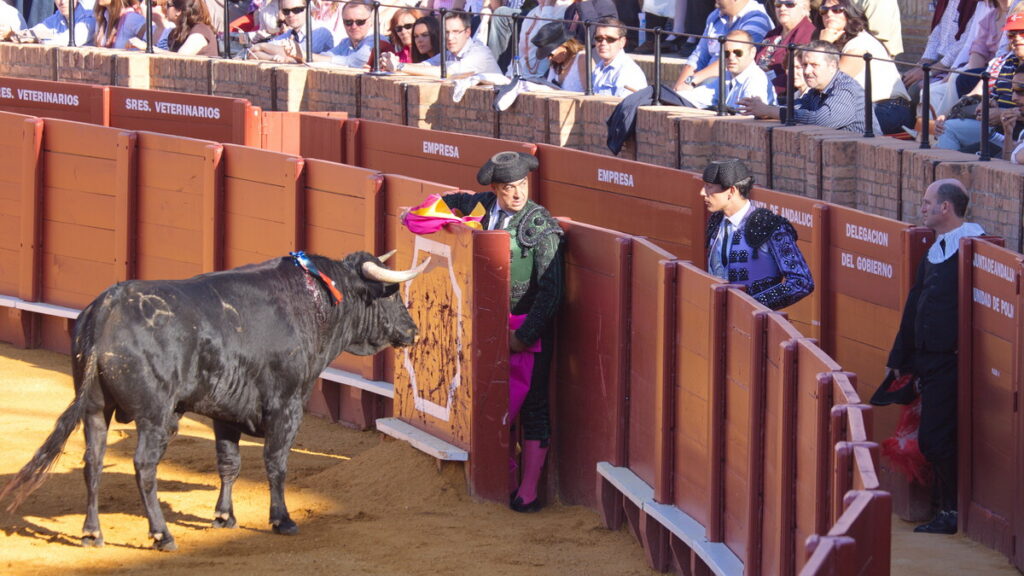
Bullfighting continues across Spain despite declining overall attendance Credit: Shutterstock/VDV
Public funding for bullfighting has reached a record high in 2026, with the Spanish government confirming a €120 million annual subsidy package this Saturday, March 28. Despite a 75% collapse in attendance over the last two decades, the practice is being sustained by a controversial “Cultural Heritage” status that prevents local regions from implementing total bans. The immediate consequence of this fiscal shift is a growing national divide, as a record 715,606 citizens have officially petitioned for the repeal of the laws shielding the tradition.
While major events like the upcoming Feria de Abril in Seville still draw massive crowds, the broader 2026 data reveals that the industry now survives primarily as a subsidized art form, with a staggering 83% of the population under the age of 35 now demanding a complete end to the practice.
A steady decline in national participation
Recent data highlights the scale of change. Surveys linked to Spain’s Ministry of Culture indicate that only around 1.9% of the population attends bullfighting events regularly, while broader estimates suggest that approximately 5.9% of Spaniards attend at least one event per year. These figures underline a long-term downward trend in participation, particularly when compared to previous decades when bullfighting held a more central place in popular culture.
The decline is also reflected in the number of events held across the country. Industry figures show that bullfighting events have fallen by more than 50% since the late 2000s, a drop closely linked to shifting public attitudes and changing leisure habits. Younger generations, in particular, are less likely to attend, with surveys consistently showing lower levels of interest among under-35s.
Changing attitudes and growing debate
The reasons behind this shift are complex. Animal welfare concerns have become increasingly prominent in public discourse, contributing to growing opposition to bullfighting in parts of Spanish society. In some regions, local restrictions and political debates have further reduced the presence of events.
At the same time, bullfighting remains legally protected as part of Spain’s cultural heritage, ensuring that it continues to receive institutional support. Public funding, as well as private investment, has helped maintain the industry despite falling attendance figures. This tension between cultural preservation and evolving social values has turned bullfighting into an ongoing national debate, reflecting broader questions about tradition, identity and change.
Strongholds and moments of renewed interest
Despite the overall decline, bullfighting continues to attract large audiences in specific contexts. Major festivals and iconic venues still report strong attendance, with events in cities such as Madrid, particularly at the well-known Las Ventas arena, drawing near-capacity crowds during key dates.
Seasonal peaks, including traditional fairs and religious celebrations, often bring renewed interest, suggesting that while casual attendance has decreased, committed audiences remain highly engaged. In these settings, bullfighting retains its role as both a cultural spectacle and a social event.
An evolving cultural landscape
Rather than disappearing, bullfighting appears to be consolidating into a more niche cultural activity. The audience may be smaller, but it is often more dedicated, with enthusiasts continuing to support events and defend the tradition’s place in Spanish culture.
At the same time, organisers and institutions face increasing pressure to adapt, whether through changes in presentation, regulation or public engagement. The challenge lies in balancing preservation with evolving expectations in a society where cultural values are shifting.
The future of bullfighting
The future of bullfighting in Spain remains uncertain. Declining participation suggests continued contraction, yet strong attendance at key events indicates that the tradition still holds significance for a segment of the population.
As Spain continues to navigate this cultural crossroads, bullfighting stands as a clear example of how long-established traditions can evolve rather than simply disappear. Whether it remains a central cultural feature or becomes increasingly marginal will depend on how these competing forces develop in the years ahead.
Sign up for personalised news
Subscribe to our Euro Weekly News alerts to get the latest stories into your inbox!
By signing up, you will create a Euro Weekly News account if you don't already have one. Review our Privacy Policy for more information about our privacy practices.




Dora Urbancsek
Dora Urbancsek is an SEO writer with over eight years of experience producing high-quality, search-optimised journalism and digital content. Based in Spain for more than five years, she covers a wide range of topics concerning Spain and Europe, including current affairs, community stories, culture, and lifestyle. Dora is known for accurate, well-researched reporting that keeps readers informed and engaged.
Comments