Spain closes airspace to US flights linked to Iran conflict
By Molly Grace • Published: 30 Mar 2026 • 16:22 • 3 minutes read
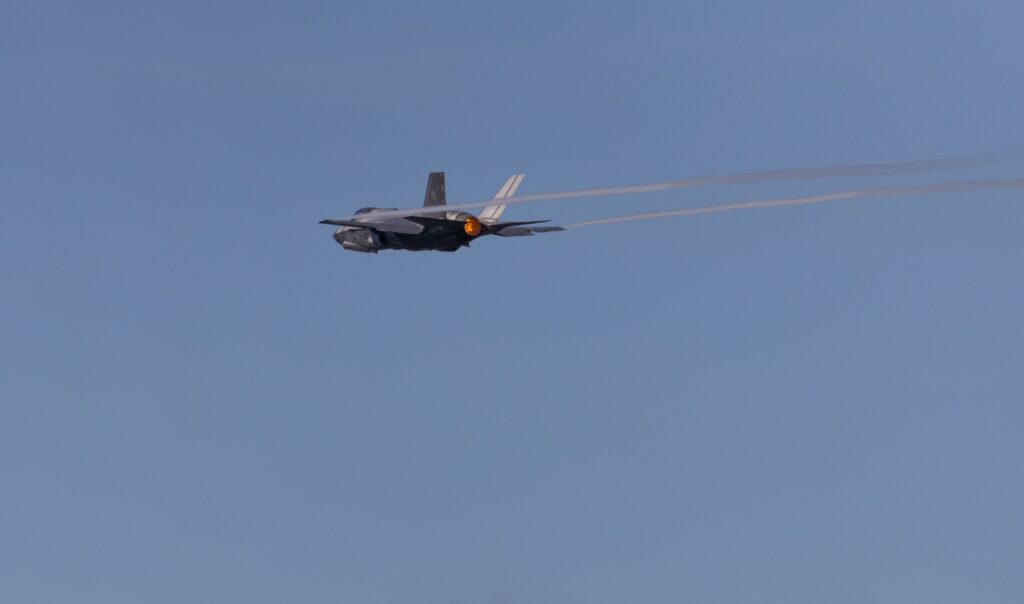
Spain’s stance places it at odds with other NATO members and European partners. Photo credit: Wirestock Creators/Shutterstock
The Spanish government has formally closed its national airspace to aircraft of the United States military that are involved in the ongoing conflict with Iran, in a move that marks a significant intensification of Madrid’s opposition to the war.
Spain’s Defence Minister, Margarita Robles, confirmed on Monday that the government will no longer permit US military aircraft to use Spanish airspace for operations linked to the conflict in Iran. The restriction applies to flights that are part of attacks on Iranian territory and is part of Madrid’s stated refusal to provide any logistical or operational support to the campaign.
Policy Shift Beyond Base Access
Earlier in the conflict, the Spanish government had already blocked the use of its jointly‑operated military bases, including the key facilities at Rota and Morón de la Frontera in southern Spain, for missions related to the Iran war. The airspace closure now extends that policy from the ground into the skies above Spain.
Robles told reporters in Madrid that Spain will not authorise the use of its territory or airspace for what the government sees as an unjustified military campaign. The move compels US military flights involved in the war to reroute, avoiding Spanish airspace when transiting from bases elsewhere in Europe to the Middle East.
Spanish officials have clarified that emergency situations are exempt from the ban; military aircraft in distress or facing urgent humanitarian contingencies may still be permitted to enter Spanish airspace when necessary.
Legal and Political Justifications
Madrid’s decision forms part of a broader narrative laid out by the government that the conflict in Iran, initiated by US and Israeli strikes, lacks legal grounding under international law. Prime Minister Pedro Sánchez has labelled the war “profoundly illegal and profoundly unjust,” signalling a stark divergence from the position of the United States and several NATO allies.
Economy Minister Carlos Cuerpo, speaking on Spanish radio, underscored that the airspace closure is a continuation of a policy already embraced by the government: that Spain will neither participate in nor contribute to military operations it regards as unilateral and inconsistent with international legal frameworks.
The policy shift reflects a broader attempt by the current Spanish administration to chart an independent foreign policy that emphasises multilateralism and legal norms over military alliance obligations. Sánchez has repeatedly urged a cessation of hostilities in the region, calling on the United States, Israel, and Iran to return to diplomacy and negotiations.
Impact on Transatlantic Relations
The decision has already had repercussions for Spain’s relationship with Washington. US President Donald Trump has publicly criticised Madrid’s stance and threatened to impose trade restrictions in response to Spain’s refusal to provide military support. These potential sanctions could mark an unprecedented economic confrontation between the two NATO members.
Spanish officials, however, have sought to downplay the likelihood of any immediate trade fallout. Cuerpo has maintained that the bilateral commercial relationship remains strong and that Spain continues to uphold ties with the United States within the framework of the European Union and broader transatlantic cooperation.
Within Spain, the government’s position has drawn criticism from opposition parties, which argue that the measures are inconsistent or may harm national interests. Some political figures have called for broader actions, such as expelling US forces from Spanish bases or reconsidering Spain’s commitments within the NATO alliance.
NATO and European Context
Spain’s stance places it at odds with other NATO members and European partners that have taken more nuanced positions regarding the conflict. While some allies have supported defensive measures or offered logistical assistance to US operations, none have adopted an outright ban on overflights or base access comparable to Madrid’s policy.
Analysts note that Spain’s decision highlights deepening divisions within the alliance over the appropriate response to the Iran war and underscores broader debates about strategic autonomy among European states. For Madrid, the airspace closure is both a symbolic and practical assertion that alliance membership does not equate to unquestioned participation in offensive military campaigns.
Operational Consequences
The immediate practical effect of the airspace closure is logistical. US military flights engaged in operations against Iran will now have to adjust flight paths to circumvent Spanish airspace, potentially lengthening missions and increasing operational complexity. Emergency exceptions mean that humanitarian or crisis‑induced diversions remain possible, though these are expected to be rare.
As the conflict continues, Spain’s decision will likely serve as a reference point in discussions among European governments about the balance between alliance solidarity, national sovereignty, and adherence to international law. Whether other countries will follow Spain’s example remains an open question, but the move has already set a notable precedent within Western diplomatic circles.
Sign up for personalised news
Subscribe to our Euro Weekly News alerts to get the latest stories into your inbox!
By signing up, you will create a Euro Weekly News account if you don't already have one. Review our Privacy Policy for more information about our privacy practices.




Molly Grace
Molly is a British journalist and author who has lived in Spain for over 25 years. With a background in animal welfare, equestrian science, and veterinary nursing, she brings curiosity, humour, and a sharp investigative eye to her work. At Euro Weekly News, Molly explores the intersections of nature, culture, and community - drawing on her deep local knowledge and passion for stories that reflect life in Spain from the ground up.
Comments