Spain’s €2,709 record and a 21.6% island surge: What the 2026 property jump means for expats
By Dora Urbancsek • Published: 02 Apr 2026 • 14:14 • 4 minutes read
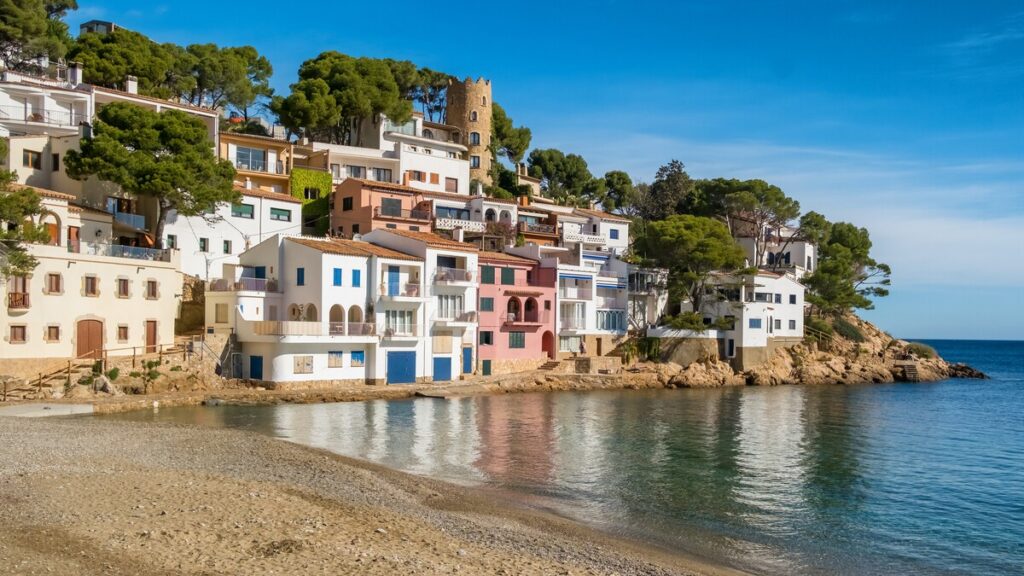
Property prices continue to climb in Spain’s coastal regions Credit: Shutterstock/Mazur Travel
Average property prices in Spain have hit a record €2,709 per m² this April 2, 2026, marking a significant 14.4% national increase since the start of the year. Data from the General IMIE Index reveals a widening divide, as the Balearic and Canary Islands lead the market with a staggering 21.6% annual surge, followed by a 16.6% jump in major metropolitan areas like Madrid and Málaga.
For expats and international buyers, the immediate consequence is a “psychological threshold” breach in coastal hotspots, where the scarcity of new housing and high construction costs are forcing a 2026 shift toward inland alternatives. With prices in prime districts like Madrid’s Salamanca now nearing €10,000/m², the window for “affordable” coastal investment is rapidly closing.
What this surge means for expats and buyers right now
The most immediate impact is reduced affordability. A price increase of more than 14 per cent in three months can significantly alter purchasing power, especially for buyers working with fixed budgets or relying on mortgage financing.
To put it into perspective, a property valued at €200,000 at the start of 2026 could now be priced closer to €228,000 to €230,000. That difference affects not only the purchase price, but also deposit requirements, taxes and monthly mortgage repayments. For those already in the process of buying, this kind of shift can mean renegotiating expectations or moving faster to secure a deal before prices climb further.
Coastal hotspots remain under pressure
The national average tells only part of the story. In reality, many expat-favoured regions are already well above €2,000 per m², and have been for some time. Areas such as the Costa Blanca, Costa del Sol and the Balearic Islands continue to experience strong demand from both foreign and domestic buyers. Alicante province, in particular, remains one of the most sought-after destinations due to its balance of lifestyle, infrastructure and relative affordability compared to Malaga or Mallorca.
However, even here, prices are steadily rising. Coastal towns, new developments and properties near key amenities are seeing the sharpest increases, with competition intensifying among buyers. For expats hoping to secure a property close to the sea, this means fewer bargains and quicker decision-making.
Why prices are rising so fast
Several overlapping factors are driving the current surge. Firstly, supply continues to lag behind demand. Spain has not built enough new housing in recent years to meet growing interest, particularly in high-demand regions. Planning delays, rising construction costs and limited available land in coastal areas have all contributed to this imbalance.
Secondly, Spain remains a highly attractive destination for international buyers. Its climate, healthcare system, infrastructure and lifestyle continue to draw people from across Europe and beyond, many of whom are willing to pay a premium for property in desirable locations. Thirdly, broader economic pressures, including inflation and higher material costs, are feeding into property prices. New builds are becoming more expensive to develop, pushing up the value of both new and existing homes.
The hidden costs that needs to be consider
For expats, rising property prices do not exist in isolation. Higher purchase prices also increase associated costs, which can add a significant amount to the overall investment. In Spain, buyers should typically budget an additional 10 to 13 per cent on top of the property price to cover taxes, notary fees, registration and legal costs. As prices rise, so do these additional expenses.
Mortgage conditions can also become more demanding. Banks may require larger deposits, particularly for non-residents, and higher property values translate into larger monthly repayments. This means that what once seemed like a comfortable budget may now feel stretched.
What you can do if you are planning to buy
For expats considering buying property in Spain in 2026, timing and preparation are critical. Acting quickly is becoming increasingly important, as desirable properties are spending less time on the market. Buyers who delay decisions risk losing opportunities or facing higher prices just weeks later.
Securing mortgage pre-approval can also provide an advantage, allowing buyers to move faster when the right property appears. Flexibility is another key factor. Expanding your search slightly inland or considering up-and-coming areas can open up more affordable options without sacrificing lifestyle entirely. Working with local agents who understand the market dynamics can also help identify opportunities before they become widely available.
Is this a short-term spike or long-term trend?
While the 14.3 per cent increase in early 2026 is particularly sharp, most analysts agree that the underlying trend is not new. Spain’s property market has been on an upward trajectory for several years, driven by consistent demand and structural supply constraints. Some experts suggest that price increases may stabilise later in the year, particularly if interest rates or economic conditions shift. However, in high-demand regions, there is little indication that prices will fall significantly in the near term.
What this means if you are planning to buy in 2026
For expats considering a purchase this year, the pace of price growth is now a key risk factor. A 14.3 per cent increase in just one quarter is not a gradual trend, it is acceleration. Waiting even a few months could mean paying tens of thousands more for the same type of property. Buyers should expect:
- Higher deposits, especially for non-residents
- More competition for well-priced homes
- Faster sales timelines, particularly in coastal areas
This also changes strategy. Buyers who were previously browsing now need to be ready to act, with financing arranged and legal checks prepared in advance. At the same time, flexibility is becoming more valuable. Looking slightly inland or targeting emerging areas can still offer better value, while prime coastal locations are becoming increasingly difficult to access at lower budgets.
Sign up for personalised news
Subscribe to our Euro Weekly News alerts to get the latest stories into your inbox!
By signing up, you will create a Euro Weekly News account if you don't already have one. Review our Privacy Policy for more information about our privacy practices.



Dora Urbancsek
Dora Urbancsek is an SEO writer with over eight years of experience producing high-quality, search-optimised journalism and digital content. Based in Spain for more than five years, she covers a wide range of topics concerning Spain and Europe, including current affairs, community stories, culture, and lifestyle. Dora is known for accurate, well-researched reporting that keeps readers informed and engaged.
Comments