Are cruise ships really just floating petri dishes? I keep hearing horror stories and it’s putting me off.
By Vega Mare • Published: 06 Apr 2026 • 9:00 • 2 minutes read
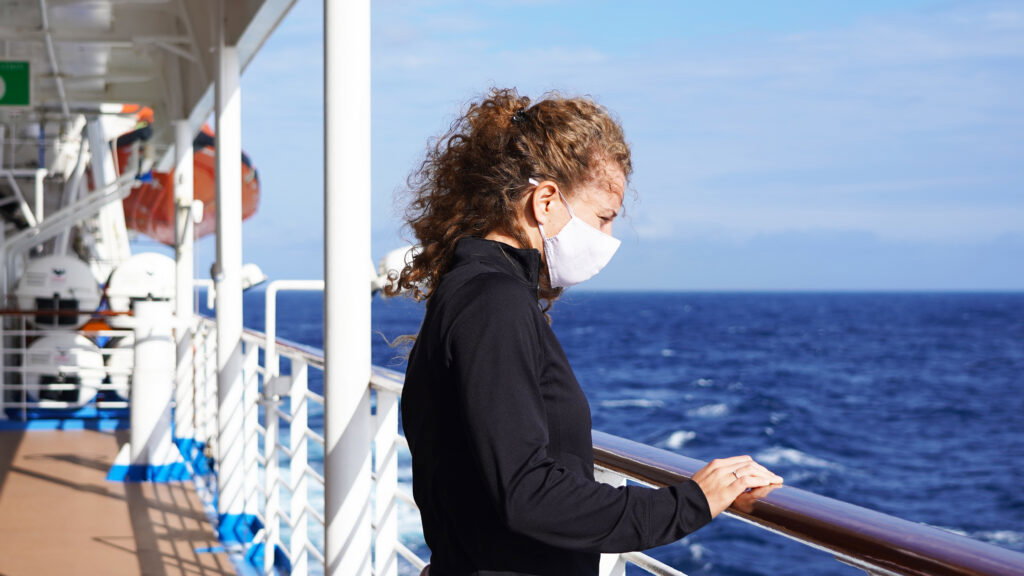
The systems are that strict because the consequences are operational, not just reputational. Credit: Artem Pachkovskyi / Shutterstock
Ask the Officer: Your cruise questions answered by a former senior ship’s officer
Introducing Ask the Officer
I grew up on the Costa del Sol watching cruise ships pass on the horizon and wondering what life looked like on the other side of that railing. At twenty-six, after the financial crisis took my business with it, I found my way to ships. Fifteen years later, having worked my way from entry level to senior officer on some of the world’s most demanding routes, I moved inland to Antequera and started writing down what I knew.
This column is for anyone who has ever sailed, considered it, or sworn they never would. Each month I’ll take a question and answer it the way I wish someone had answered it for me: honestly, from the inside, without the brochure.
“Are cruise ships really just floating petri dishes? I keep hearing horror stories and it’s putting me off.”
I spent fifteen years on those ships. Let me tell you what I actually saw.
The culture of hygiene on a cruise ship is unlike anything I have encountered elsewhere. Sanitizer levels logged like sacred texts. Temperatures charted with precision that would make a hospital proud. Here, diligence is not just a policy. It is a discipline.
And then there is the inspection. Four letters that tighten the shoulders of every officer who has ever heard them: USPH. United States Public Health. If a ship fails, it doesn’t sail. Everyone on board knows what is at stake. Kids club staff clean every plastic ball in the ball pit by hand. One by one. Thousands of them. It becomes a weekly ritual. Health inspections happen in ports around the world, but nothing focuses the mind quite like USPH. It is the one that can end a career or make it.
The response is tiered and ruthlessly precise. Once reported cases among passengers and crew reach a certain threshold, the entire operation shifts up a level. Cleaning schedules intensify. Protocols tighten. It becomes all hands on deck, literally. An entertainer who finished their show at midnight may find themselves standing by a handrail at dawn with a sanitizer bottle, wiping it down every few minutes until the next person arrives to relieve them. Three hours. Same handrail.
The crew follow the rules not just because they are required to. Going to work sick without reporting it is, on most ships, grounds for immediate dismissal. Reporting illness is protected. Concealing it is not.
The systems are that strict because the consequences are operational, not just reputational. Ships that fail to contain an outbreak can be denied entry to ports. In an industry built on arriving somewhere new every morning, that is about as serious as it gets.
Does it happen? Yes. It happens everywhere. You will just notice it more in a contained environment that is obsessed with hygiene and constantly being tested for it. Do the systems fail? Yes, when the hiring is poor and the pay reflects that. Just like anywhere else.
Have a cruise question? Write to contact@theofficersdesk.com. Selected questions will be featured in upcoming columns.
Vega Mare is the author of Inside the Floating City and The Discerning Voyager.
Sign up for personalised news
Subscribe to our Euro Weekly News alerts to get the latest stories into your inbox!
By signing up, you will create a Euro Weekly News account if you don't already have one. Review our Privacy Policy for more information about our privacy practices.





Vega Mare
ASK THE OFFICER: Vega Mare grew up on the Costa del Sol and spent fifteen years as a senior officer aboard cruise ships, leading teams across some of the world's most demanding waters. She writes and consults on cruise travel from Antequera. theofficersdesk.com
Comments