Compulsory doggie bags: Spanish restaurants must now offer customers a leftovers box
By Adam Woodward • Published: 06 Apr 2026 • 10:39 • 3 minutes read
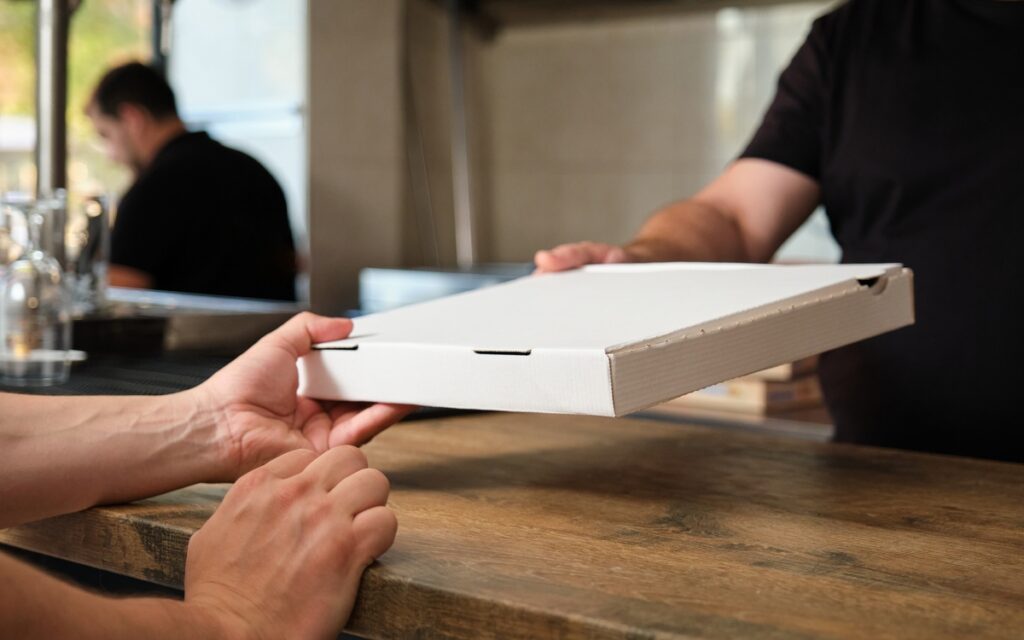
Restaurants must now offer a leftovers box. Credit: Ladanifer - Shutterstock
Diners across Spain can now take home uneaten portions without hesitation or awkward requests. A major national law has transformed this common-sense habit into an official consumer right. The new rules came in on April 3.
Why this law matters for diners and restaurant owners
Every bar, café and restaurant must now provide a free, suitable container when customers ask for unfinished food. Staff can no longer treat doggy bags as an optional favour or cultural Americanism, alien to Spanish society regardless of the Michelin stars they have. Clear, visible information about this right must appear on menus or near ordering points to make the practice feel completely normal. Only all-you-can-eat buffets escape the rule, since portions there are not individually served.
Diners can benefit directly. Generous Spanish portions no longer risk ending up in the bin. Families, couples and solo eaters will gain an easy way to enjoy meals twice while saving money. Restaurateurs, meanwhile, avoid waste-related guilt and potentially reduce costs by minimising discarded ingredients.
Broader fight against food waste across the supply chain
Spain is putting itself in line with European goals and the UN Agenda 2030. The law introduces a clear hierarchy of priorities that every food business must follow:
- First, donate safe surplus for human consumption
- next, repurpose through transformation
- then, use for animal feed
- Finally, turn residues into compost or energy
Curiously, the third in that list used to be standard practice in restaurants until it was prohibited, but here we go again with the argument about whether we were more environmentally friendly 30 years ago or today.
Important practical notes on “free” containers
- The food itself must be given without any extra charge.
- Reusable or easily recyclable containers should be provided free of charge.
- If a single-use plastic container is used, the establishment may charge for it (in line with the general plastic packaging rules in Ley 7/2022), but must show the cost separately on the bill.
The law entered into force with the specific obligations for restaurants applying from early April 2026 (fineable after a one-year adaptation period).
Larger establishments exceeding 1,300 square metres must create a formal prevention plan and seek partnerships with food banks or charities. Supermarkets will promote near-expiry products through discounts and creative marketing to keep them on shelves rather than in landfills.
European people are said to throw away more than their own weight in food annually, roughly 140 kilograms per person, while Spaniards average around 28 kilograms. Cutting these figures by half at retail and consumption stages, plus 20 percent in production, represents an ambitious yet achievable target by 2030.
What happens if rules are ignored?
Enforcement includes a graded system of fines to make sure of compliance. Minor breaches, such as failing to inform customers, can attract penalties up to €2,000. Serious violations, including lack of a prevention plan or missed donation opportunities, rise to €60,000. Repeated or especially grave offences may result in fines reaching €500,000.
Smaller businesses with fewer than ten employees receive some administrative relief, yet everyone in the sector must still adopt waste-reduction measures, and there will be checks. Sustainability specialists say that the real objective is more than just dishing out fines. Changing long-held social attitudes forms the heart of the reform. Requesting leftovers once carried a slight stigma in some circles. Now it counts as responsible, environmentally conscious behaviour.
Environmental and economic gains for everyone
Reducing food waste delivers multiple wins. Fewer discarded meals mean lower greenhouse gas emissions, reduced water consumption and more efficient use of agricultural resources. Diners save money on future meals, while restaurants improve their sustainability credentials, an increasingly important factor for modern customers.
From April 2026 onwards, finishing a meal in Spain includes a simple new step: asking for that free leftovers container. Enjoying great food, sharing memorable moments and avoiding unnecessary waste now go hand in hand. Both customers and hospitality professionals stand to gain from this move towards a more thoughtful dining culture. This might even change dining culture in Spain to move away from “eyes bigger than your belly” marketing.
So far, no one has piped up about the increased pollution of microplastics and throw-away containers. Perhaps that will come in 30 years from now.
"Too Good to Go" – New app makes healthy eating affordable and sustainable
Sign up for personalised news
Subscribe to our Euro Weekly News alerts to get the latest stories into your inbox!
By signing up, you will create a Euro Weekly News account if you don't already have one. Review our Privacy Policy for more information about our privacy practices.




Adam Woodward
Adam is a writer who has lived in Spain for over 25 years. With a background in English teaching and a passion for music, food, and the arts, he brings a rich personal perspective to his work at Euro Weekly News. As a father of three with deep roots in Spanish life, Adam writes engaging stories that explore culture, lifestyle, and the everyday experiences that shape communities across Spain.
Comments