Thousands stranded as 1,475 flights delayed and 172 cancelled across Europe
By Molly Grace • Updated: 06 Apr 2026 • 16:42 • 3 minutes read
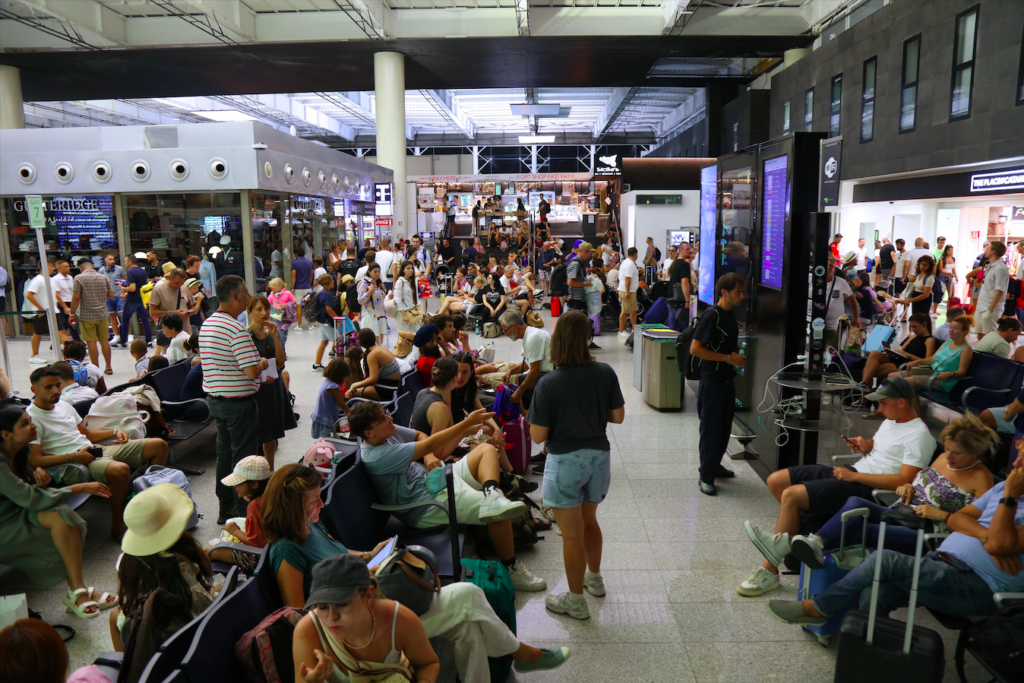
Airlines have been required to adjust schedules at short notice as delays have accumulated. Photo credit: Tupungato/Shutterstock
Air travel across Europe has come under pressure as disruption to flight schedules continues to affect multiple countries. What began as delays within parts of the network has developed into a broader operational issue, with passengers across several regions experiencing disruption to their journeys.
Thousands of passengers have been left stranded as 1,475 flights have been delayed and a further 172 cancelled within a short period. The disruption has affected Spain, England, Italy, Norway, Denmark, Sweden and the Netherlands, placing strain on key air travel corridors across the continent.
Delays and cancellations affect multiple countries and major airlines
Airlines impacted include ITA Airways, Vueling, KLM, Scandinavian Airlines (SAS) and Ryanair, among others. The scale of the disruption has made it difficult for carriers to maintain scheduled operations, particularly on routes involving connections between major cities.
The precise cause of the disruption has not been formally confirmed. However, the pattern of delays indicates that initial operational issues within the network led to aircraft and crew being out of position, with disruption increasing as schedules fell behind.
Passengers travelling through key hubs have faced uncertainty as departure times have shifted and cancellations have been confirmed at short notice. Both short-haul and longer intra-European routes have been affected.
Major airports experience operational strain
Airports in Madrid, London and Rome have been among the most affected, with delays and cancellations leading to congestion in terminals and at departure gates. Travellers have reported extended waiting times, missed connections and limited availability of alternative flights.
The disruption has not remained confined to these locations. Due to the interconnected nature of European air travel, delays at one airport have affected operations elsewhere. Aircraft arriving late have been unable to depart on time, while crew rotations have also been disrupted.
Airports in Amsterdam, Oslo, Copenhagen and Stockholm have experienced knock-on effects, extending disruption across northern and central Europe.
Airlines face scheduling challenges
Airlines have been required to adjust schedules at short notice as delays have accumulated. In many cases, aircraft and crew have not been in their expected positions, making it difficult to maintain planned operations.
Both low-cost and full-service carriers have been affected. Aircraft operating multiple routes throughout the day have carried delays forward, contributing to further disruption later in schedules. In some instances, cancellations have been necessary where recovery within the same day has not been possible.
Passengers attempting to rebook have encountered limited availability, particularly on frequently used routes. Some travellers have been required to wait until the following day or later to continue their journeys.
Passengers report disruption to travel plans
Travellers across the affected regions have experienced disruption to both business and personal travel. Missed connections have extended journey times, while some passengers have needed to arrange overnight accommodation.
Airlines have provided assistance in line with standard procedures, including rebooking options and, where applicable, support with accommodation. However, the number of affected passengers has placed pressure on customer service resources.
The disruption has also affected inbound services, with passengers travelling into Europe encountering delays before departure or upon arrival.
Network effects extend disruption across borders
European air travel operates as a closely connected network, with many routes dependent on precise timing. When delays occur at major hubs, the effects can spread across multiple countries.
Flights departing from Spain or Italy often rely on aircraft arriving from northern Europe earlier in the day. When those inbound flights are delayed, subsequent departures are also affected. This chain reaction has contributed to the scale of disruption observed.
Airspace congestion has added further complexity, particularly over busy regions such as the United Kingdom and central Europe. Air traffic management requirements have limited the number of flights able to operate on schedule.
Ongoing impact and recovery efforts
Airlines and airports have worked to restore normal operations, although recovery from disruption on this scale can take time. Aircraft and crews must be repositioned, and schedules return to normal gradually over subsequent flight rotations.
Passengers have been advised to check flight status updates and allow additional time for travel while operations stabilise. Airlines continue to monitor conditions and make adjustments where necessary.
While delays and cancellations occur within aviation, the number recorded in this instance reflects disruption affecting several countries at once. The situation demonstrates how operational issues in one part of the network can affect travel across the continent.
Broader implications for European travel
The disruption highlights the sensitivity of tightly scheduled air travel systems to operational pressure. With high passenger volumes and limited flexibility, even short-term issues can have wider consequences.
As services return to normal, the immediate effects are expected to ease. However, the incident underlines the complexity of managing air travel across multiple countries and carriers within a shared network.
Sign up for personalised news
Subscribe to our Euro Weekly News alerts to get the latest stories into your inbox!
By signing up, you will create a Euro Weekly News account if you don't already have one. Review our Privacy Policy for more information about our privacy practices.





Molly Grace
Molly is a British journalist and author who has lived in Spain for over 25 years. With a background in animal welfare, equestrian science, and veterinary nursing, she brings curiosity, humour, and a sharp investigative eye to her work. At Euro Weekly News, Molly explores the intersections of nature, culture, and community - drawing on her deep local knowledge and passion for stories that reflect life in Spain from the ground up.
Comments