Mercadona removes fish counters: T9 format brings shift to pre-packaged seafood
By Dora Urbancsek • Published: 07 Apr 2026 • 8:37 • 3 minutes read
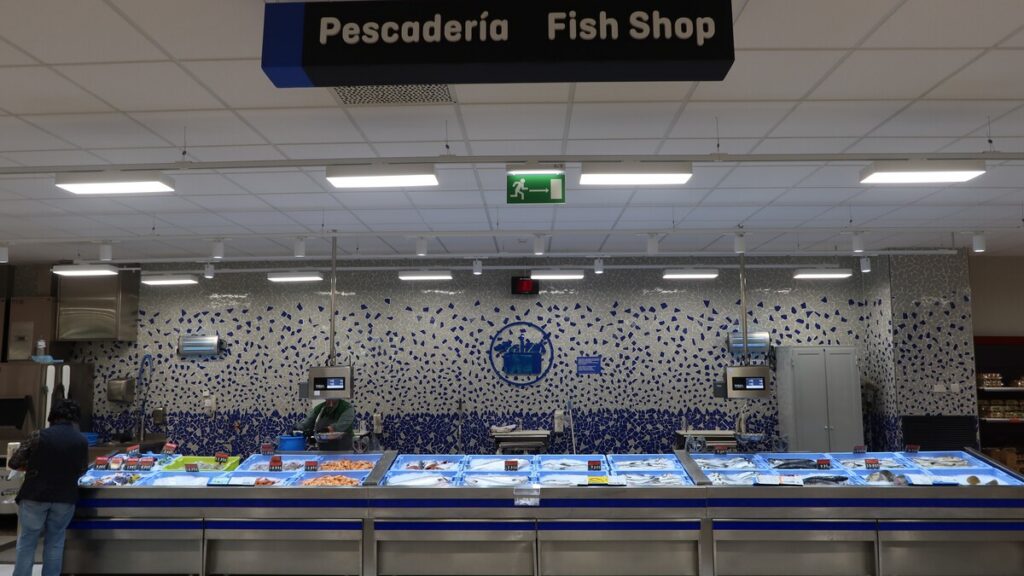
Mercadona is removing traditional fish counters in some stores Credit: Shutterstock/Marco Gallo
Mercadona is officially removing traditional fish counters in cities like Logroño and Valencia as part of its new “T9” store format rollout this April 2026. The move, confirmed by Juan Roig following a 20% decline in national fish consumption, replaces staffed service with pre-packaged trays to speed up the shopping process and reduce logistics costs.
For shoppers, the immediate consequence is the loss of personalized fish preparation and a shift toward “ready-to-go” portions. While Mercadona maintains that the change avoids hiring freezes and reduces waste, the strategy has triggered a viral backlash on social media over increased plastic use and the end of Spain’s traditional fishmonger experience.
A change that feels bigger than one store
Although this specific case comes from La Rioja, it is not the first time Mercadona has made this kind of change. The company has been testing pre-packaged fish sections in different parts of Spain for some time. For shoppers, the difference is immediate. Instead of choosing fresh fish at the counter and asking for it to be cleaned or prepared, everything is already portioned and sealed. For some, that convenience works. For others, it feels like something important has been taken away.
Shoppers complain about quality, plastic and loss of service
Many customers reacted quickly online. On X, users have criticised the decision, with some saying the experience now feels “less fresh” and more like a standard supermarket abroad. Others pointed to the increase in plastic packaging, questioning whether the change fits with growing concerns about sustainability.
A common complaint is the loss of personal service. The fish counter has traditionally been one of the few places in a supermarket where customers could speak directly to staff, ask questions, and request specific cuts. Several users also mentioned that they feel they now have less control over portion sizes, often having to buy more than they need.
@Mercadona hoy me encontré con la eliminación de pescadería que habéis metido en horribles plásticos!. Me fui sin el pescado..
Solución: el día de la semana que toca comprar pescado (sábados) será en otro hiper que se quedarán con mis 270 euros de media de gasto semanal..— Cuentaspelis (@LaCruzdelSud) January 11, 2025
Buenos días. 🙋 Efectivamente, en algunas tiendas estamos realizando un cambio en la sección de Pescadería. 🐟 Se trata de un nuevo modelo de venta cuyo objetivo es fomentar el consumo del pescado, ofreciéndolo limpio y ya preparado. (1/2)
— Mercadona (@Mercadona) January 12, 2025
Why Mercadona is moving in this direction
Mercadona has not made a big public announcement about this specific rollout, but the reasoning behind it is not new. Pre-packaged products are easier to manage. They reduce waste, simplify logistics, and speed up the shopping process. They also require fewer staff on the shop floor. From a business point of view, it is a practical decision. From a customer point of view, it depends on what you value more: speed or choice.
What this means for everyday shopping in Spain
For many people living in Spain, especially those who enjoy cooking fresh food, the fish counter is part of daily life. It is not just about buying ingredients, but about choosing them properly. Without it, shopping becomes more predictable but also more limited. For expats, this may make Mercadona feel more familiar, especially for those used to supermarkets where everything is pre-packed. At the same time, it removes one of the more traditional elements of Spanish food culture.
Common questions people are asking
Is Mercadona removing all fish counters?
No. Many stores still have them. The change is happening gradually and not everywhere at once.
Is the fish still fresh?
Yes, it is still handled under the same food safety standards. The main difference is how it is presented and sold.
A sign of where supermarkets are heading
This is not a dramatic overnight change, but it does point to a clear direction. Supermarkets in Spain are slowly moving towards quicker, more standardised shopping. For some customers, that makes life easier. For others, it takes away part of what made shopping here different. For now, the reaction shows one thing clearly: people have noticed, and not everyone is happy about it.
Sign up for personalised news
Subscribe to our Euro Weekly News alerts to get the latest stories into your inbox!
By signing up, you will create a Euro Weekly News account if you don't already have one. Review our Privacy Policy for more information about our privacy practices.



Dora Urbancsek
Dora Urbancsek is an SEO writer with over eight years of experience producing high-quality, search-optimised journalism and digital content. Based in Spain for more than five years, she covers a wide range of topics concerning Spain and Europe, including current affairs, community stories, culture, and lifestyle. Dora is known for accurate, well-researched reporting that keeps readers informed and engaged.
Comments