Good time to fill up on fuel as prices set to jump – Why, and by how much?
By Adam Woodward • Published: 13 Apr 2026 • 9:40 • 2 minutes read
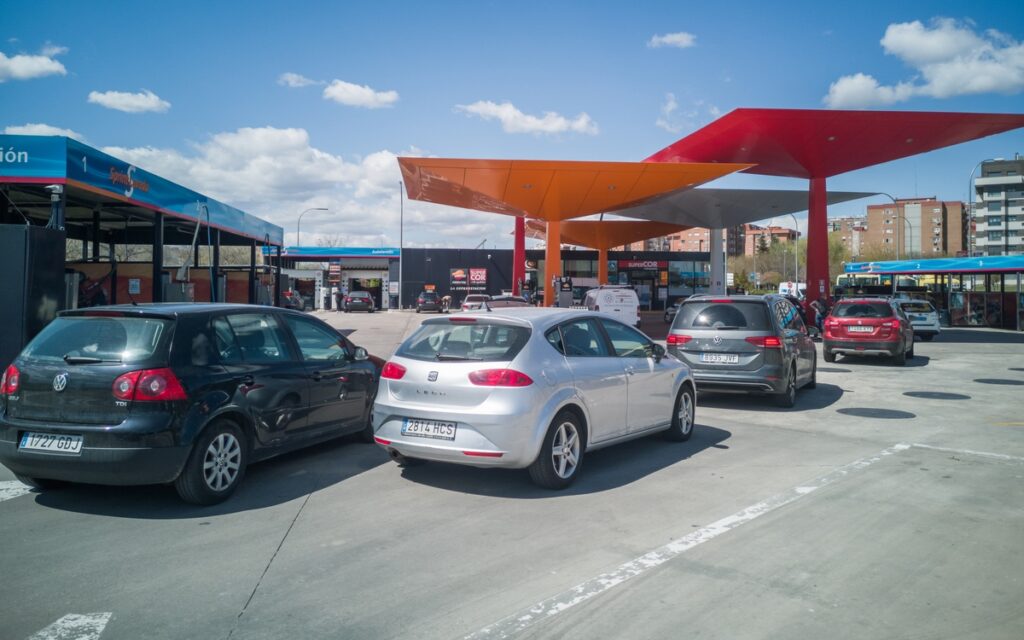
Queues to fill up at the petrol station. Credit: Natalia de la Rubia - Shutterstock
Oil markets have witnessed dramatic gains on Monday, April 13, after President Donald Trump declared an immediate naval blockade of the Strait of Hormuz following the collapse of US-Iran negotiations.
Sharp rise hits global fuel benchmarks
Brent crude, the European benchmark, has jumped nearly 7.3 per cent in early trading to go over the $102 per barrel mark by the time European stock markets prepared to open. West Texas Intermediate (WTI) crude climbed even higher, rising almost 8.5 per cent to reach $104.70 per barrel. Such rapid moves reveal acute concerns over potential disruptions to roughly one-fifth of global oil supplies that normally transit the narrow waterway.
Traders reacted immediately to the news. Earlier uncertainty around a possible ceasefire and reopening of the strait had pushed prices lower, with Texas crude closing Friday at $96.57 per barrel after a 13 per cent weekly drop, making filling up at the pump feel a little more normal in the past few days. Monday’s reversal erased much of that optimism within hours.
Trump orders naval action after failed talks
In response to failed peace talks, Trump posted on his Truth Social that the US Navy would begin blocking every vessel attempting to enter or exit the strait with immediate effect. US Central Command (CENTCOM) confirmed operations would start at 3pm on Monday, and target all maritime traffic to and from Iranian ports.
“Effective immediately, the US Navy will begin the process to block all vessels attempting to enter or exit the Strait of Hormuz,” the president stated. This measure is planned to prevent Iran from disrupting flows first and profiting themselves in these heightened tensions.
Why the Strait matters for energy markets
The Strait of Hormuz serves as a vital artery for oil exports from the Gulf region. Any lengthy restriction risks severe supply shocks, higher fuel costs worldwide, and knock-on effects for inflation and economic growth. Analysts say that even short-term uncertainty can propel prices sharply higher, as seen in previous geopolitical flare-ups.
Markets are now bracing themselves for more volatility. Energy traders are monitoring developments closely, while consumers face the prospect of rising petrol and heating bills if the blockade carries on like this. Diplomats continue searching for de-escalation paths, yet Monday’s events go to show the fragile balance in the region.
US oil exports doing well
Meanwhile, US crude oil exports are rising to record levels with the ongoing Strait of Hormuz crisis, with analysts projecting volumes to reach around 5.2 million barrels per day in April and May 2026. Empty tankers continue to stream toward the US Gulf Coast in more numbers to load American crude for onwards shipment, particularly to Asian buyers looking for replacement supplies after Middle East flows collapsed.
Far from any slowdown, American oil is flowing out at historic rates precisely because of the blockade and restricted Gulf exports, with the trend accelerating following today’s developments.
Immediate impact on petrol and diesel prices
A $10 rise in Brent crude typically adds up to 3 to 6 euro cents per litre to European pump prices, depending on taxes, refining margins, exchange rates, and so on. Retail prices in Spain therefore stand to rise as much as €10 per average car tank. The rise might not be obvious for two or three days, making early in the week a good time to fill up.
Sign up for personalised news
Subscribe to our Euro Weekly News alerts to get the latest stories into your inbox!
By signing up, you will create a Euro Weekly News account if you don't already have one. Review our Privacy Policy for more information about our privacy practices.




Adam Woodward
Adam is a writer who has lived in Spain for over 25 years. With a background in English teaching and a passion for music, food, and the arts, he brings a rich personal perspective to his work at Euro Weekly News. As a father of three with deep roots in Spanish life, Adam writes engaging stories that explore culture, lifestyle, and the everyday experiences that shape communities across Spain.
Comments