Sleeping on Spain’s beaches. What can get you fined at night
By Lucy Ramnought • Updated: 05 Jun 2026 • 11:19 • 4 minutes read
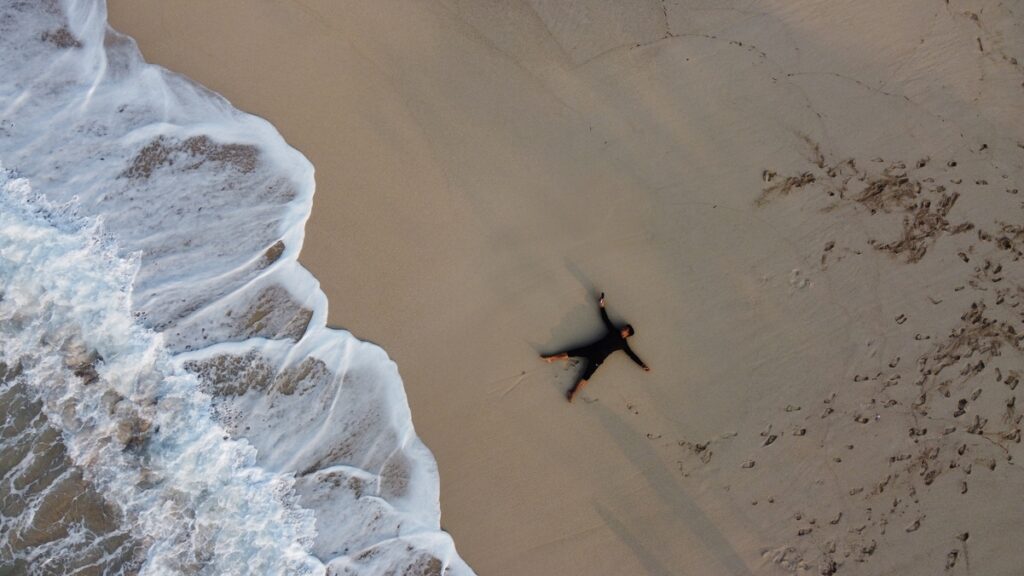
Night beach rules Credit: gogonokicha/shutterstock
There are fewer better places than a beach in Spain to watch a sunset, stargaze, or catch a sunrise. But if you decide to pull up a blanket and spend the night on the sand, you could catch yourself landed with a fine.
Most people don’t realize that there is no single nationwide Spanish law banning you from falling asleep under the stars. However, regional and local authorities have filled that legal gap with strict local bylaws. If you are caught sleeping or camping on the sand, you could face being fined.
National vs. local law
The root of the confusion comes from how Spanish beaches are governed. Under national legislation, Spain’s coastline falls under the public maritime-terrestrial domain. This is managed by the national Coastal Law , which can be found via the official Spanish State Gazette (BOE).
While Article 33 of the national coastal law strictly prohibits organized camping and temporary encampments, it remains completely silent on the concept of bivouacking, the act of a single person sleeping out in the open on a towel or in a sleeping bag.
Because national law leaves this as a grey area, the state delegates the day-to-day management of beaches to local town halls. Meaning that two beaches only a few kilometers apart could have completely different rules depending on their local beach ordinances.
One major, reason councils enforce nighttime bans is safety. Most major tourist beaches undergo tractor cleaning between 2am and 6am. Anyone sleeping on the sand is a near invisible, severe safety hazard for heavy machinery operators
Three levels of beach fines
Local area bylaws classify beach violations into three distinct categories:
Minor violations (€100–€750): These would typically be handed out if you are caught remaining on a beach during restricted, closed overnight hours or for minor littering.
Serious violations (€751–€1,500): This is the category where unauthorized overnight sleeping, even without a tent usually lands. Local police routinely fine visitors for the “unauthorized overnight occupation of public space.” In popular destinations like Benidorm, local laws explicitly prohibit remaining on or sleeping on the sand during restricted overnight hours, with fines averaging around €1,200.
Very serious violations (€1,501–€3,000+): These heavy penalties are reserved for pitching tents, driving motorized vehicles on the sand, or lighting unauthorized fires and barbecues.
Natural parks have harsher rules
Protected natural spaces, such as Cabo de Gata in Almeria or the dunes of Tarifa, are a completely different story. In these zones, regional environmental protection laws override the local town rules. Catching a fine for sleeping or camping inside a protected natural reserve can easily start at a huge €3,000 and scale upwards dramatically due to ecological damage risks.
So what is and what isn’t allowed at night?
To stay out of trouble with the local police, it helps to know how coastal towns categorize night-time activities.
Activities that are usually allowed are transient or active recreational uses. You will rarely face issues if you are walking along the shoreline, sitting up to look at the sea, stargazing, or setting up a tripod for night photography.
Certain activities exist in a legal grey area. For instance, night swimming is banned in some major tourist hubs for safety reasons but left completely unsupervised in quieter towns. Similarly, night fishing is frequently permitted, though it is usually restricted to specific night hours to avoid overlapping with daytime swimmers. Sleeping on a towel also falls into this category.
Activities that are frequently prohibited are, setting up tent camping, erecting plastic awnings, lighting open bonfires, using barbecues, or hosting loud parties with amplified music these are almost universally illegal on every beach in Spain.
What do travellers say?
The confusion surrounding these overlapping rules is a frequent topic on travel forums, where tourists often mistake a lack of police enforcement for official legality.
One traveler discussing overnight stays noted, “It’s not allowed, but that said, there were folks sleeping on Cala Llombards this morning just with blankets.” Another user humorously highlighted the administrative fragmentation: “Since Spain is kinda several countries in a trenchcoat, rules vary a lot.”
Others recount more intimidating encounters with active patrols: “I once slept at the beach because I thought it would be really cool… someone actually swept the whole beach with a search light, I guess in search of people like me.”
Quick q&a
Is it legal to sleep on the beach in Spain?
No, not practically. While no national law explicitly bans sleeping out on a towel, individual town councils hold the power to set beach rules, and the vast majority have strictly banned overnight sleeping.
What is the difference between camping and bivouacking?
Camping is pitching a tent, awning, or temporary structure. This is strictly illegal on all Spanish beaches.
Bivouacking is sleeping in the open on a towel or in a sleeping bag. National law leaves this as a grey area, but local town bylaws usually ban it anyway.
How much are the fines if I get caught?
Fines depend on the town but generally scale by severity.
Minor (€100–€750) Being on a closed beach at night or minor littering.
Serious (€751–€1,500): Sleeping on the sand (Benidorm averages €1,200).
Very serious (€1,501–€3,000+): Pitching a tent, lighting fires, or sleeping inside protected natural parks.
Can I at least sit on the beach to stargaze or watch the sunrise?
Yes. Active, recreational activities like walking the shoreline, sitting up to look at the stars, or taking photos are completely legal almost everywhere.
Why are councils so strict about overnight sleeping?
Mainly safety. Most tourist beaches are cleaned by heavy tractors during the early hours. People sleeping flat on the sand are invisible to operators and at high risk of being run over.
How can I be 100% sure of the rules?
Check the entrance of the beach for information signs, or look up the local town hall’s website for their official beach ordinance (ordenanza de playas). Taking five minutes to search can mean the difference between a memorable sunrise and a four-figure fine.
Follow Euro Weekly News on Google News
Get breaking news from Spain, travel updates, and expat stories directly on your Google News feed.
Follow on Google NewsSign up for personalised news
Subscribe to our Euro Weekly News alerts to get the latest stories into your inbox!
By signing up, you will create a Euro Weekly News account if you don't already have one. Review our Privacy Policy for more information about our privacy practices.


Lucy Ramnought
Lucy Ramnought is a local news writer and mother of 4 from the UK who has lived in the Costa Del Sol for just over 4 years. With a background in content writing and social media for various companies, and with vast experience in PA and project management, Lucy is committed to producing accurate, engaging and reliable stories to her work at Euro Weekly News.
Comments