Families caring for elderly parents in Spain say Brexit has left them with impossible choices
By Harry Dennis • Updated: 19 Jun 2026 • 13:40 • 4 minutes read
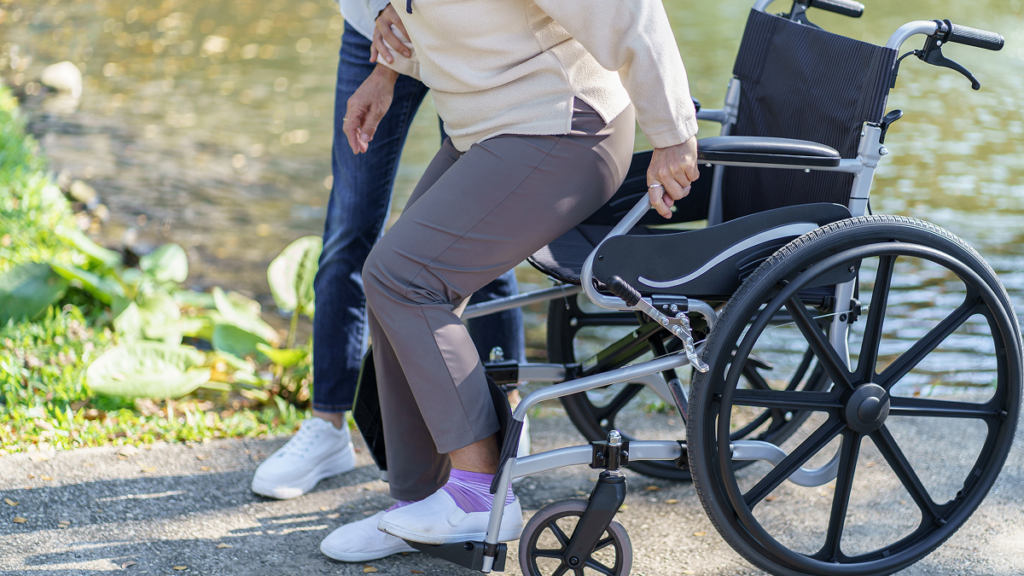
Brexit has made family care harder for some British residents in Spain. Credit: Lee Charlie / Shutterstock
A British son says his family had to sell up, stop working and move to Almería after post-Brexit visa rules made it impossible to keep caring for his elderly mother in Spain through short visits alone.
How Brexit turned family care in Spain into a residency problem
Elderly British residents in Spain are facing a growing care dilemma as post-Brexit travel rules leave some families unable to stay long enough to look after ageing parents.
The issue has been highlighted by the case of Daniel Northover, 53, who moved from Liverpool to Turre, in Almería, to care for his 80-year-old mother, Carole Bentley, after the death of her husband.
According to Reuters, Bentley cannot cook, clean or dress herself after suffering several strokes. Northover and his sister had been travelling back and forth from the UK to Spain to care for her, but the arrangement became increasingly difficult because British nationals are now treated as non-European Union citizens for most short stays.
Under Schengen rules, UK visitors can usually stay in Spain and other Schengen countries for up to 90 days in any rolling 180-day period without a visa. For families dealing with a stroke, dementia diagnosis, fall, bereavement or sudden loss of mobility, that limit can disappear quickly.
Northover said the family had been forced to “give up our lives and careers” after his sister’s family reunification visa was rejected and he and his partner sold their home to apply for a non-lucrative visa, which allows residence in Spain but does not allow paid work.
Why healthcare cover does not guarantee daily care at home
The problem is not simply whether elderly British residents can see a doctor in Spain.
Many UK pensioners living legally in Spain can access state healthcare through routes such as the S1 form, which is registered with Spain’s Instituto Nacional de la Seguridad Social (INSS), the National Social Security Institute. Once registered, this can give access to state healthcare on the same basis as a Spanish citizen.
Social care is different.
The UK government’s guidance for British people planning later life in Spain warns that families are generally expected to provide social care, including after a hospital stay, during a long-term illness or when someone needs help with daily tasks.
It also says the kind of support commonly provided by UK local authorities may not be available in Spain. Each self-governing region is responsible for state-funded social care, and local town halls often deliver services.
For British residents used to thinking of healthcare and social care as part of the same safety net, that distinction can come as a bit of a shock.
How Spain’s dependency system can leave families waiting
Spain’s Ley de Dependencia, the dependency law, sets out support for people who need help with everyday activities because of age, illness or disability.
But access is not automatic. British residents may need to prove they have been registered as living in Spain for at least five years, including the last two, before being considered for some state-funded dependency support.
The UK government warns that the process can take up to two years. It also says that even when an assessment confirms someone needs help, the service or funding may still not be available because of limited budgets or entitlement thresholds.
The official Spanish framework also shows the limits of home support. Under current rules, help at home for people assessed at Grade III dependency, the highest standard grade, ranges from 65 to 94 hours a month. That works out at just over three hours a day at the top of the range.
For someone who cannot cook, wash, dress or move safely alone, that may still leave most of the day and night uncovered.
Why returning to the UK may not be realistic for older residents
One easy answer often suggested online is that elderly British residents should simply return to the UK.
For many, it is not that simple.
Some have lived in Spain for decades. Their home, neighbours, routines, doctors and emotional support networks are in Spain.
The same discussion also pointed to the housing problem facing some older returnees, with one Reddit user asking what happens if elderly residents “can’t sell their place in Spain” and no longer have property in the UK.
GOV.UK guidance also says that British nationals moving back to the country may need to prove they have returned to the UK to live before accessing free NHS healthcare under ordinary residence rules.
For a frail pensioner with limited mobility, dementia, serious illness or no property to return to, moving to the country can be more than an administrative decision. It can be a major emotional and health risk.
How British residents in Spain can reduce the risk before a crisis
The practical advice for British families is to plan before an emergency occurs. However, sometimes life just ‘happens’ and we must make do with what we have available.
Older residents should check that their passport, residence documents, padrón municipal registration, healthcare card, S1 paperwork and medical records are in order. The padrón is the municipal register held by the local town hall and is often needed when accessing local services.
Families should also know where the nearest health centre, hospital, social services office and ayuntamiento (town hall) are, and whether an English-speaking interpreter may be needed. GOV.UK warns that many doctors, officials and social workers in Spain do not speak English.
For relatives in the UK, the 90/180-day rule should be treated as part of care planning. A few emergency trips can use up the allowance quickly, and overstaying can create further problems.
Charities such as Age Concern España can provide advice and casework support for older English-speaking residents, although they state that they do not provide direct care services.
Private carers, live-in care, night care, legal advice and translation support may all need to be budgeted for.
Follow Euro Weekly News on Google News
Get breaking news from Spain, travel updates, and expat stories directly on your Google News feed.
Follow on Google NewsSign up for personalised news
Subscribe to our Euro Weekly News alerts to get the latest stories into your inbox!
By signing up, you will create a Euro Weekly News account if you don't already have one. Review our Privacy Policy for more information about our privacy practices.




Harry Dennis
Born in the UK and raised on the Cádiz coast, Harry brings his background in design, music, and photography to his writing for Euro Weekly News, sharing stories that celebrate culture and lifestyle across Spain and beyond.
Comments