Mount Etna erupts as red alert issued causing summer flight chaos. What it means for travel to Spain
By Lucy Ramnought • Updated: 06 Jul 2026 • 11:34 • 2 minutes read
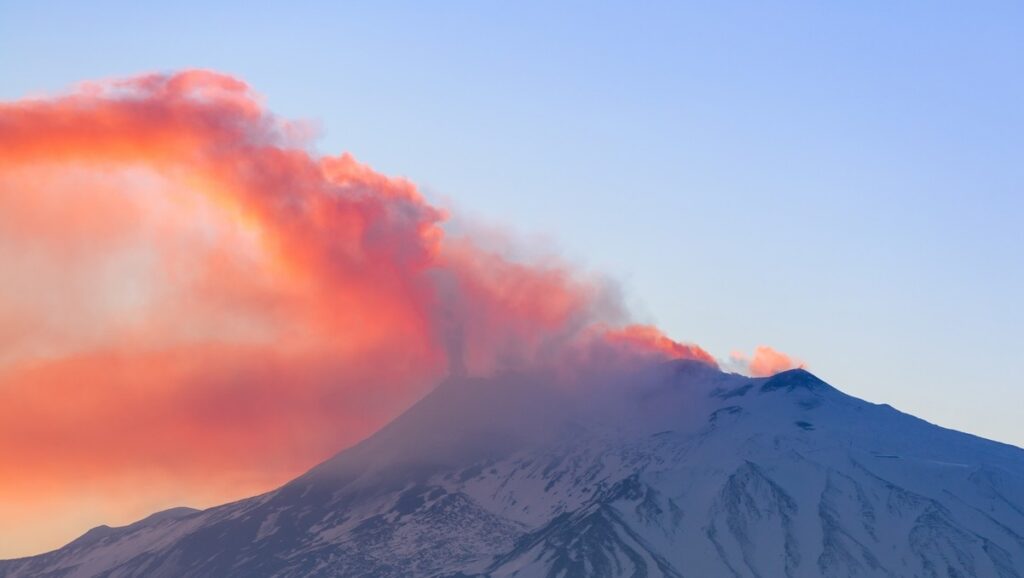
Eruption causing travel chaos Credit:Porojnicu Stelian/shutterstock
A dramatic eruption of Mount Etna has forced aviation authorities to issue the highest level of volcanic ash warning, with flights disrupted in parts of Sicily and striking images of ash clouds spreading rapidly across social media.
The eruption, which intensified on Sunday, July 5 and continued into Monday, July 6, has affected operations at airports in eastern Sicily, raising major concerns among holidaymakers across Europe about possible flight cancellations and wider travel disruption.
What has happened at Mount Etna
Mount Etna, Europe’s largest active volcano, entered a new eruptive phase during the early hours of Sunday, July 5. The eruption produced lava fountains, volcanic ash emissions and elevated volcanic tremor activity, prompting the Toulouse Volcanic Ash Advisory Centre to issue strong aviation warnings for the region.
More images of Mount Etna 🌋 pic.twitter.com/bdIa0pztsU
— Mambo Italiano (@mamboitaliano__) July 5, 2026
Italy’s National Institute of Geophysics and Volcanology (INGV) confirmed that the activity originated from Etna’s summit craters and that volcanic ash emissions were affecting parts of eastern Sicily. As with previous Etna eruptions, authorities activated established aviation and civil protection monitoring procedures.
Is travel to Spain affected by the eruption?
Current forecasts from the Toulouse VAAC show that the volcanic ash plume remains over the central Mediterranean and eastern Sicily. No official warnings relating to volcanic ash have been issued for Spain by either Spanish aviation authorities or Spain’s national weather agency, AEMET.
For those flying in and out of Spain during this peak time to destinations such as Malaga, Alicante, Barcelona, Mallorca and the Canary Islands, there is currently no disruption linked to the eruption.
Are any flights being cancelled
Flight disruption has been concentrated in Sicily, where Catania Airport has experienced operational restrictions due to volcanic ash and reduced visibility. Passengers travelling directly to Spain from the UK, Ireland and most European airports should not expect disruption unless their journey includes a connection through affected areas of southern Italy.
Which airports are currently disrupted
Current disruption is largely confined to Sicily. However airports potentially affected by diversions include, Catania-Fontanarossa Airport, Comiso Airport and other airports in southern Italy, depending on ash movement. Travellers with onward connections through Sicily should check directly with their airline before travelling.
Is it safe to fly during the eruption even if not on my route?
Volcanic ash can present a hazard to aircraft engines if encountered directly. For this reason, international aviation authorities continuously monitor volcanic activity and issue warnings to airlines and air traffic controllers.
The European region is monitored by dedicated Volcanic Ash Advisory Centres, which provide regular forecasts and aviation guidance. If volcanic ash poses a risk to aircraft operations, flights are rerouted, delayed or cancelled as a precaution.
What to do if your flight is via Italy
If your journey includes a connection through southern Italy or Sicily, consider the following:
Check your airline’s website before travelling.
Register for airline flight alerts.
Monitor official airport updates.
Allow extra connection time where possible.
Ensure your travel insurance details are accessible.
Travellers connecting through Rome, Milan and northern Italian airports are unlikely to be affected.
Will volcanic ash from Mount Etna reach Spain?
Current official forecasts show no volcanic ash moving towards Spain.
Are flights from the UK to Spain affected?
There is currently no evidence of widespread disruption to flights between the UK and Spain.
Could the situation change?
Volcanic activity can change quickly. However, aviation authorities continuously monitor conditions and would issue updated guidance if circumstances changed.
Follow Euro Weekly News on Google News
Get breaking news from Spain, travel updates, and expat stories directly on your Google News feed.
Follow on Google NewsSign up for personalised news
Subscribe to our Euro Weekly News alerts to get the latest stories into your inbox!
By signing up, you will create a Euro Weekly News account if you don't already have one. Review our Privacy Policy for more information about our privacy practices.



Lucy Ramnought
Lucy Ramnought is a local news writer and mother of 4 from the UK who has lived in the Costa Del Sol for just over 4 years. With a background in content writing and social media for various companies, and with vast experience in PA and project management, Lucy is committed to producing accurate, engaging and reliable stories to her work at Euro Weekly News.
Comments