Four tiny heartbeats, one in 15 million odds and a birth that stunned doctors
By Molly Grace • Published: 21 Jul 2026 • 16:45 • 3 minutes read
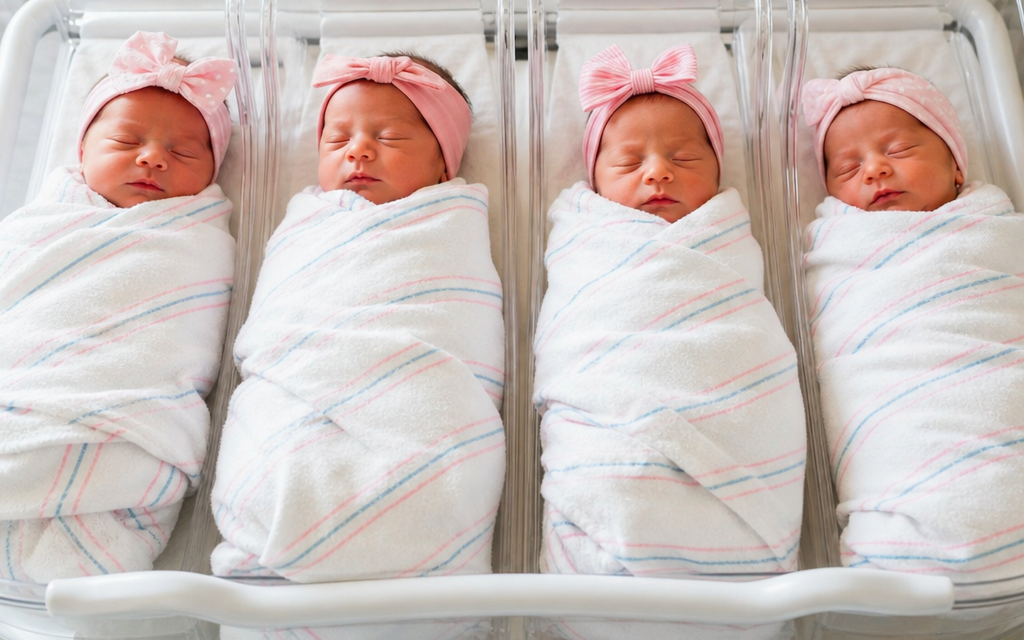
Stories of naturally conceived identical quadruplets are extremely rare. Photo credit: AI Generated
One baby is life-changing. Four arriving at once? That’s something no parent can truly prepare for. When Australian couple Jenitar and Ray Na’amoana attended what they thought would be a routine pregnancy scan, they had no idea they were about to become part of medical history. Instead of one baby, doctors discovered four identical girls growing from a single fertilised egg, a pregnancy so rare experts estimate it happens just once in every 15 million pregnancies.
Months later, after a tense, high-risk pregnancy, the couple welcomed daughters Emily, Harriet, Catherine and Alexa, all born prematurely but safely by Caesarean section at 28 weeks and four days at Brisbane’s Royal Brisbane and Women’s Hospital. Now, while the family celebrates an extraordinary miracle, they are also facing a reality few parents could ever imagine, the staggering cost of bringing four newborn babies home at the same time.
From miracle to mounting bills
As heartwarming as the story is, reality arrived just as quickly as the babies. Already parents to four children, the Na’amoanas are now a family of ten and the financial impact is almost impossible to comprehend. Four cots, four car seats, four highchairs, four prams, thousands of nappies, mountains of baby clothes, a larger family vehicle…
For most parents, preparing for one newborn is expensive enough. Preparing for four at once is a challenge that would overwhelm almost any household. The girls remain in neonatal intensive care, where premature babies often spend weeks or months receiving specialist treatment before they are strong enough to go home. Even after leaving hospital, many premature babies require ongoing medical appointments and close monitoring during their early years.
Millionaire steps in to help
Recognising the enormous challenge facing the family, friends launched an online fundraiser to help cover essential expenses, from replacing their family vehicle to buying the equipment needed for four newborns. Then came an unexpected act of generosity, Australian technology entrepreneur and millionaire Bevan Slattery donated A$10,000, giving the campaign an immediate boost and inspiring hundreds of others to contribute.
His donation quickly became one of the biggest talking points surrounding the story, with many praising the businessman for stepping in to help a family whose lives had changed overnight. The fundraiser has continued to attract donations from strangers touched by one of Australia’s most remarkable birth stories.
Four tiny fighters
Although they arrived more than two months early, all four girls are reported to be doing well under the care of neonatal specialists. For the doctors and nurses involved, the successful delivery represents the culmination of months of intensive planning, while for the parents it marks the beginning of an entirely new chapter.
Stories of naturally conceived identical quadruplets are so rare that they make headlines around the world whenever they occur. Medical experts believe many obstetricians will never witness such a pregnancy during their entire careers. Yet behind the extraordinary statistics lies a very ordinary family suddenly adapting to extraordinary circumstances. Instead of celebrating the arrival of one new baby, Jenitar and Ray now face the joyful chaos of raising four daughters born against almost impossible odds.
A pregnancy doctors may only see once in a lifetime
Multiple births are becoming more common thanks to fertility treatment, but this case is in a league of its own. The Na’amoana sisters were conceived naturally. All four babies developed from one fertilised egg that split repeatedly during the earliest days of pregnancy, with the girls sharing a single placenta throughout their development. Consultant obstetrician Dr Alexa Bendall, who cared for the family, described the pregnancy as exceptionally rare, with many specialists spending their entire careers without encountering a similar case.
The youngest baby was later named Alexa in honour of the doctor who helped guide the family through months of careful monitoring and specialist care. With four babies depending on one placenta, every stage of the pregnancy carried additional risks. Delivering the girls safely required meticulous planning from a large multidisciplinary team determined to give each baby the best possible start.
A miracle measured in more than numbers
The chances of a naturally conceived identical quadruplet pregnancy may be around one in 15 million, but for the Na’amoana family those numbers are now far less important than four tiny lives fighting to grow stronger every day. Their story has become more than a remarkable medical case. It is also a reminder that extraordinary moments often inspire extraordinary kindness.
As donations continue to pour in and the family prepares for the day all four girls can finally leave hospital together, one thing is already certain: what began as one of the world’s rarest pregnancies has become a story of resilience, generosity and hope that has captured hearts far beyond Australia.
Follow Euro Weekly News on Google News
Get breaking news from Spain, travel updates, and expat stories directly on your Google News feed.
Follow on Google NewsSign up for personalised news
Subscribe to our Euro Weekly News alerts to get the latest stories into your inbox!
By signing up, you will create a Euro Weekly News account if you don't already have one. Review our Privacy Policy for more information about our privacy practices.

Molly Grace
Molly is a British journalist and author who has lived in Spain for over 25 years. With a background in animal welfare, equestrian science, and veterinary nursing, she brings curiosity, humour, and a sharp investigative eye to her work. At Euro Weekly News, Molly explores the intersections of nature, culture, and community - drawing on her deep local knowledge and passion for stories that reflect life in Spain from the ground up.
Comments