Suitcase stress: The airports leaving travellers waiting for missing bags
By Molly Grace • Published: 28 Jul 2026 • 0:50 • 3 minutes read
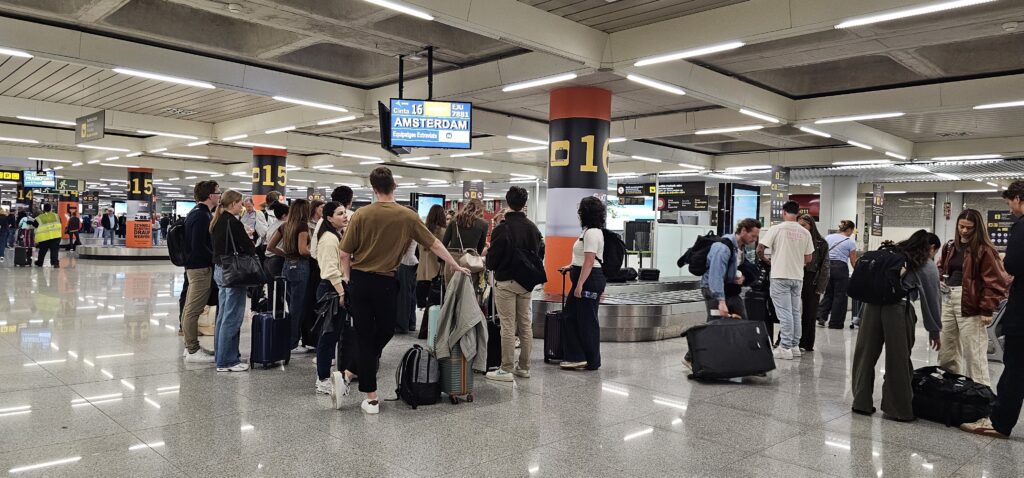
Peak holiday periods only add to the pressure. Photo credit: Daria Zelenska/Shutterstock
There are few holiday moments more frustrating than standing beside an empty baggage carousel while everyone else wheels their suitcase towards the exit. The conveyor belt slows to a stop, the lights switch off and the uncomfortable thought begins to creep in: where is my luggage?
While airlines successfully transport millions of bags every year, some airports are far more likely than others to leave passengers filing lost baggage reports instead of heading straight to the beach or hotel.
The airports dominating the list
The top of the this years ranking looks very different from previous years, with Seattle-Tacoma International Airport (Sea-Tac) taking the unwanted title of the airport where passengers are most likely to experience lost luggage problems. According to Airspace Times’ latest analysis, travellers using Sea-Tac face an estimated 1 in 33 chance of their baggage going missing, giving it a lost luggage rate of 3.06 per cent.
The list also highlights major international airports around the world where baggage handling remains a challenge. Indira Gandhi International Airport in Delhi ranks second, with a reported 1 in 68 chance of luggage problems, followed by Brussels Airport, where the risk stands at approximately 1 in 80 travellers.
Completing the top five are Chhatrapati Shivaji Maharaj International Airport in Mumbai and London Stansted Airport, with luggage issues affecting around 1 in 85 and 1 in 98 passengers respectively.
Other major airports appearing in the ranking include Toronto Pearson International Airport, Dallas/Fort Worth International Airport, London Heathrow, Phoenix Sky Harbor International Airport and Amsterdam Schiphol.
European travellers may be surprised to see some familiar names much lower down the list. Heathrow, one of the world’s busiest airports, ranks eighth, while Amsterdam Schiphol appears in tenth place. Meanwhile, Barcelona-El Prat Airport ranks 23rd globally, with an estimated baggage problem rate of around 1 in 855 passengers.
Bigger airports, bigger challenges
Before anyone swears off flying through Heathrow or Barcelona, it’s worth remembering that the rankings don’t necessarily mean these airports lose the highest percentage of luggage. Instead, they process enormous numbers of passengers every day, meaning even a relatively small error rate can result in thousands of delayed bags over the course of a year.
Every suitcase passes through a remarkably complex journey involving check-in systems, automated conveyor belts, baggage scanners, sorting facilities, loading teams and connecting flights. If one part of that chain is delayed, particularly during tight flight connections, luggage can easily miss the aircraft even when its owner does not. Peak holiday periods only add to the pressure, with airports handling record numbers of travellers during the summer months.
Most bags aren’t lost forever
Despite the horror stories shared on social media, permanently lost luggage is actually much rarer than many travellers imagine. Industry figures show that most baggage problems involve delays rather than permanent loss. The majority of mishandled bags are reunited with their owners within 48 hours, often arriving on the next available flight.
Common reasons include short connection times, missed transfers, damaged baggage tags or late-loading during busy departure periods. International flights involving several airlines are generally more vulnerable to delays than direct routes, simply because luggage has to move through multiple handling systems before reaching its final destination.
How to improve your chances
Experienced travellers have developed a few simple habits that can significantly reduce the inconvenience if luggage does go astray. Photographing your suitcase before travelling makes it easier to identify, while removing old baggage stickers helps prevent scanners reading outdated flight information.
Many passengers now also place Bluetooth or GPS tracking devices inside checked luggage, allowing them to see exactly where their suitcase is through a smartphone app. Although the tracker won’t stop baggage going missing, it can often help airport staff locate it more quickly. Keeping medication, valuables, travel documents and a change of clothes in hand luggage is another precaution that can save a holiday if checked baggage is delayed.
Know your rights
If your luggage fails to arrive, report it immediately before leaving the airport. Airlines will usually ask passengers to complete a Property Irregularity Report (PIR), which officially records the missing baggage and begins the tracing process.
Passengers may also be entitled to reimbursement for essential purchases, such as clothing or toiletries, while waiting for their luggage to be returned, although receipts should always be kept. In cases where baggage is permanently lost or seriously delayed, compensation may also be available under international aviation rules, depending on the circumstances.
Don’t let it ruin your holiday
With millions of bags travelling successfully every week, the chances are your suitcase will arrive exactly where it should. Even so, the latest rankings serve as a reminder that the world’s busiest airports face enormous logistical challenges, particularly during the height of the summer travel season.
For anyone heading abroad, a few minutes spent preparing before checking in could make all the difference if your suitcase decides to take an unexpected detour. After all, discovering your luggage has gone sightseeing without you is one travel souvenir nobody wants to bring home.
Follow Euro Weekly News on Google News
Get breaking news from Spain, travel updates, and expat stories directly on your Google News feed.
Follow on Google NewsSign up for personalised news
Subscribe to our Euro Weekly News alerts to get the latest stories into your inbox!
By signing up, you will create a Euro Weekly News account if you don't already have one. Review our Privacy Policy for more information about our privacy practices.





Molly Grace
Molly is a British journalist and author who has lived in Spain for over 25 years. With a background in animal welfare, equestrian science, and veterinary nursing, she brings curiosity, humour, and a sharp investigative eye to her work. At Euro Weekly News, Molly explores the intersections of nature, culture, and community - drawing on her deep local knowledge and passion for stories that reflect life in Spain from the ground up.
Comments