Spain’s earthquake risk explained: Why southern Spain is one of Europe’s seismic hotspots
By Adam Woodward • Published: 15 Aug 2026 • 13:25 • 4 minutes read
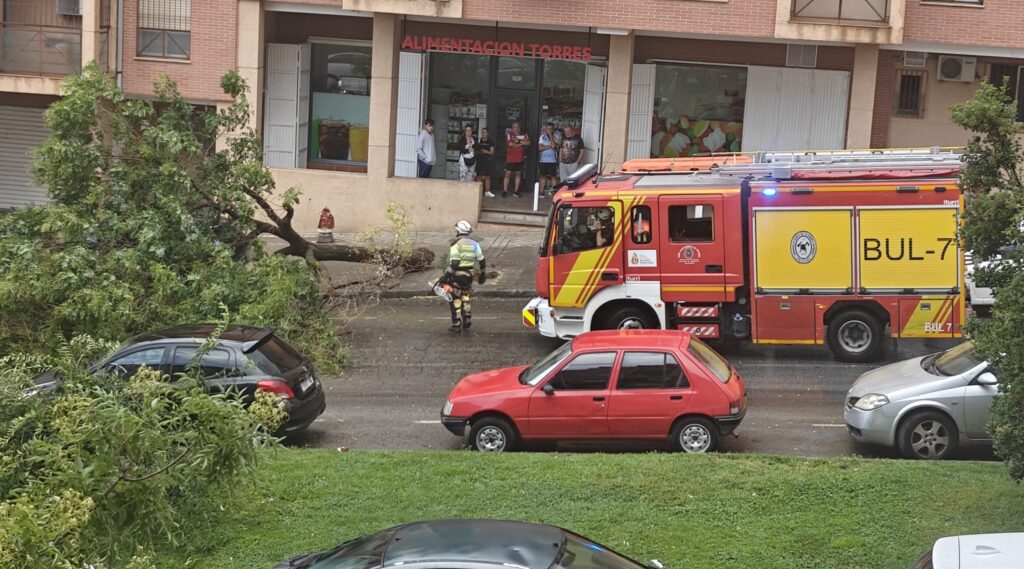
Firefighters clear fallen trees after Granada earthquake. Credit: Ricardo López X
A slow-motion collision beneath Spain is keeping parts of the country on shaky ground, with southern and eastern regions carrying some of the highest earthquake risks in the country.
For British, Irish and other northern European residents who have made Spain their home, the subject can feel particularly unsettling. Many people arrive expecting scorching summers, busy beaches and the occasional dramatic storm, but not the possibility of the ground moving beneath their feet.
Yet earthquakes are part of Spain’s geological every day reality, and an earthquake reported in Almeria province this morning is another timely reminder that seismic activity is not something confined to history books.
Euro Weekly News has previously reported on earthquakes in Almeria, including a powerful 4.5-magnitude tremor near Tabernas in February which was felt across several areas.
Why does Spain get earthquakes?
Spain is close to the meeting point of the African and Eurasian tectonic plates. Africa is slowly moving towards Europe at roughly 4 to 5 millimetres a year. That may sound tiny, but over geological timescales it is an enormous force.
Scientists sometimes describe this slow approach as a geological “kiss”. It does not mean that Spain is sitting on top of one enormous fault waiting to suddenly split apart. Instead, pressure is distributed through a complicated network of faults and fractured rock.
Spain’s Civil Protection authorities explain that the Iberian Peninsula lies on the south-western edge of the Eurasian plate, where it interacts with the African plate. Between 1,200 and 1,400 earthquakes are recorded across the Iberian Peninsula every year, although most are too small to be noticed by people.
That distinction matters. Earthquake activity does not automatically mean destructive earthquakes are common.
Which parts of Spain face the greatest earthquake risk?
Andalucia is one of the areas where the geological story becomes particularly important. A broad zone of higher seismic hazard stretches through southern and eastern Spain, with areas of Andalucia, Murcia and the Valencian region particularly relevant for residents and property owners. Parts of the Pyrenees and Galicia also feature on long-term seismic hazard maps.
Registrado un seísmo de magnitud 5 con epicentro en #Alhendín #Granada
El @E112Andalucia gestiona más de 80 llamadas
Se han recibido avisos de todas las provincias, salvo de Huelva y Cádiz pic.twitter.com/t3nxMoigWY
— EMA 112 (@E112Andalucia) August 14, 2026
Research published in El Pais previously estimated that more than 14 million people live in areas classified as having high or very high seismic risk. That figure covers a broad geographical area rather than suggesting that 14 million people are in immediate danger.
Spain’s official seismic hazard map gives a more useful picture for individual homeowners because risk varies considerably from one location to another. The Instituto Geografico Nacional (IGN) provides an interactive map showing estimated seismic hazard at specific points across Spain.
Check Spain’s official seismic hazard map
Almeria, Granada and Malaga deserve special attention
Residents of southern Spain have plenty of historical evidence that earthquakes are nothing new. Granada is particularly well known for seismic activity. The devastating 1884 earthquake caused widespread destruction in the region, while smaller sequences have repeatedly rattled the province.
Almeria also sits within a particularly interesting part of the wider geological picture. The province faces the Alboran Sea, where active faults form part of the complicated boundary between Africa and Europe.
Recent EWN reporting has also covered a large earthquake swarm between Estepona and the Sierra de Grazalema, with 105 small earthquakes recorded in just one week earlier this year.
Malaga residents may remember the 4.9-magnitude earthquake recorded off the coast of Fuengirola in December 2025, which was felt across large parts of southern Spain. None of this means residents should expect a major earthquake. It does mean that southern Spain is far from geologically inactive.
Terremoto 5.0º registrado en #Ogíjares #Granada pic.twitter.com/8tYFzIGdNA
— David MENDOZA! (@MSDGR97) August 15, 2026
Why the same earthquake can feel very different
Magnitude is only part of the story. A relatively modest earthquake close to the surface can feel much stronger than a larger, deeper event several dozen kilometres away. Ground conditions also matter.
Soft sedimentary ground can shake foundations even more, meaning two people living only a few kilometres apart may experience the same earthquake very differently.
That is particularly relevant for people living in blocks of flats. A resident several floors up may notice swaying or rattling that someone on the ground floor barely feels.
What should you do if an earthquake strikes?
Panicking and rushing for the front door is one of the things people should avoid. Civil Protection advice is straightforward: if you are indoors, stay inside during the shaking and protect yourself beneath sturdy furniture or beside an interior load-bearing wall. Keep away from windows, mirrors and heavy objects that could fall.
People outside should move away from buildings, trees, electricity cables and anything else that could fall. Drivers should stop somewhere safe and stay in the vehicle until the shaking ends.
Afterwards, check for injuries and obvious hazards. Anyone smelling gas or seeing damaged electrical wiring should leave the area and follow official instructions. Lifts should not be used after a quake.
What about your Spanish home and insurance?
Property owners should also think about earthquakes before one happens rather than afterwards. Checking whether a home has been built or refurbished to the applicable seismic standards is sensible, particularly when buying an older property in Andalucia, Murcia or eastern Spain.
Insurance cover is another point worth checking carefully. Standard home policies can differ in what they cover, particularly when damage results from a natural disaster. Spain also has a national compensation system for certain extraordinary risks, so homeowners should understand what their ordinary policy covers and what falls under the wider system. Renters should keep copies of important documents and make sure they know how to shut off gas, water and electricity where appropriate.
For those who felt this morning’s Almeria earthquake, the geological explanation is a reminder that Spain’s ground may occasionally move – but it is also a reminder that most of the country’s thousands of annual seismic events are small.
Follow Euro Weekly News on Google News
Get breaking news from Spain, travel updates, and expat stories directly on your Google News feed.
Follow on Google NewsSign up for personalised news
Subscribe to our Euro Weekly News alerts to get the latest stories into your inbox!
By signing up, you will create a Euro Weekly News account if you don't already have one. Review our Privacy Policy for more information about our privacy practices.


Adam Woodward
Adam is a writer who has lived in Spain for over 25 years. With a background in English teaching and a passion for music, food, and the arts, he brings a rich personal perspective to his work at Euro Weekly News. As a father of three with deep roots in Spanish life, Adam writes engaging stories that explore culture, lifestyle, and the everyday experiences that shape communities across Spain.
Comments