Almería’s sea has never been this warm, and the record keeps climbing
By Harry Dennis • Published: 21 Aug 2026 • 17:55 • 2 minutes read
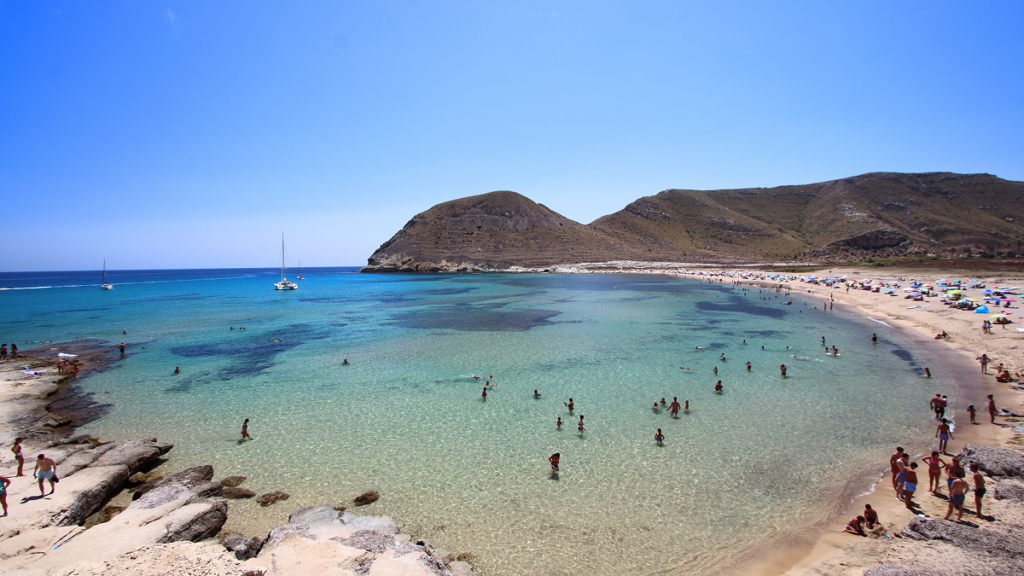
Scientists point to climate change as the main driver behind the long-term warming. Credit: Nacho Such / Shutterstock
A bath-warm Mediterranean swim might sound appealing for beachgoers visiting the coast, but scientists see rising sea temperatures as one of the clearest signs of a warming climate. The sea off Almería’s Cabo de Gata has just logged its hottest temperature since records bega, and the previous record set there barely lasted two years.
Cabo de Gata’s buoy logs 28.84°C, beating the mark set in 2024
The buoy off Cabo de Gata, part of the state ports authority’s monitoring network, recorded a water temperature of 28.84°C at 1pm on Wednesday August 20, the highest figure logged there since measurements began in 2001. That is 0.23°C higher than the previous record of 28.61°C, set 2 years ago, on August 21 2024. The sea stayed above 28°C for around 17 hours, from 9am on the Wednesday through to 2am the following morning.
Puertos del Estado runs a network of monitoring buoys along Spain’s coastline, tracking sea conditions including temperature, wave height and wind. The Cabo de Gata buoy has been logging readings since 2001, giving more than two decades of data on how the water there has changed.
A clear jump from the buoy’s own long-term average
The buoy’s own data shows how quickly conditions have shifted at this one spot on the Almería coast. Between 2001 and 2010, the hottest August afternoons averaged around 26.4°C, peaking at 27.8°C in 2009.
The following decade barely moved that figure, settling at 26.51°C with a high of 27.08°C in 2018. Since 2021, though, the same August average has climbed to 28.08°C. That’s more than one and a half degrees higher than the decade before it.
Neighbouring waters are running hot too
Cabo de Gata’s record was not an isolated reading. A day earlier, on Tuesday August 19, the buoy at Málaga port reached 28.8°C, a figure Spain’s national weather agency, Aemet (the State Meteorological Agency), described as incredible.
Aemet said sea temperatures along this stretch of coast were running well above normal for the time of year, in keeping with a broader pattern seen across the Mediterranean this summer.
Records have been beaten almost every month since 2022
Scientists studying the data point to climate change as the main driver behind the long-term warming. Aside from the final three months of the year, every month has set a new temperature record at some point between 2022 and 2026. The pattern suggests the latest reading at Cabo de Gata may not stand for long. The last record lasted less than two years, and each one since 2021 has been broken sooner than the one before it.
Follow Euro Weekly News on Google News
Get breaking news from Spain, travel updates, and expat stories directly on your Google News feed.
Follow on Google NewsSign up for personalised news
Subscribe to our Euro Weekly News alerts to get the latest stories into your inbox!
By signing up, you will create a Euro Weekly News account if you don't already have one. Review our Privacy Policy for more information about our privacy practices.





Harry Dennis
Born in the UK and raised on the Cádiz coast, Harry brings his background in design, music, and photography to his writing for Euro Weekly News, sharing stories that celebrate culture and lifestyle across Spain and beyond.
Comments