Speeding in Spain: the exact speeds that can mean a €600 fine, six points or prison
By Harry Dennis • Published: 21 Aug 2026 • 13:30 • 3 minutes read
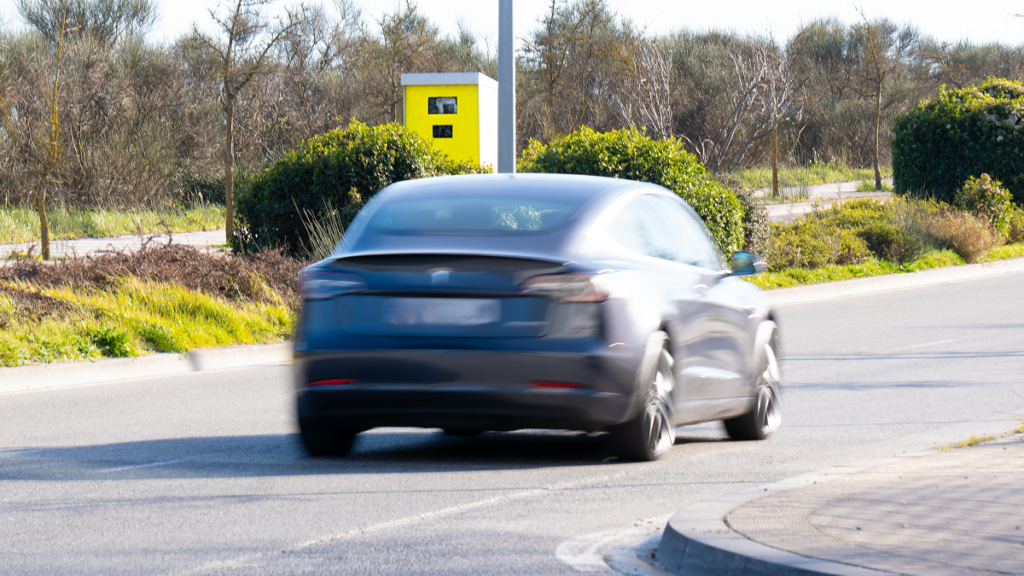
Fines can range from €100 to €600, and in extreme cases, carry prison time. Credit: Credit: photosoria / Shutterstock
Twenty kilometres an hour over the limit costs a flat 100 euros wherever it happens, but push further past that and the road starts to matter. The same excess can mean a modest fine on a motorway or six penalty points on a town street. Here is exactly what every excess now costs, road type by road type and radar by radar.
What to expect from Spain’s traffic authority if caught speeding
Spain’s traffic authority, the Dirección General de Tráfico (DGT), fines speeding drivers between 100 and 600 euros under an official scale that depends on two things: the type of road being driven on, and precisely how many kilometres an hour over the limit a radar recorded.
Penalty points only start once the excess passes a set threshold, and the scale itself splits in two. One table for roads limited to 50 km/h or under, and a separate, slightly more forgiving one for anything faster.
Fines on roads limited to 50 km/h or under
This scale covers most town and city streets, including the 30 km/h limit that has become the default on single-lane urban roads without a segregated pavement.
- 1-20 km/h over: €100, no points.
- 21-30 km/h over: €300, two points.
- 31-40 km/h over: €400, four points.
- 41-50 km/h over: €500, six points.
- More than 50 km/h over: €600, six points, and a possible criminal case once the excess passes 60 km/h.
Fines on faster roads, from country lanes to motorways
Conventional roads carry a 90 km/h limit and motorways or dual carriageways 120 km/h, and both sit under this second scale, which allows more room before the price jumps.
- Up to 30 km/h over: €100, no points.
- 31-50 km/h over: €300, two points.
- 51-60 km/h over: €400, four points.
- 61-70 km/h over: €500, six points.
- More than 70 km/h over: €600, six points, and a possible criminal case once the excess passes 80 km/h.
When speeding stops being a fine and becomes a crime
Both scales cap out at 600 euros and six points, but the DGT hands the case to the courts once an excess crosses a fixed line: 60 km/h over in a built-up area, or 80 km/h over on an interurban road. At that point the offence falls under the Criminal Code rather than the traffic regulations. Article 379 sets a penalty of three to six months in prison, or a fine and community service, plus a driving ban of between one and four years.
A driver caught doing 160 km/h on a 60 km/h road near Málaga this year was reported to be facing exactly this outcome, an illustration of how quickly an ordinary fine turns into a criminal case once the margin gets large enough.
Radar tolerance margins have shrunk to just a few km/h
Spanish drivers used to talk about an informal “5 and 7” cushion, a few extra km/h that older radars were assumed to miss. New-generation cameras are far more precise, and that unofficial buffer has effectively disappeared.
The legal tolerance that remains is narrower and depends on the device. According to the Real Automóvil Club de España (RACE), fixed and section radars carry a margin of three km/h below 100 km/h and three per cent above it, while mobile radars, including those mounted in patrol cars or held by hand, allow five km/h or five per cent. That margin is already factored into the reading before any fine is issued.
Paying within 20 days halves the fine, but there is a catch for tourists and rental drivers
Under the DGT’s own rules, a driver has 20 calendar days from notification to pay and receive an automatic 50 per cent reduction, but doing so waives the right to appeal. Anyone who wants to contest the fine instead has 45 days in total to settle in full before it is passed to the tax agency with a 20 per cent surcharge added.
Fines only arrive by post or through the DGT’s electronic notification system, never by email, and the agency warns that any emailed “fine” is a scam.
For visitors and residents driving on a foreign or hire car, the process is much the same, though rental firms typically pass on the driver’s details along with an administrative charge of their own. Penalty points stay tied to a Spanish-issued licence, so a UK or other foreign licence holder will not lose points at home, but cooperation between Spanish and British authorities on chasing unpaid fines has been tightening since a 2025 UK-EU agreement, meaning an unpaid fine is increasingly likely to catch up with a driver long after they have left Spain.
Follow Euro Weekly News on Google News
Get breaking news from Spain, travel updates, and expat stories directly on your Google News feed.
Follow on Google NewsSign up for personalised news
Subscribe to our Euro Weekly News alerts to get the latest stories into your inbox!
By signing up, you will create a Euro Weekly News account if you don't already have one. Review our Privacy Policy for more information about our privacy practices.





Harry Dennis
Born in the UK and raised on the Cádiz coast, Harry brings his background in design, music, and photography to his writing for Euro Weekly News, sharing stories that celebrate culture and lifestyle across Spain and beyond.
Comments