Spain’s hospital vending machines are failing patients as junk food dominates
By Harry Dennis • Updated: 01 Sep 2026 • 9:32 • 2 minutes read
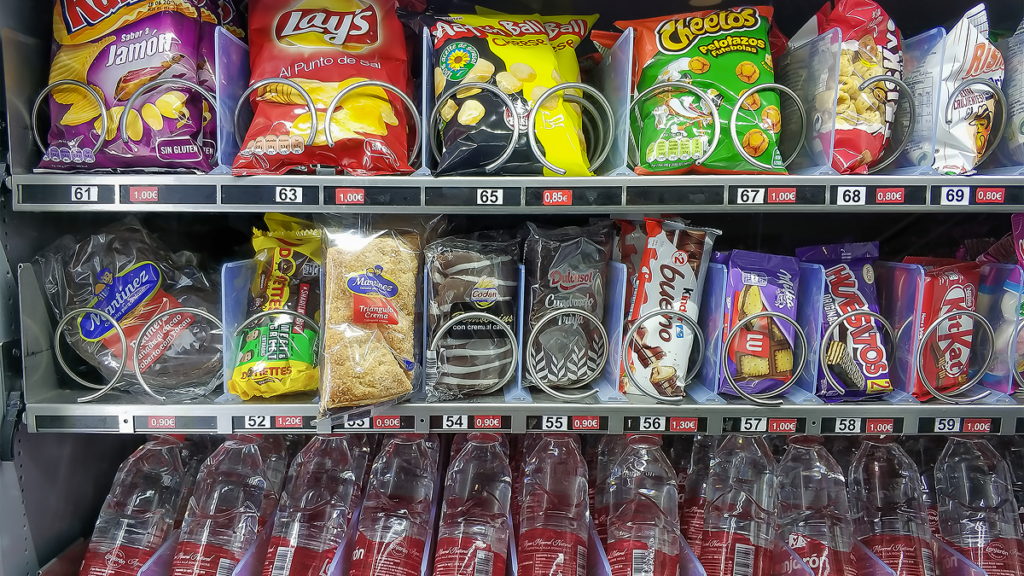
Healthy options are still the exception in Spain's hospital vending machines. Credit: agsaz / Shutterstock
A trip to the emergency room already comes with enough stress, without discovering the only food on offer is a chocolate bar or a packet of ham-flavoured crisps. A new study of Spain’s hospital vending machines found healthy snacks are the exception, and often the pricier option too.
Crisps and sweets are often the cheapest thing on the machine
Consumer group OCU examined 171 vending machines across the emergency departments of 52 Spanish hospitals, and found the healthiest items were consistently the most expensive ones too. In 44 per cent of machines stocking both types of product, the cheapest snack on offer was an unhealthy one, priced between €0.35 and €1.50. Fresh options such as fruit, yoghurt or a packaged salad cost between €1.50 and €2.50, while a bottle of water averaged €0.95.
For someone waiting on news about their own health, or a loved one’s, the price of a snack can often make the decision for them. If you need a quick sugary pick-me-up during the wait, and the cheapest option is a chocolate bar, then it becomes the easy choice. But shouldn’t a vending machine in a hospital, the one place where you’d expect healthy food options, have accesible and affordable healthy snacks available to its visitors?
Just 15% of what’s on offer actually counts as healthy
Between 60 and 70 per cent of the products found were sweets, pastries, industrial baked goods, salty snacks or sugary drinks, OCU said. Only 15 per cent qualified as genuinely healthy, including fresh fruit, natural nuts, yoghurt and pre-packed salads. The rest, roughly a fifth to a quarter of the total, fell somewhere in between, such as sandwiches and sweetened drinks. In other words, a patient standing in front of one of these machines is far more likely to be offered something loaded with sugar or salt than anything resembling a balanced snack.
Only nine of the 52 hospitals had free drinking water
Perhaps the starkest finding was on water. Just nine of the 52 hospitals surveyed had an accessible drinking fountain in their emergency department. That left patients and visitors at most sites with no way to get a free glass of water, meaning they had to buy a bottle instead, or reach for something sweeter sitting right next to it. For anyone dehydrated, feverish or simply anxious after hours in a waiting room, that is far from a minor inconvenience.
OCU wants healthy food to make up 80% of every machine
The consumer group has asked Spain’s Ministry of Consumption to bring in new rules requiring at least 80 per cent of vending machine stock in public health settings to be healthy, and to limit how prominently unhealthy products are displayed. It also wants free drinking water made compulsory, not just in hospitals but in care homes, libraries and sports centres too.
Britain’s National Health Service has been pushing hospitals in a similar direction for several years, encouraging trusts to stock more healthy options and cut back on sugary drinks, though how far each hospital has gone still varies.
The gap Spain already flagged for hospitals
The finding lands just months after Spain introduced restrictions on sugary drinks and ultra-processed food in some school canteens, with the government signalling at the time that hospitals, care homes and residences for older and dependent people were expected to be next in line for similar rules.
OCU’s study suggests that promise still has a long way to go before anyone waiting in an emergency department notices the difference.
Follow Euro Weekly News on Google News
Get breaking news from Spain, travel updates, and expat stories directly on your Google News feed.
Follow on Google NewsSign up for personalised news
Subscribe to our Euro Weekly News alerts to get the latest stories into your inbox!
By signing up, you will create a Euro Weekly News account if you don't already have one. Review our Privacy Policy for more information about our privacy practices.


Harry Dennis
Born in the UK and raised on the Cádiz coast, Harry brings his background in design, music, and photography to his writing for Euro Weekly News, sharing stories that celebrate culture and lifestyle across Spain and beyond.
Comments