Spain’s 2026 plan to end clock changes has failed, and the next change is already locked in
By Harry Dennis • Published: 05 Sep 2026 • 14:11 • 3 minutes read
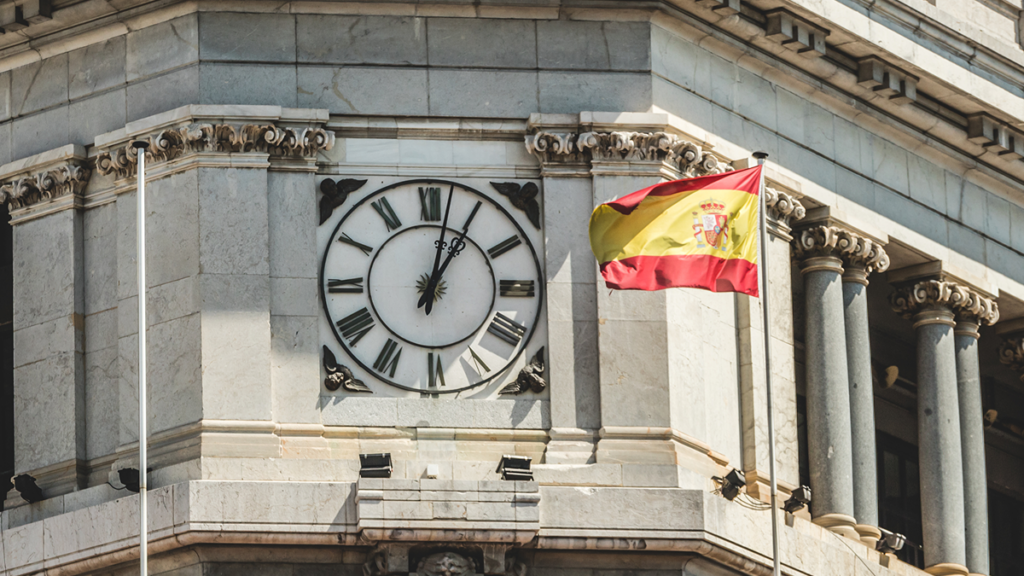
Spain's clocks are due to change again this October, with no permanent fix yet in sight. Credit: Daniel Myjones / Shutterstock
Pedro Sánchez said the twice-yearly ritual barely saved energy and was doing more harm than good.
Well, nearly a year on, Spain turns its clocks back again on October 25, and Brussels has now published exact dates for every changeover through 2031.
Clocks in mainland Spain and the Balearic Islands move back from 3am to 2am on Sunday, October 25, giving residents an extra hour in bed. In the Canary Islands the change happens an hour earlier, from 2am to 1am. It is also the final date on Spain’s existing domestic calendar, published in the Boletín Oficial del Estado (BOE, the government’s official gazette) in 2022 to cover the years 2022 to 2026. That expiry is part of why Sánchez chose last October to push for a permanent change instead of asking for another five-year renewal.
Sánchez’s campaign to scrap the ritual
Last October, the prime minister called the twice-yearly change “obsolete” and said Spain would push Brussels to scrap it for good, as he announced at the time. His government argued the practice barely reduces energy use any more and does more harm than good, pointing to research linking it to disrupted sleep and irritability.
A 2018 EU-wide public consultation found that 84 per cent of respondents wanted seasonal clock changes scrapped altogether, and Sánchez used that backing to push Brussels to finally act. Not everyone agrees the change should go, though: supporters of keeping it point to older studies estimating modest savings of around €300 million a year nationally once industrial use, road safety and tourism are factored in, against roughly €6 a year for an individual household.
Why the plan stalled in Brussels
The European Parliament backed ending the twice-yearly change back in 2019, but the Council of the EU has never agreed a common position on what should replace it. Its own website still confirms that “no final decision has been taken on this matter and no timeline for such a decision has been defined.”
The sticking point is not whether to stop changing the clocks, but which time to keep permanently. Some member states favour summer time, others winter time, and changing the law needs the Council and the European Parliament to agree on the same version of it. Spain’s own switch, in the meantime, remains governed by Real Decreto 236/2002, which simply transposes the EU’s existing rules into Spanish law.
Brussels has already booked changes until 2031
While that deadlock continues, the European Commission published a routine communication in March confirming clock-change dates for every year from 2027 to 2031. Spain’s clocks are due to move forward on March 28 2027 and back on October 31, then follow the same pattern each spring and autumn until the final date on the current list, October 26 2031.
The dates are not a guarantee that today’s system will survive intact. They exist under the same directive that already governs the biannual switch, and would be replaced overnight if the Council and Parliament ever agree new legislation. The Commission is expected to prepare a fresh technical report on the issue by the end of 2026, but for now the published dates are the only long-term schedule that officially exists.
Why Spain may already be on the wrong clock
Even the argument over which time to keep permanently is complicated by a decision made 86 years ago. Spain’s geography places it in the same natural time zone as the UK and Portugal, but General Franco moved the country’s clocks forward in October 1940 to align with Nazi Germany, and Spain never went back.
The result is that Spain stays an hour ahead of London and Lisbon even in winter, and in summer it effectively runs two hours ahead of where the sun says it should be. In practice, that is why so many Spanish schoolchildren still wait for the bus in the dark well into autumn, and why dinner and bedtime both run later than almost anywhere else in western Europe.
The split between sleep experts and the tourism industry
If Spain ever does settle on one time permanently, sleep specialists and the hospitality industry disagree over which it should be. Chronobiologist María Ángeles Rol has argued that standard, winter time is “the healthiest” option because it matches the body’s natural rhythm more closely, a position backed by the Spanish Sleep Society. Meanwhile, tourism and hospitality businesses tend to prefer permanent summer time for the extra daylight it gives evening trade.
Until the Council reaches an agreement, none of that changes what happens this weekend. The UK also puts its clocks back on October 25, so the hour’s difference between Spain and Britain will stay exactly as it is, whatever eventually happens in Brussels.
Follow Euro Weekly News on Google News
Get breaking news from Spain, travel updates, and expat stories directly on your Google News feed.
Follow on Google NewsSign up for personalised news
Subscribe to our Euro Weekly News alerts to get the latest stories into your inbox!
By signing up, you will create a Euro Weekly News account if you don't already have one. Review our Privacy Policy for more information about our privacy practices.


Harry Dennis
Born in the UK and raised on the Cádiz coast, Harry brings his background in design, music, and photography to his writing for Euro Weekly News, sharing stories that celebrate culture and lifestyle across Spain and beyond.
Comments