Pedro Sánchez reveals that Spain is heading for snap election on November 29
By Adam Woodward • Updated: 05 Oct 2026 • 9:48 • 4 minutes read
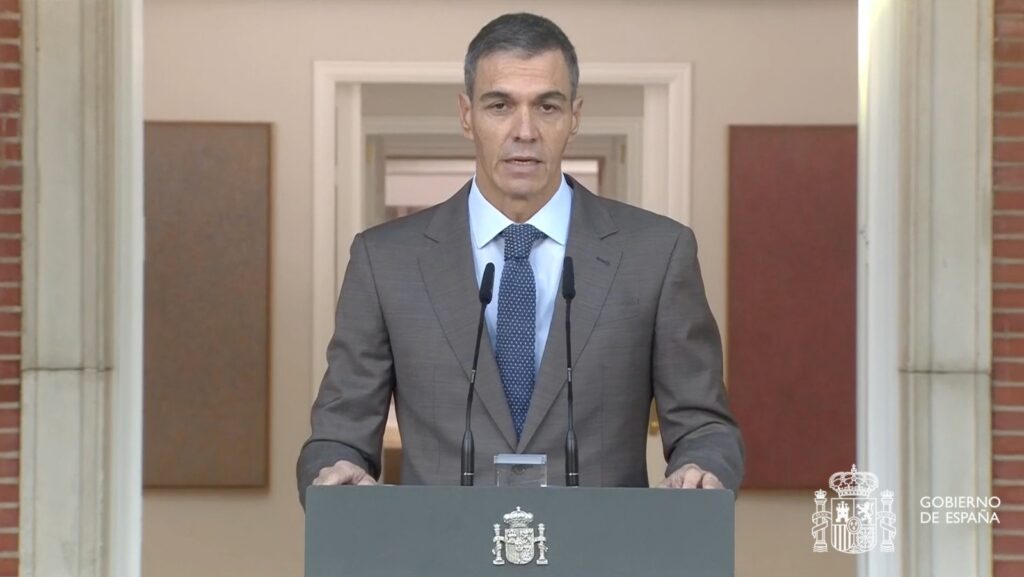
Pedro Sánchez speaking from Moncloa. Credit: Moncloa
Pedro Sánchez has called a snap general election in Spain for Sunday, November 29, bringing forward a national vote after his government suffered a major parliamentary defeat over housing.
The Spanish prime minister confirmed the decision this morning, Monday October 5, in a statement from La Moncloa following a weekend of talks with ministers and senior PSOE figures.
Sánchez had been under growing pressure to dissolve Parliament after Congress rejected two government housing decrees on Friday. The decision means Spaniards will return to the polls considerably earlier than originally expected, with the country now heading into an election campaign just weeks before Christmas.
Spain’s snap election will be held on November 29
The election will take place on November 29, following the dissolution of the Cortes Generales and publication of the election decree in Spain’s Official State Gazette.
Under Spain’s electoral timetable, an early general election must take place 54 days after the formal publication of the decree. The electoral calendar will therefore begin immediately, with political parties now preparing their candidates and campaigns.
The campaign itself is expected to begin on November 13, followed by the traditional day of reflection on November 28. The result will determine who governs Spain for the next four years, although forming a government could once again prove difficult if no party wins enough seats to govern alone.
Why has Sánchez called an election now?
The immediate trigger was the government’s failure to get its two housing decrees through Congress. The measures were rejected after PP, Vox and Junts voted against the government’s proposals, exposing once again the difficulty Sánchez faces in maintaining a parliamentary majority.
One decree was defeated by 178 votes to 172, while the second fell by 184 votes to 166. The proposals included measures affecting vulnerable tenants facing eviction, temporary and room rentals and protections intended to provide greater stability for some main-home rental contracts. Their defeat came as Spain’s housing crisis was already generating protests in cities across the country.
For Sánchez, the parliamentary defeat demonstrated just how difficult it has become to govern with a fragmented Congress.
What does the election mean for British residents?
British citizens living in Spain will be watching the election closely even though most will not be able to vote in it. British residents who have not obtained Spanish citizenship cannot vote in Spanish general elections simply because they live here, own property or pay taxes. They can, subject to the relevant requirements, vote in certain local elections, but national elections are different. That means the November 29 result could have a direct effect on British residents’ lives without them having a vote in choosing the national government.
Issues likely to matter include:
- Housing and rental regulations
- Taxation
- Pensions and benefits
- Immigration and residency
- Energy prices
- Transport
- Healthcare and public services
- The cost of living
The future of Spain’s housing policy could be particularly important. The two measures rejected last week will not simply become law after the election. A new government could introduce similar proposals, rewrite them or abandon them altogether.
Why is Pedro Sánchez so controversial?
Sánchez has been one of Spain’s most divisive prime ministers, with criticism focusing on several major events and political decisions during his time in office.
He did not win the most votes in the 2023 election
The PP won more votes and seats than the PSOE in the July 2023 general election. Sánchez nevertheless returned as prime minister after reaching agreements with several smaller parties to secure the parliamentary support needed for his investiture. That dependence on regional and nationalist parties has remained one of the defining features of his government.
The controversial Junts deal
Perhaps the most contentious agreement came with Catalan party Junts. Sánchez got the party’s support for his return to government after agreeing to an amnesty covering people involved in the Catalan independence process. Critics accused him of changing his position on amnesty to obtain the parliamentary votes he needed. The issue remains deeply divisive in Spain.
The Covid lockdown
Sánchez’s government imposed one of Europe’s strictest Covid lockdowns in March 2020 as Spain struggled to contain the first wave of the pandemic. The measures became the subject of a major constitutional dispute, with Spain’s Constitutional Court later ruling that the first state of alarm was unconstitutional. Supporters of the government argued that exceptional measures were necessary during an unprecedented public health emergency, while critics accused Sánchez of imposing excessive restrictions on fundamental rights.
The 2025 “apagón”
The nationwide electricity blackout of April 2025 became another major political headache. Millions of people were left without electricity, while trains stopped, traffic systems were disrupted and card payments and communications were affected. The blackout prompted intense criticism of the government’s handling of the crisis and questions over the resilience of Spain’s electricity system.
Corruption scandals involving senior PSOE figures
A series of corruption investigations involving people connected to the PSOE has created perhaps the most persistent political pressure on Sánchez in recent years.
The Koldo affair, involving former Transport Minister José Luis Ábalos and his former adviser Koldo García, became a major scandal surrounding alleged irregularities in pandemic-era mask contracts.
Former PSOE organisational chief Santos Cerdán has also faced allegations in the wider corruption investigation. Sánchez has denied personal wrongdoing and defended his government’s record, but the scandals have nevertheless damaged the political credibility of his administration.
Spain now enters another election campaign
The November 29 election will give Spanish voters the opportunity to decide whether Sánchez should remain in power or whether another political combination should take control of the country.
For foreign residents, the result could be particularly important. The election comes at a time when Spain is facing a housing affordability crisis, political divisions over Catalonia and immigration, pressure over the cost of living and continuing questions about the government’s ability to pass legislation.
After Friday’s housing defeat, Sánchez has now decided that the voters, rather than another round of negotiations in Congress, should decide what happens next.
Spain goes to the polls on November 29.
Follow Euro Weekly News on Google News
Get breaking news from Spain, travel updates, and expat stories directly on your Google News feed.
Follow on Google NewsSign up for personalised news
Subscribe to our Euro Weekly News alerts to get the latest stories into your inbox!
By signing up, you will create a Euro Weekly News account if you don't already have one. Review our Privacy Policy for more information about our privacy practices.



Adam Woodward
Adam is a writer who has lived in Spain for over 25 years. With a background in English teaching and a passion for music, food, and the arts, he brings a rich personal perspective to his work at Euro Weekly News. As a father of three with deep roots in Spanish life, Adam writes engaging stories that explore culture, lifestyle, and the everyday experiences that shape communities across Spain.
Comments
Barbara Davidson
06 October 2026 • 12:42I sincerely hope he loses power, the housing problem is always blamed on others but the Spanish government allow almost 1 million illegal immigrants to live in Spain and they have to be housed. He blames foreigners for buying homes that having absolutely nothing to do with the so called ´´housing crisis´´ because many Spanish people cannot afford homes on their low wages. Also it is the ´´Foreigners´´ who pay millions in taxes and operate businesses that generate billions in Taxes. I am sick listening to the Spanish government talking about it when they could have built thousands of homes for their own people. Or better still force the builders to give a fixed discount to all Spaniards buying a home and make it compulsory, or they can insist that for every hundred homes built 5 must be given to the state for allocation to Spanish people. But he does nothing, plays the blame game when he is at fault
Roberto Pfeiffer
08 October 2026 • 08:43Hi Barbara, just read your comment and that makes perfect sense. I worked in Malaysia many years ago and the law provide discount for the Malaysian people when buying property. It made absolute sense. People on lower wages cannot afford high property prices and the discount allowed thousands onto the housing ladder. Also you idea about the builders being made to build homes for free is a great idea but being Spain I can all kinds of corruption in allocating such houses. The builder/ council would have to do it on national TV to ensure they were not just giving the houses to their pals or families. But still a great idea.
Comments are closed.