Italy food crisis: empty supermarket shelves as lorry protests hit supplies
By Adam Woodward • Published: 20 Oct 2026 • 9:03 • 3 minutes read
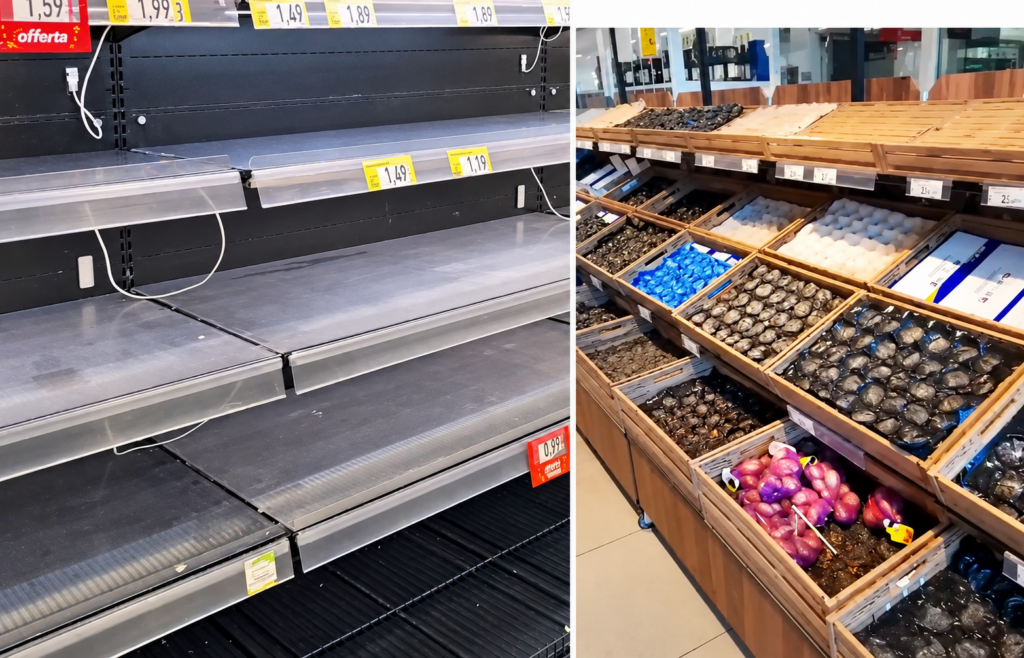
Supermarket shelves empty in Italy. Credit: RadioGenoa X
Italy is facing growing disruption to food supplies after lorry-driver protests over soaring fuel costs left supermarket shelves bare in parts of the country, with shoppers warned that shortages could continue for some time.
Reports from Naples and the surrounding Campania region describe empty fruit and vegetable displays, shortages of chilled products and, in some shops, difficulties finding milk. Blockades affecting roads, warehouses and the port of Naples have prevented deliveries from reaching retailers at a critical time.
Italy’s shelves emptied in hours. Not famine. Diesel protests halted the trucks.
Southern Italy, October 17: freezers bare, produce crates empty, stations dry. Hauliers and farmers blocked roads over fuel prices that make deliveries unprofitable. Panic buying finished the job.
This is the quiet part of Europe’s energy math. No war required.
How long until your supermarket looks the same?
Follow : @burntoast317 https://t.co/7qCNacz60W
— Allegiance Pledger (@burntoast317) October 18, 2026
Why are Italian supermarkets running short of food?
The immediate problem is a protest by Italian haulage companies against rising fuel costs. Lorry drivers say the expense of running their vehicles has become increasingly difficult to absorb, leading to demonstrations and blockades that have disrupted the movement of goods.
Naples has become one of the main trouble spots. On Monday, October 19, protesters blocked the Bausan entrance to the city’s port, while disruption on the A1 motorway and around distribution centres added to the pressure on deliveries.
Problems have also been reported in warehouses serving supermarket chains in the Caserta area, north of Naples. Restrictions on loading and unloading goods have prevented food from reaching shops, particularly in Campania. According to Italian news agency ANSA, shortages have also been reported in other southern regions, including Calabria, Puglia, Basilicata and Sicily.
this is the current situation in southern italy, as you can see we have literally no groceries in our supermarkets cause there’s a huge strike going on regarding the petrol prices so of course food is not being delivered and families are struggling https://t.co/L4n06bbxAo
— claudia³ ☆ (@claustrofobicaa) October 19, 2026
Which foods are affected by the shortages?
Fruit and vegetables were among the first products to become harder to find, but reports from Naples on Tuesday, October 20, described a wider problem affecting supermarket departments. Some shops were reporting gaps in their supplies of cheese, cured meats and refrigerated products, with milk also difficult to find in certain locations.
Perishable goods are particularly vulnerable when deliveries are delayed. Supermarkets depend on regular shipments to replenish their stocks, and food that cannot be transported on time may spoil before it reaches customers.
Retailers have warned that the situation could deteriorate if the blockades continue. Even after restrictions are lifted, distribution centres will need time to clear backlogs and restore normal deliveries.
En Italia las protestas por carestía acabaron en una violencia callejera que dejó 100 heridos y 250 detenidos. Este lunes estalló además una huelga de camioneros en el norte. https://t.co/dKsKpLcuPc
— Javier Alatorre (@Javier_Alatorre) October 19, 2026
Is Italy running out of food?
Despite the alarming pictures from affected supermarkets, there is no evidence that Italy as a whole is running out of food. Current reports point to localised supply-chain disruption rather than a nationwide shortage. The immediate concern is that continued blockades could spread the problem to more shops and products. Consumers may also face higher prices if transport costs continue to rise or retailers struggle to replenish stocks.
Italy was already dealing with pressure on household budgets before the latest protests. National statistics institute ISTAT reported that annual inflation reached 4.2 per cent in September, up from 3.3 per cent in August. Unprocessed food prices rose by 5.5 per cent over the year, while grocery and unprocessed food prices increased by 1.5 per cent. Rising energy costs were also a major contributor to the wider inflation rate.
What will happen next?
The immediate outlook depends on whether haulage representatives and the Italian government can reach an agreement over fuel costs and the disruption to deliveries. For a nation whose entire world image revolves around its cuisine, the look is bad.
Talks with Transport Minister Matteo Salvini were scheduled for Tuesday, October 20, as pressure grew to restore the movement of goods and prevent further shortages. For shoppers in affected areas, the key question is how quickly normal deliveries can resume. Food supplies may take time to recover even if the blockades end, depending on the extent of the disruption.
For now, the situation is a warning about how quickly fuel-price disputes can affect everyday life. When lorries cannot reach warehouses, ports and supermarkets, the consequences can be felt directly in the shopping basket.
Follow Euro Weekly News on Google News
Get breaking news from Spain, travel updates, and expat stories directly on your Google News feed.
Follow on Google NewsSign up for personalised news
Subscribe to our Euro Weekly News alerts to get the latest stories into your inbox!
By signing up, you will create a Euro Weekly News account if you don't already have one. Review our Privacy Policy for more information about our privacy practices.



Adam Woodward
Adam is a writer who has lived in Spain for over 25 years. With a background in English teaching and a passion for music, food, and the arts, he brings a rich personal perspective to his work at Euro Weekly News. As a father of three with deep roots in Spanish life, Adam writes engaging stories that explore culture, lifestyle, and the everyday experiences that shape communities across Spain.
Comments