26 barrels found in Marbella shipwreck could help solve 139-year-old mystery
By Harry Dennis • Published: 28 Oct 2026 • 12:39 • 2 minutes read
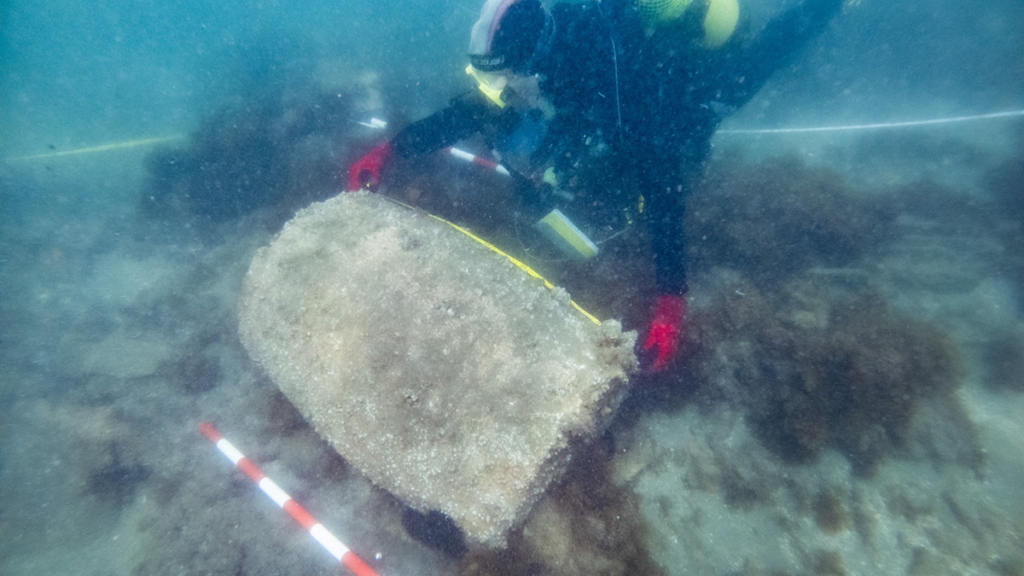
Archaeologists found 26 barrels at the Cabopino wreck, and some appear to still hold part of their contents. Credit: IAPH / Centro de Arqueología Subacuática
Divers working in around six metres of water off a Marbella beach have found 26 barrels, some of them apparently still holding part of what was packed inside 139 years ago. Archaeologists now want to know whether it’s the cement that records say the ship was carrying to Buenos Aires.
Some of the barrels still hold part of their contents
Divers have finished their 15-day dig on the Cabopino and the barrels they’ve found are the biggest surprise. Archaeologists from the Andalucian Institute of Historical Heritage (IAPH) counted 26 of them, and some appear to still hold part of what was packed inside. Samples have been taken, although nobody can say yet what the substance is.
Historical records say the ship carried Roman cement from the 1800s, so that’s what the team will be testing for. However, it’s still only a theory, and no results have been released.
Four batches of tiles point to French factories
The rest of the cargo is just as exciting. Four different batches of tiles have been identified so far, and three carry the marks of southern French makers from the Marseille and Aubagne area: Pierre Lançon, Roux B. Martin and A. Remuzat. Roof tiles made by Pierre Sacoman, of Saint-Henri in Marseille, were found too.
Together with the barrels, they fit the story in the records, which say the Italian sailing ship Garigliano left Marseille for Buenos Aires and sank in a storm off Marbella in 1887.
However, the IAPH stresses that the name is a hypothesis backed by the findings and not yet a confirmation.
The hull may have split open under its own cargo
Perhaps the oddest detail is how the ship ended up on the seabed. It seems to have run aground with its bow towards the beach and a heavy lean to port, and the team thinks that could mean that both sides may have split and fallen outward as the weight of the cargo dragged the hull over once the ship lost stability. That still needs confirming though.
Cleaning one section of the cargo area also showed the load was packed in several layers, and so far, 34 metres of the structure are visible, while ships of this kind could reach about 45 metres, so part of it may still be buried.
What a working merchant ship can tell us about the 1800s
For historians, the appeal is a close look at an everyday working ship of the late 1800s, carrying building materials from a French port to South America. Wood samples will show which timbers it was built from, while samples of the copper sheathing (the metal covering on the hull) will be studied to see how it was made, which could help tell it apart from other merchant ships of its time.
The team also filmed the wreck in 360 degrees and built a 3D model from video and photographs, so researchers can keep studying it without relying only on new dives. Andalucian culture minister Patricia del Pozo said the work adds new data to knowledge of ‘our shared past’.
It follows the identification of the 18th-century warship Fernando off San Pedro de Alcántara in July. And for anyone who swims at Cabopino, it’s a strange thought that all of this lies in around six metres of water just off the coast.
The divers are due back in 2027
The IAPH’s underwater archaeology centre plans more dives at the wreck in 2027, and the lab results on the barrels, wood and copper are still to come. So expect more on what’s inside those barrels, and whether this really is the Garigliano, when the results are in and the divers return.
Follow Euro Weekly News on Google News
Get breaking news from Spain, travel updates, and expat stories directly on your Google News feed.
Follow on Google NewsSign up for personalised news
Subscribe to our Euro Weekly News alerts to get the latest stories into your inbox!
By signing up, you will create a Euro Weekly News account if you don't already have one. Review our Privacy Policy for more information about our privacy practices.
Harry Dennis
Born in the UK and raised on the Cádiz coast, Harry brings a creative eye to his writing, sharing stories that celebrate culture and lifestyle across Spain and beyond.
Comments