Bank scam crackdown: Police arrest 43 criminals impersonating fraud teams
By Adam Woodward • Updated: 12 Nov 2026 • 12:15 • 4 minutes read
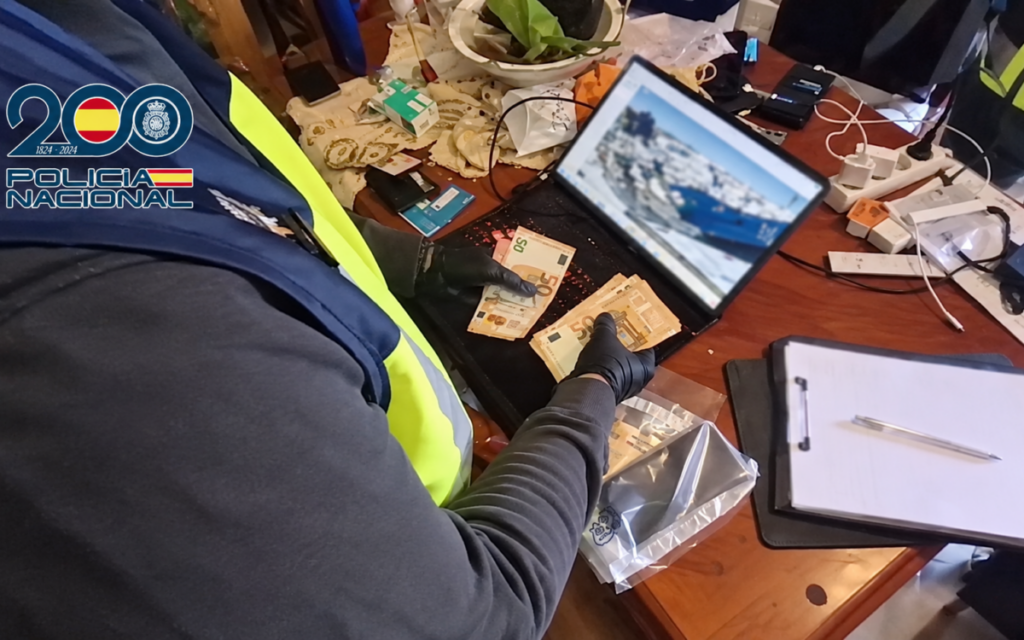
Police raid on bank account scammers. Credit: CNP
A sophisticated €1.14 million operation targeted bank customers in Spain, many over 65, using fake security alerts and a new contactless card fraud technique.
Spain’s National Police have arrested 43 people suspected of belonging to an organised criminal network accused of stealing more than €1.14 million from bank customers by pretending to be fraud prevention staff.
The investigation uncovered 134 separate fraud cases involving more than 130 victims, many of whom were over 65 years’ old. Police say the criminals used convincing text messages and telephone calls to persuade customers that their bank accounts were under attack, before tricking them into handing over money or access to their banking services.
The operation, announced on Thursday, November 12, also exposed the use of a relatively unfamiliar technique involving contactless bank cards and mobile phones.
How the bank message scam worked
The criminals began by sending large numbers of SMS text messages to bank customers’ phones, warning them that a suspicious transaction was taking place in their accounts.
The messages appeared to come from the customers’ actual banks, using a technique known as SMS spoofing to manipulate the sender details. This meant fraudulent alerts could appear in the same message thread as genuine communications previously received from the bank. The Banco de España’s explanation of SMS and caller ID spoofing explains how criminals can imitate the identity of a bank in this way.
Victims were then instructed to contact a telephone number or website to resolve the supposed security problem. Someone posing as a bank employee would explain that urgent action was needed to protect their money.
Police say victims were persuaded to:
- Transfer money to other bank accounts, supposedly to keep their savings safe.
- Reveal their online banking passwords and security details.
- Share their mobile phone screens, allowing criminals to access banking applications and financial products.
- Install fraudulent applications which could give criminals control over certain phone functions.
In some cases, individual victims lost more than €45,000. The latest operation follows other warnings about bank fraudsters posing as security staff and sending criminals to customers’ homes.
Criminals exploited contactless bank cards
One of the more unusual methods uncovered by investigators was an NFC relay attack. NFC is the technology used for contactless payments, allowing bank cards and mobile phones to communicate with payment terminals when held close together.
Police say the criminals persuaded victims to install a fraudulent application, sometimes instructing them to remove their genuine banking application first. Victims were then told to hold their physical bank cards against their mobile phones as part of what they believed was a legitimate security check. The fraudulent software turned the phone into a relay device, transmitting the card’s NFC communications in real time to equipment controlled by the criminals elsewhere.
This allowed the fraudsters to use the relayed information to carry out transactions at another device or cash machine, effectively making it appear as though they had the victim’s card.
Young people recruited to move stolen money
Investigators also uncovered a carefully organised network in which different individuals were responsible for specific stages of the fraud.
These included:
- Data suppliers: Obtained banking customer databases containing details of hundreds of thousands of people.
- SMS operators: Prepared customer lists and distributed fraudulent messages.
- Spoofers: Pretended to be bank employees and persuaded victims to follow instructions.
- Money mules: Supplied bank accounts to receive stolen funds, with young people recruited through social media and some homeless individuals targeted.
- Money handlers: Withdrew cash or transferred stolen funds between different accounts.
- Cryptocurrency exchangers: Converted money into cryptocurrency to make it harder to trace.
The operation also revealed that some victims were threatened after realising they had been defrauded. Criminals allegedly sent messages containing personal information, including home addresses, to frighten them into not reporting the crime.
Three searches and 43 arrests
🚨 Detenidas 43 personas por estafar a clientes de bancos haciéndose pasar por su departamento antifraude 🏦
📱 Enviaban SMS masivos alertando de una falsa transacción en tu cuenta. Más de 1,1 M€ defraudados y 134 hechos esclarecidos
⚠️ Tu banco nunca te pedirá tus claves por SMS ni por teléfono
— Policía Nacional (@policia) November 12, 2026
The investigation began around a year ago after police discovered private messaging groups being used by criminal networks to organise their activities. Officers eventually examined 400 channels and groups on the messaging platform, collecting 300 user identities and fully identifying 100 individuals.
The operation culminated in three property searches, two in Madrid and one in Cadiz, resulting in 43 arrests. Another 13 people were questioned as suspects without being detained, while police say a total of 95 people have been implicated in the investigation.
The suspects face allegations including membership of a criminal organisation, fraud and money laundering. Investigations are continuing and further arrests have not been ruled out.
A warning for expats: Never trust an unexpected bank alert
The case is an important reminder for anyone living in Spain, particularly older residents and expats who may be unfamiliar with the increasingly sophisticated telephone and text-message scams circulating in the country.
A message appearing in an existing bank SMS conversation is not necessarily genuine. Criminals can manipulate sender details to make fraudulent messages look authentic. Similar warnings have been issued about fake bank account warning messages and fraudulent bank text messages circulating in Spain.
Remember these basic precautions:
- Never transfer money to another account because someone claiming to be from your bank tells you it is necessary to protect your savings.
- Never disclose passwords, PINs or security codes to someone contacting you unexpectedly.
- Never install an application at the request of an unsolicited caller claiming to represent your bank.
- Never allow an unexpected caller to take control of your phone or share your screen.
- Do not use telephone numbers or links provided in suspicious messages. Contact your bank using the number on your bank card or its official website.
The Spanish National Police’s advice on banking SMS and telephone scams provides further guidance on recognising these tricks. If you receive an unexpected warning about suspicious activity, hang up and contact your bank independently. Do not feel obliged to continue the call just because the caller claims to be from your bank.
The most important lesson is that a convincing message, a familiar bank name and someone who sounds like a genuine security employee are no guarantee that the person contacting you is who they claim to be.
Follow Euro Weekly News on Google News
Get breaking news from Spain, travel updates, and expat stories directly on your Google News feed.
Follow on Google NewsSign up for personalised news
Subscribe to our Euro Weekly News alerts to get the latest stories into your inbox!
By signing up, you will create a Euro Weekly News account if you don't already have one. Review our Privacy Policy for more information about our privacy practices.





Adam Woodward
Adam is a writer who has lived in Spain for over 25 years. With a background in English teaching and a passion for music, food, and the arts, he brings a rich personal perspective to his work at Euro Weekly News. As a father of three with deep roots in Spanish life, Adam writes engaging stories that explore culture, lifestyle, and the everyday experiences that shape communities across Spain.
Comments